RE: https://mastodon.cc/@dtm/116266557872962801

David, do you feel bias is a good or bad thing in journalism - I didn't understand your point in terms of the piece I shared. https://mediahelpingmedia.org/ethics/unconscious-bias-and-its-impact-on-journalism/

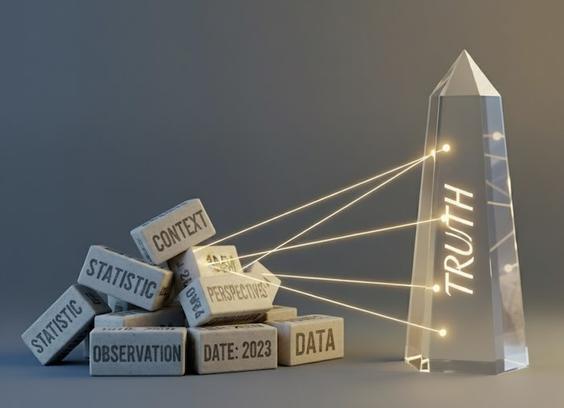
@MediaHelpingMedia I think bias is unavoidable. There is no such thing as objective journalism. The goal should be truth. Facts are useless without context. The public is incapable of parsing raw data. That was the point I was inelegantly making.
@dtm I agree on all the points you make. We all have to deal with our own biases, and context is essential when setting out facts. That is another issue we have tried to explore on MHM.
https://mediahelpingmedia.org/basics/facts-context-perspectives-and-the-truth/
Facts, context, and perspectives - Media Helping Media

The primary role of a journalist in covering a news story is to uncover verifiable facts, provide context and present the information to the audience.

Media Helping Media - FREE TRAINING RESOURCES FOR JOURNALISTS AND MANAAGERS

@MediaHelpingMedia I’m not trying to.contradict anything you’re doing, but I would find Hunter S. Thompson more compelling than most of what amounts for journalism these days. We have convinced the public that they should want only reported facts, with no input from the journalist and I find that absurd. 99% of Americans don’t even know how the government even works, let alone the intricacies of foreign policy, economics, science, and history.

They need help understanding what to think.

@dtm I think you made an excellent point in an earlier post when you wrote about 'context'. We, as journalists, gather facts, check them, then add context so that the audience can draw their own conclusions. If news journalists soil the mix with their own subjective views then we are altering the picture. Our job is not to lead people to think in a certain way. There are so many angles to this discussion. It's all about impartiality. .
https://mediahelpingmedia.org/impartiality/
Impartiality - Media Helping Media

Media Helping Media - FREE TRAINING RESOURCES FOR JOURNALISTS AND MANAAGERS

@MediaHelpingMedia That’s certainly what we were taught and was long the ideal. I’m just not sure I believe in it anymore. I’m not even sure it was ever a realistic ideal. There is editorial and opinion and that is different than reporting, but I don’t think reporting was ever just the facts. I think the ideal should be “This is what I saw. This is what I learned.”

It’s more honest. There’s always a human involved. Or there used to be.

You will likely not agree with me on this. That’s okay. :)

@dtm I don't think we disagree. Once subjective opinions and emotions enter the mix facts can become distorted. I have just updated a scenario I wrote six years ago about where I totally messed up reporting live to the point where "this is what I saw" became polluted with my own biases and ended up with me broadcasting misinformation. What I learnt was to just do my job and report rather than make stuff up because it fitted my own personal feelings. https://mediahelpingmedia.org/scenarios/emotional-assumptions-scenario/
Emotional assumptions – scenario - Media Helping Media

In this scenario a journalist lets their own emotional assumptions colour their news judgement resulting in misinformation.

Media Helping Media - FREE TRAINING RESOURCES FOR JOURNALISTS AND MANAAGERS

@MediaHelpingMedia There’s no simple solution. It’s only ever as good as the people doing the work. I think we should always question our biases but there’s no way to avoid them. We just need to be aware of them and do our best not to let them infect our thinking.

I think we are agreeing. As I said, there’s no silver bullet, no magical formula. It’s also why a good newsroom has experienced reporters and editors, fact checkers and proofreaders.