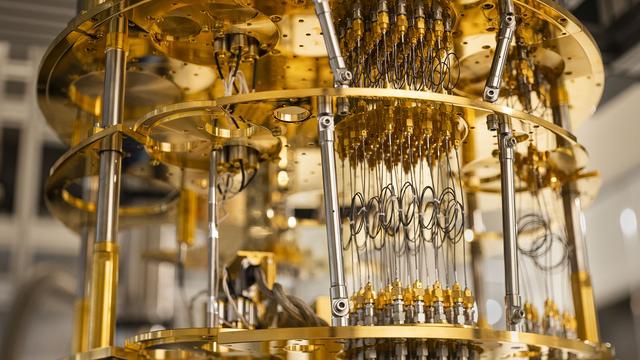
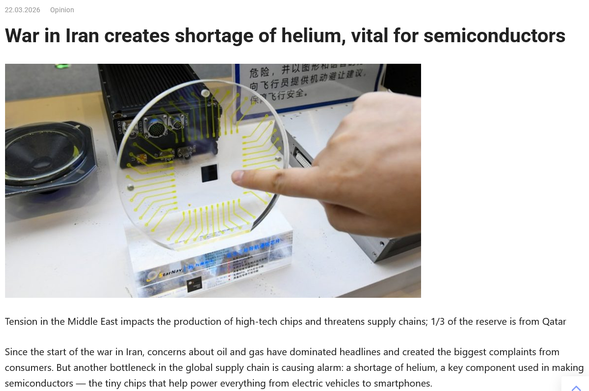
The war on Iran has created a shortage of Helium, which plays a critical role in semiconductor manufacturing and in medical equipment such as MRI machines.

Helium is mostly produced as a byproduct of LNG production.

Following retaliation strikes by Iran, Qatar has halted most of its LNG production in the country, which has led to a suspension of helium production as well. Qatar supplies a third of the world’s helium.

https://lnginnorthernbc.ca/2026/03/22/war-in-iran-creates-shortage-of-helium-vital-for-semiconductors/
#UsPol
1/n
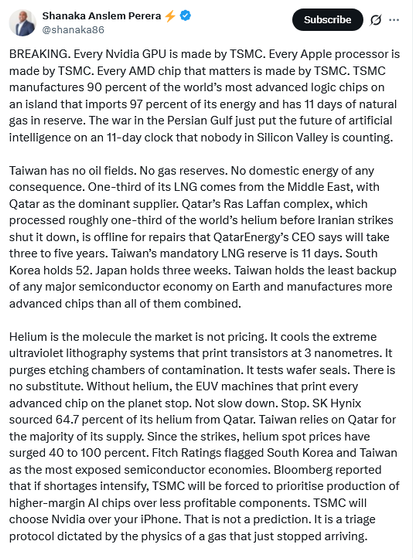
Insightful commentary by Shanaka Anslem Perera on the disruption of Helium production due to the war on Iran and its effect on semiconductor manufacturing and semiconductor economies.

"Helium cools the extreme ultraviolet lithography systems that print transistors at 3 nm. It purges etching chambers of contamination. It tests wafer seals. There is no substitute. Without helium, the EUV machines that print every advanced chip on the planet stop."

https://substack.com/@shanakaanslemperera/posts
2/n

@AkaSci One bit of good news: Chinese researchers have developed a material that can reach a temperature of 106 mK, & they could at least show it in a demo, & it has no moving parts.

The bad news - it is not yet commercially available, and sometimes there are issues that don't show up in an initial test.

U.S. specific "bad news": China is ahead of us regarding this technology. Ideally we'd congratulate them, but in the current political climate, that's not likely.

https://www.tomshardware.com/tech-industry/china-develops-new-ultra-cold-alloy-that-can-reach-273-c-without-helium-could-enable-compact-cooling-for-superconducting-quantum-chips-military-equipment-and-beyond

China develops new ultra-cold alloy that can reach -273°C without helium — could enable compact cooling for superconducting quantum chips, military equipment, and beyond

Compact cryogenic cooling systems incoming?

Tom's Hardware