
90% of crypto's Illinois primary spending failed to achieve its objective

https://www.mollywhite.net/micro/entry/202603172318

90% of crypto's Illinois primary spending failed to achieve its objective

The cryptocurrency industry super PACs dumped $14.2 million into the Illinois primaries. 90% of that – $12.8 million – was wasted, in that it went to opposing Democratic candidates who won their primaries (Stratton in the Senate race, Ford in H-07) or supporting their opponents. The PACs' only victories in the state were where they contributed money towards outcomes that were already highly likely. They opposed Robert Peters (H-02), who had been polling in third place and ultimately received 12% of the vote. They supported Bean (who was leading the polls in H-08) and incumbent Budzinski (H-13). Sadly this early spending in Illinois used up less than 6% of what the super PACs have on hand, so buckle up for a looong eight months.
Molly White

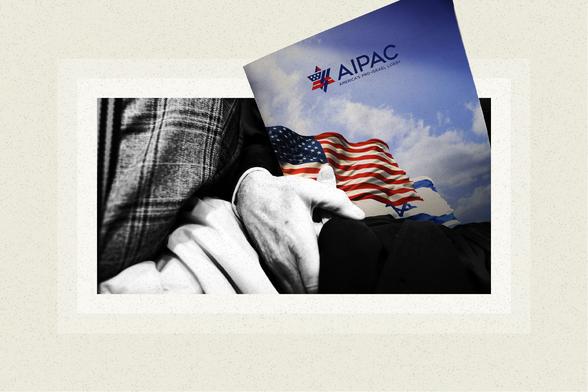
You can't talk about what happened in the Illinois primaries without talking about the other PACs who spent big, specifically AIPAC and other dark-money Israel-affiliated PACs that spent to defeat pro-Palestinian candidates (eg Kat Abugazaleh) without ever once mentioning Israel [1].

It's far more accurate to say that pro-Zionist groups spent big in the Illinois primary and got mixed results. Crypto just went along for the ride.

There is a war in the Democratic Party between anti-genocide candidates, who enjoy 90% support in the base, and the establishment who is doing everything to defeat them, up to and including intentionally losing the 2024 presidential election [3].

Nobody cares about crypto.

[1]: https://www.politico.com/news/2026/03/18/aipac-israel-illino...

[2]: https://news.gallup.com/poll/702440/israelis-no-longer-ahead...

[3]: https://www.thenation.com/article/politics/dnc-autopsy-gaza-...

AIPAC faces calls to reassess strategy after split results in Illinois

In its first midterms test, the powerful pro-Israel group backed two victors but failed to secure its preferred outcome in the two districts where it spent the most.

Politico

This is just activist cope. Voters in Illinois CD7, where I live, didn't put Melissa Conyears-Ervin (lavishly supported by AIPAC) into a tight second-place run against La Shawn Ford because Israel bamboozled them. If you look at the map of where the MCE votes came from, it's very unlikely any of them gave a shit about Israel whatsoever. Her votes followed the exact same pattern as they did in 2024, when she gave Danny Davis (the long-term incumbent) a run for his money, and when she wasn't supported by AIPAC at all.

In the Illinois 9th, AIPAC supported candidate seemingly at random in an attempt to split the progressive vote and clear a path for Laura Fine. Didn't work there either.

It may very well be the case that Israel is disfavored by a strong majority of Illinois Democrats (I'd certainly understand why). What your analysis misses is salience: people care about lots of things they don't vote about. Poll primary voters here; you will find a small group of them that think Israel is the most important issue in the district (they will be almost uniformly white PMC voters and they'll be disproportionately online). Mostly you're going to find voters that (a) hate Trump and (b) are concerned about the economy.

It's clearly not the case that "anti-genocide candidates" enjoy a 90% share of the Illinois Democratic primary electorate, because they didn't win.

Did you miss the part where I said that the AIPAC and AIPAC-affiliated PAC spending never mentions Israel?
Did you miss the part where I pointed out that the results were identical to just one cycle ago where AIPAC wasn't a factor at all? I'm a politically engaged Illinois Democrat (to the point where I have precinct maps of CD7 and CD9 running for local political discussions), I understand what AIPAC was doing here. Unfortunately for your argument, it doesn't appear to have had any effect.

First, IL-7 was nothing like it was in 2024. What are you talking about? In 2024, a 14 term incumbent, Danny Davis, was seeking reelection. Now there's some noise here because IL-7 changed in the 2021 redistricting and became more Democratic but still, Davis is a long-time veteran.

Davis was a progressive but has a more mixed record on Israel funding and defence bills. He's concered with what he has called a "humanitarian crisis", which is more than most, but never gone so far as to use terms like "genocide" or "ethnic cleansing" AFAIK.

Davis faced challenges in 2024 but won pretty handily. One of his challengers wasa the future 2026 AIPAC chosen candidate, Melissa Conyears-Ervin. AIPAC indirectly (eg through UDP) spent millions [1] in the IL-7 Democratic primary and still came in third.

So, IL-7 in 2026 was a massively funded primary in an open field with no incumbent and 2024 was a 14 term incumbent seeking reelection without massive spending. In what way are they comparable?

Bonus question: if millions are spent to oppose a candidate and they still win, how can you say the results were "identical"?

[1]: https://chicagocrusader.com/la-shawn-ford-wins-7th-district-...

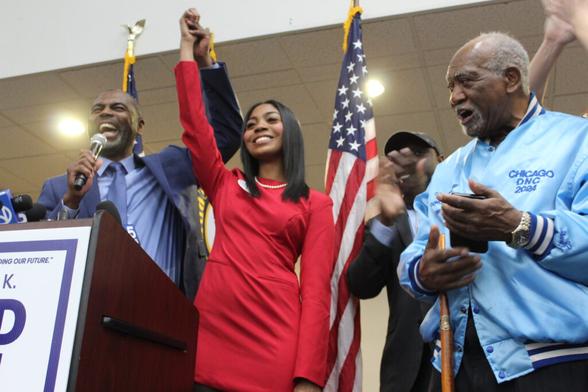
La Shawn Ford wins 7th District primary despite $2.5M opposition spending

Despite facing millions in opposition spending, La Shawn Ford triumphed in the 7th District primary with strong support from voters. La Shawn Ford

The Chicago Crusader

MCE got the same votes she did in the 2024 primary in 2026. It's not complicated; just get the precinct level results, give them to Claude, and tell it "put this on a map". Remember you'll need precinct results both from Cook County and Chicago. She played in exactly the same parts of the CD7 map that she did last cycle, and ranked the same.

Tell me what AIPAC had to do with that, given that AIPAC was not involved in her 2024 run.