 Raven Luni
 Massimo
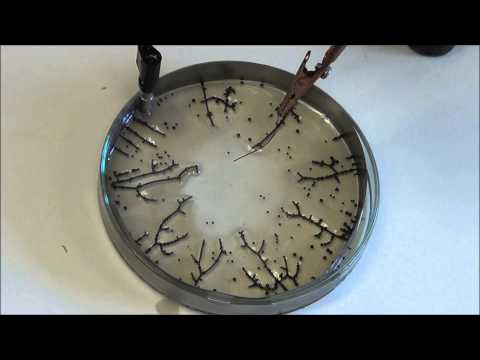
If you take a Petri dish, castor oil and some ball bearings and put all in an electric field, you might happen to spot an interesting behavior: self-assembling wires who appear to be almost alive
[📹 Stanford Complexity Group]
If you take a Petri dish, castor oil and some ball bearings and put all in an electric field, you might happen to spot an interesting behavior: self-assembling wires who appear to be almost alive
[📹 Stanford Complexity Group]
here is a more detailed video of the experiment - you need 20 000 volts for it to happen - it is likely that magnetic fields are attracting the balls, although the paths they take are still under investigation (unfortunately Professor Alfred Hübler passed away in 2018).
It *is* possible to try it at home if you can get a 20 kV supply and have the space and knowledge to do the experiment safely 😉
@vfrmedia @shadowdancer @Rainmaker1973
The overlap between complexity theory and chaos theory must be fascinating.
Eagerly awaiting more papers on these subjects!
yikes!!!!!
 Netraven
 panu
panu Alex@rtnVFRmedia Suffolk UK
 Nicole Parsons
 mrg
mrg rtn
rtn Lazarou Monkey Terror 🚀💙🌈
 Embrace Civil Disobedience
 peachfront
 viernullvier
 Willow 🏳️⚧️🏴🇵🇸
 Pino Carafa
 955_36
 Adrian W
 bit101