 Son of Sandor
July 10, 1950 #ColdWar TIME At what soft spot would the probing finger of Communist aggression aim its next jab? Western observers have long feared that one of the likeliest targets would be Russia’s neighbor, Iran, a backward land perched precariously on the USSR’s Middle-Eastern doorstep. Iran has been wallowing in an economic and political swamp for decades. https://time.com/archive/6607811/iran-next-target/
On Aug 19, 2013, the CIA publicly admitted for the first time its involvement in the 1953 coup against Iran's elected Prime Minister Mohammad Mossadegh. The 1953 coup was later invoked by students and the political class in Iran as a justification for overthrowing the shah. https://www.npr.org/2019/01/31/690363402/how-the-cia-overthrew-irans-democracy-in-four-days
Jan 15, 1951 TIME What dismayed the British was that they had been closely bargaining for months with the Iranian government to accept much lower royalties from the Anglo-Iranian Oil Co. The British government, which controls Anglo-Iranian, feared that the Iranians, who now get considerably less than half of Anglo-Iranian’s profits, would never settle for less than a 50-50 split. In addition, Anglo-Iranian and the five other owners of the Iraq Petroleum Co. had just about completed long negotiations with Iraq on a new contract.
https://time.com/archive/6616580/foreign-trade-half-half/
https://time.com/archive/6616580/foreign-trade-half-half/

Jan 29, 1951 NYT For nearly two generations Iran has been under foreign influence of one sort or another: the Russians coming down from the north, both in Czarist and in Soviet days, and in these latter days offering their own species of land reform as bait; the British and Americans, interested in oil and also in military security. But the young Shah works under difficulties and against great odds. Russia waits her chance and the reactionaries of the old order wait theirs https://www.nytimes.com/1951/01/30/archives/from-troubled-iran.html

Mar 2, 1951 NYT Aggression from within in the form of a possible Communist uprising in #Iran has Britain worried. The possibility has been discussed privately for some time. So has the question of what the West should do if there is no direct evidence of Russian intervention.
https://www.nytimes.com/1951/03/02/archives/britain-worried-over-iran-warns-soviet-on-aggression-in-the-guise.html
https://www.nytimes.com/1951/03/02/archives/britain-worried-over-iran-warns-soviet-on-aggression-in-the-guise.html

Mar 9, 1951 NYT An Iranian Parliamentary committee voted unanimously for nationalization of the oil industry tonight, a few hours after the funeral of Premier Gen. Ali Razmara, who was assassinated yesterday because he had opposed the plan.
https://www.nytimes.com/1951/03/09/archives/nationalizing-of-oil-in-iran-asked-slain-premier-plans-foe-buried.html
https://www.nytimes.com/1951/03/09/archives/nationalizing-of-oil-in-iran-asked-slain-premier-plans-foe-buried.html

Mar 10, 1951 NYT Assassination in Iran. The murderer was a member of the Crusaders of Islam, a fanatical Moslem organization which had demanded the end of oil concessions. In prison later the assassin shouted: “Long live Islam, death to the oil company." The question is whether the new Premier will be strong enough to maintain Iran's delicate international position and progress toward solution of her internal problems.
https://www.nytimes.com/1951/03/11/archives/assassination-in-iran.html
https://www.nytimes.com/1951/03/11/archives/assassination-in-iran.html

Mar 10, 1951 NYT When the surface of the smoldering volcano is eggshell thin, as it is in Iran, a shot fired in a mosque may start an eruption that can spread in many directions. The gun that killed Razmara was aimed against “foreigners,” particularly the British, because of their control of the Anglo-Iranian Oil Company, which the ultra-nationalists want nationalized.
https://www.nytimes.com/1951/03/10/archives/abroad-the-land-where-anything-can-happen-nationalizing-oil-caught.html
https://www.nytimes.com/1951/03/10/archives/abroad-the-land-where-anything-can-happen-nationalizing-oil-caught.html
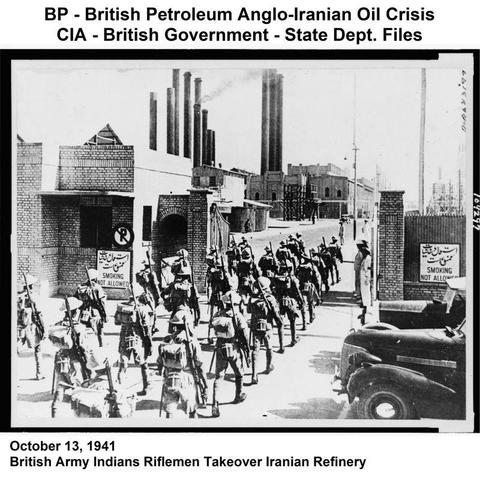
Mar 15, 1951 NYT A warning against any attempt to cancel the British oil concession in southern Iran and nationalize the oil industry was sent to Teheran today by the British Government. The company's present agreement with Iran is valid until 1993 and cannot be legally terminated by unilateral action of the Iranian Government. The Iranian oil concession was first granted to British interests in 1901. It was revised and extended in 1933.
https://www.nytimes.com/1951/03/15/archives/british-warn-iran-on-taking-over-oil-protest-move-to-nationalize.html
https://www.nytimes.com/1951/03/15/archives/british-warn-iran-on-taking-over-oil-protest-move-to-nationalize.html

Mar 16, 1951 NYT By unanimous vote, the Majlis, or lower house of Iran's Parliament, decided tentatively today to nationalize the oil industry, which would be a prize of any war between the West and Russia. Britain's fifty-year control of the Iranian oil fields was repudiated.
https://www.nytimes.com/1951/03/16/archives/irans-house-votes-to-nationalise-oil-action-follows-assassination.html
https://www.nytimes.com/1951/03/16/archives/irans-house-votes-to-nationalise-oil-action-follows-assassination.html

Mar 16, 1951 NYT Stanley Abramovitch, director of emigration and relief programs for the Joint Distribution Committee, said yesterday that spring thaws in Iran, Iraq and Afghanistan would result in the converging of “tens of thousands of Jews" in Teheran, a base for emigration to Israel.
https://www.nytimes.com/1951/03/16/archives/disaster-to-jews-seen-spring-thaws-will-send-hordes-into-teheran.html
https://www.nytimes.com/1951/03/16/archives/disaster-to-jews-seen-spring-thaws-will-send-hordes-into-teheran.html

Mar 19, 1951 TIME Assassin Tahmassebi is a carpenter, a reader of the Koran in the mosque, a member of a small xenophobic sect called Fadayan Islam (Crusaders of Islam) which, with fine impartiality, has been denouncing Truman, Stalin and Britain’s George VI.
Washington and London regarded Tahmassebi as a mere triggerman; the real instigator was assumed to be Ayatulla Kashani, head of Fadayan Islam and a member of a twelve-man “National Front” in the Majlis (parliament).
https://time.com/archive/6795434/iran-for-oil-islam/
Mar 18, 1951 NYT The British discovered and developed the Iranian fields, and since 1909 the Anglo-Iranian Oil Company, Ltd, has had sole concession to exploit the deposits. The aggregate value of Anglo-Iranian shares on the London stock market is about $720,000,000 Its actual worth is far greater.
https://www.nytimes.com/1951/03/18/archives/iran-whose-oil-britains-stake-murder-and-threats.html
https://www.nytimes.com/1951/03/18/archives/iran-whose-oil-britains-stake-murder-and-threats.html

Mar 18, 1951 NYT The Iranian army is not enthusiastic and it is underequipped; the country is one of those tempting vacuums which expanding great powers have always found so difficult to resist. A vacuum with vacuum upon vacuum behind it!
https://www.nytimes.com/1951/03/18/archives/iran-is-important-because-it-is-weak-its-oil-riches-corruption-and.html
https://www.nytimes.com/1951/03/18/archives/iran-is-important-because-it-is-weak-its-oil-riches-corruption-and.html

Iran Is Important Because It Is Weak; Its oil riches, corruption and mass poverty make the country a tempting plum for Russia. People of Troubled Iran Iran--Important and Weak
P Toynbee article linking Iran importance to her mil weakness; USSR aggression seen deterred only by fear of gen war; map; illus
Mar 21, 1951 NYT Seventeen Pennsylvania State College men who had no special plans as recently as last Friday arrived here yesterday on their way to Iran. Their Easter vacation will be spent there, playing soccer against four Iranian teams and promoting international friendship.
https://www.nytimes.com/1951/03/21/archives/penn-state-team-on-way-soccer-players-bound-for-iran-arrive-here-en.html
https://www.nytimes.com/1951/03/21/archives/penn-state-team-on-way-soccer-players-bound-for-iran-arrive-here-en.html

The nationalization of Iran’s oil industry in 1951 marked a decisive rupture. It was more than an economic reform, it was a direct challenge to a geopolitical order in which Western powers exercised decisive control over resource-rich nations. The nationalization of oil on March 20, 1951, remains a defining moment.
https://irannewsupdate.com/news/general/mohammad-mossadegh-and-the-struggle-for-sovereignty-oil-nationalization-and-the-fight-against-structural-dependency/?amp
https://irannewsupdate.com/news/general/mohammad-mossadegh-and-the-struggle-for-sovereignty-oil-nationalization-and-the-fight-against-structural-dependency/?amp
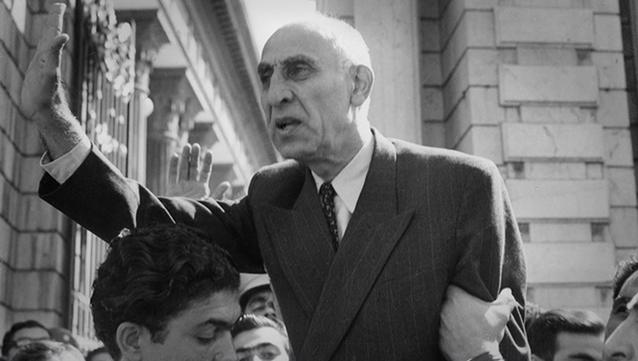
Mohammad Mossadegh and the Struggle for Sovereignty: Oil Nationalization and the Fight Against Structural Dependency - Iran News Update
An in-depth historical analysis of Mohammad Mossadegh’s leadership, Iran’s oil nationalization, the 1953 coup, and the enduring struggle for national sovereignty and independence.
Mar 22, 1951 NYT Britain reaffirmed today her vital interest in the independence, integrity and security of Iran where martial law has been proclaimed because of disturbances accompanying a campaign to nationalize British oil interests there.
The Government was studying the precedent set by the British Government in appealing to the League of Nations in 1932 when the Iranian Government tried to annul the British oil concession. The Teheran Government, Lord Henderson said, has not replied to Britain's note warning against nationalization of the oil business as proposed by the Iranian Parliament.
https://www.nytimes.com/1951/03/22/archives/britain-stresses-concern-over-iran-morrison-reaffirms-interest-in.html

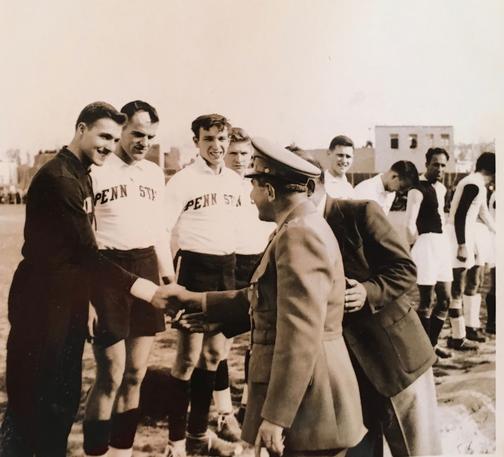
Mar 22, 1951 NYT The Pennsylvania State College fifteen-man soccer squad departed from La Guardia Airport at 10:20 AM yesterday for Iran. It will be the first American athletic group ever to play on Iranian soil. The team was chosen by the Department of State after the Iranian Athletic Association requested a “good, strong college team” to visit Iran. Since then the trip has been turned into a goodwill tour.
https://www.nytimes.com/1951/03/22/archives/soccer-team-off-for-iran.html
https://www.nytimes.com/1951/03/22/archives/soccer-team-off-for-iran.html

Soon they would arrive in Iran at the request of the US State Department to play several exhibition matches against local teams in an effort to “further goodwill” between a Russia-fearing, communist-hunting American government and a nation one newspaper called a “Cold War hotspot.”
https://onwardstate.com/2017/09/18/cold-war-happy-valley-penn-state-soccer-and-the-quest-to-stop-communism/
https://onwardstate.com/2017/09/18/cold-war-happy-valley-penn-state-soccer-and-the-quest-to-stop-communism/
Cold War, Happy Valley: Penn State Soccer And The Quest To Stop Communism
When the U.S. State Department received an invitation from the Iranian Athletic Association that proposed a diplomatic soccer tour of the country in early spring of 1951, government officials reached out to the national champion Nittany Lions first.
Mar 23, 1951 #ColdWar NYT Martial law has been proclaimed in Teheran to hold in check the fanatical anti-foreign forces that assassinated the late Prime Minister. These reactionary forces are in control of the Majlis. They are fanned to flame in the name of “revolution” by the Communist party, outlawed but engineering public demonstrations.
Iran's position is so vulnerable that in this case expropriation of the oil industry is not a step toward but away from the independence ruler and people passionately desire. It would inevitably increase Russian pressure and power in an area both the Czars and the Politburo have always coveted.
https://www.nytimes.com/1951/03/23/archives/the-stake-in-iran.html

Mar 25, 1951 #ColdWar NYT The unanimous vote of the Iranian Parliament to nationalize the country's oil fields and the installations of the largely British-owned Anglo-Iranian Oil Company, was not simply a domestic decision of interest and concern only in Iran. In the background of that action were several geographical, political and strategic considerations which are of world-wide importance. First of all, Iran lies in that vital part of the world that for centuries has been both a bridge between East and West and the pathway of conquest for most of the empires since beginning of history.
https://www.nytimes.com/1951/03/25/archives/iran-stirs-up-acute-crisis-over-oil-nationalization-plan-is-a.html
https://www.nytimes.com/1951/03/25/archives/iran-stirs-up-acute-crisis-over-oil-nationalization-plan-is-a.html

IRAN STIRS UP ACUTE CRISIS OVER OIL; Nationalization Plan Is A Baffling Problem For the British The Region's Oil Wealth Tide of Social Revolution Britain the Scapegoat Move Called a Mistake Courses of Action Possibilities of Nationalization THE MIDDLE EAST--THE IMPORTANCE OF ITS OIL
on problem created for GB