 Chippys_mittens
How possibly?
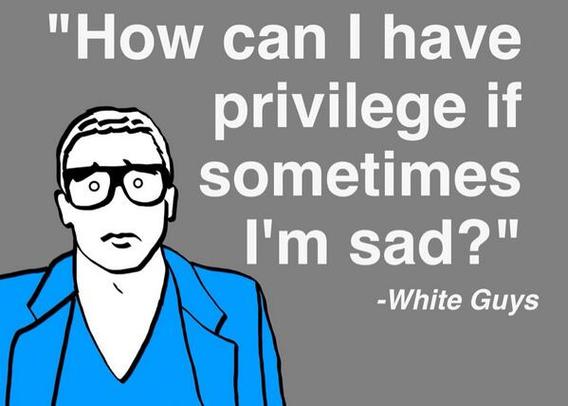
I hate the word “privilege” used in this context. Words have connotations, and “privilege” conjures up images of playing polo at the country club with the upper crust of one’s community, then going back to the office to work as executive vice president of the company your father founded. Yet, the people concerned about social justice seem unreasonably attached to their particular jargon, even if it gets in the way of communication. Over the past 15 years or so, I’ve seen a handful of people get it when it’s explained to them as, “imagine you grew up hardscrabble dirt poor, but also had to deal with racism.” But mostly, the online discussions devolve into a fight over the definition of the word privilege. C’mon, let’s just ditch the word, ferchrissakes! Keep the concept, call it something more relatable!
Same with “toxic masculinity.” Yes, I get it, the “toxic” adjective is a modifier to talk about a particular type of masculinity, but the people who hear it as “masculinity is toxic” have a point, too. People use adjectives as intensifiers. I guarantee that the people talking about “evil homosexuals” aren’t adding “evil” to distinguish from the good ones.
I personally don’t like the idea of the phrase toxic masculinity because I don’t believe that the masculine energy is toxic in and of itself. I feel like a more appropriate term would be pseudo masculinity. Because that implies that people are not naturally this way, but they are forcing themselves to act this way in pursuit of some perceived ideal of masculinity.
I mean, humans are frequently guilty of using terms that mean a very specific thing in a much broader sense as a shorthand for clearly communicating what we specifically mean in that instance.
For instance, I have heard people are use the phrase “toxic masculinity” to describe boyfriends that don’t want to do the dishes, when the actual correct term is “lazy piece of shit”, but for some reason, when communicating this information to other people, it is easier for them to ascribe an issue with the sex of the person than an issue with the sex of the person, implying that the only actual fix is to repair your emotional relationship with your own sex instead of accepting that everyone has a human responsibility to contribute to doing the chores around the house.
Once again, I reiterate that masculinity and masculine energy is not toxic, any more than femininity and feminine energy is toxic, and I also exhort anyone that took the time to read this much to do their best to effectively and accurately communicate using specific language rather than emotional shorthand.
The people who are offended by “toxic masculinity” already use pseudo masculinity to describe everything not toxic masculinity.
All yold I think pseudo masculinity can only be more confusing.
Hey, sure. I’m not arguing for the term toxic masculinity. I’m arguing against pseudo masculinity because it’s way more confusing.
It’s probably better to find another term entirely
 bizarroland