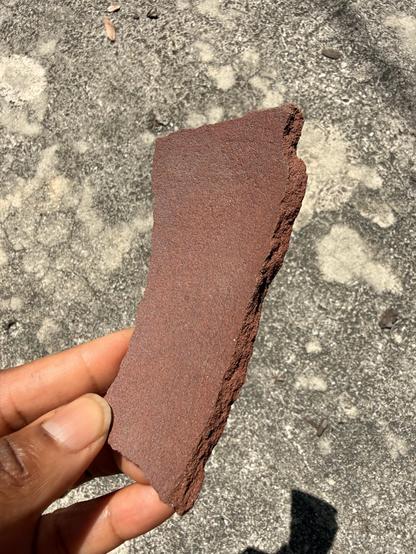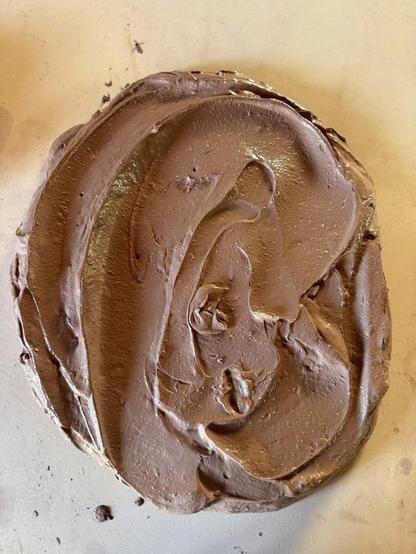
I’m making a custom clay body for my upcoming workshop using #WildClay I collected just south of where I live, and combining it with a midrange commercial clay to give it the durability it lacks on its own. The sample on the right was fired to over 2100°F, just under its melting point, and is still fragile and easily broken. The color transformation is lovely, though. I’m excited to give workshop participants a unique opportunity to work with local clay.
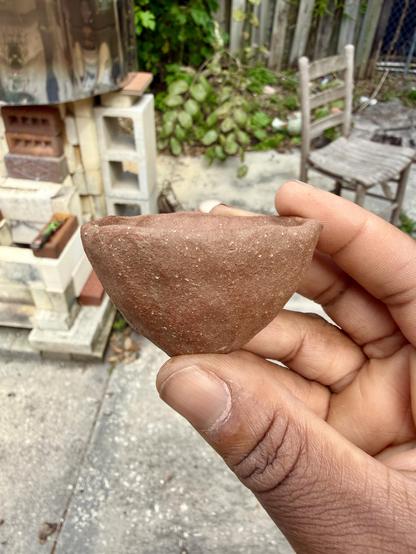
I test fired a small pot made with the wild/commercial clay combo I’m using for my workshop this weekend. I think it’s beautiful. It will give participants the tactile experience of working with our sandy native clays but the resulting piece will live up to our modern expectations of ceramic durability. Also, the fired color is influenced by the nice burgundy hue of wild clay. I fired to cone 3 (2126°F)
and it seems vitreous at that temperature.
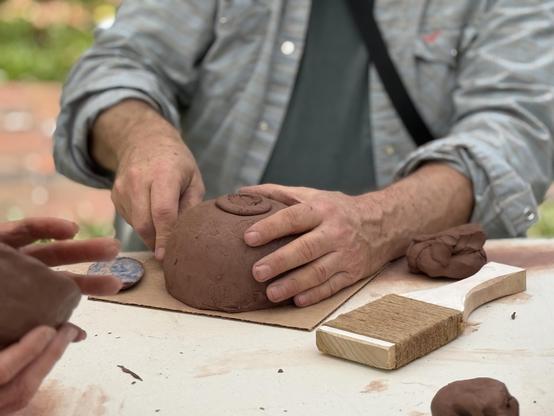
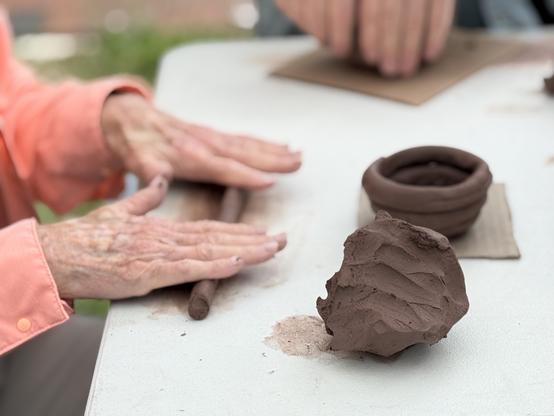
From today’s clay workshop at Reflections of Manatee house museum in Bradenton. I really love doing these community coil building sessions, especially outdoors. I hope participants left with a deeper sense of connection to this strange, gritty subtropical peninsula of limestone, sand, fossil and shell. #pottery #clay #ceramics
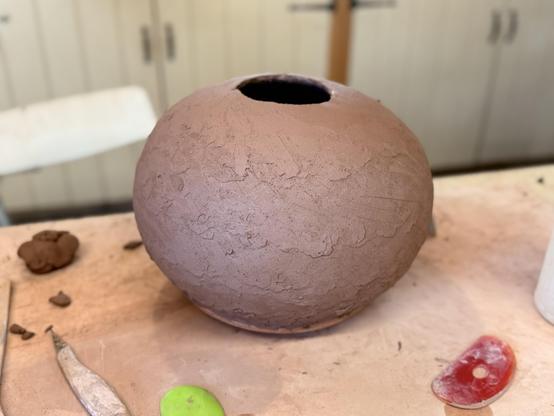
I’m ending the week by using the leftover wild/commercial terracotta mix from last weekend’s workshop to coil build a Nigerian round-bottom pot. I’m going to stop here and let it dry for a bit and then wrap it up in plastic. On Monday, I’ll add the neck. The point is to let the bottom dry enough to be able to support the weight of the neck, but the clay still needs to be damp enough that fresh clay can attach to it without cracking. Timing is everything when working with #clay.
@potterybyosa that shape and texture are so enticing
@CuriousMagpie I’ll show another photo next week once its form is complete and the exterior refined (no more texture!)