 AJ Sadauskas
What could possibly go wrong?
(A sidenote: Wouldn't it be ironic if a Kessler Syndrome event involving Elon Musk's Starlink satellites ended up being the reason humans never reach Mars?)
From the ABC:
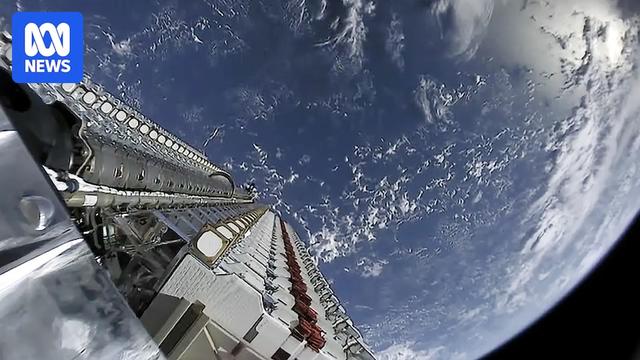
"Starlink is an internet satellite constellation of about 9,600 small spacecraft in low orbit around the Earth.
"They represent little more than half of active satellites but a mere fraction of artificial objects now circling the globe.
"Space above the Earth is filling with clutter.
"Computer scientist and space junk enthusiast Mars Buttfield-Addison says there are about 33,000 objects large enough to be individually identified from the Earth's surface.
"That doesn't account for debris too small to be seen or observed using telescopes and ground-based radar.
"Ms Buttfield-Addison, who is completing a PhD at the University of Tasmania focused on tracking space debris, said about 17,500 satellites have been put into orbit since 1957 and more than two-thirds of those (about 12,000) have been launched in the past six years.
"However, the overall number of individual pieces of space junk is unknown."
https://www.abc.net.au/news/2026-03-21/space-junk-satellites-low-orbit/106468774
#space #spacejunk
(A sidenote: Wouldn't it be ironic if a Kessler Syndrome event involving Elon Musk's Starlink satellites ended up being the reason humans never reach Mars?)
From the ABC:
"Starlink is an internet satellite constellation of about 9,600 small spacecraft in low orbit around the Earth.
"They represent little more than half of active satellites but a mere fraction of artificial objects now circling the globe.
"Space above the Earth is filling with clutter.
"Computer scientist and space junk enthusiast Mars Buttfield-Addison says there are about 33,000 objects large enough to be individually identified from the Earth's surface.
"That doesn't account for debris too small to be seen or observed using telescopes and ground-based radar.
"Ms Buttfield-Addison, who is completing a PhD at the University of Tasmania focused on tracking space debris, said about 17,500 satellites have been put into orbit since 1957 and more than two-thirds of those (about 12,000) have been launched in the past six years.
"However, the overall number of individual pieces of space junk is unknown."
https://www.abc.net.au/news/2026-03-21/space-junk-satellites-low-orbit/106468774
#space #spacejunk
 Cameron Jones
 Peter
Peter