 Levka
Levka"Monte Verde, one of the earliest Indigenous sites in South America, is much younger than thought, study claims. But others call it 'egregiously poor geological work.'
A new analysis of archaeological layers at Monte Verde in Chile suggests that people lived there 4,200 years ago, not 14,500 years ago as originally proposed. But many experts point to errors in the methods.
(. . .)
Since the discovery of Monte Verde, archaeologists have identified many other sites that predate the Clovis migration by more than a thousand years, including Paisley Caves in Oregon, White Sands in New Mexico, the Friedkin and Gault sites in Texas, and Page-Ladson in Florida. But MV-II is still unusual because it is the only securely dated Late Pleistocene archaeological site in South America.
In a study published Thursday (March 19) in the journal Science, an international group of researchers led by Todd Surovell, an archaeologist at the University of Wyoming, reevaluated the age and formation of MV-II. They concluded that Monte Verde was most likely occupied in the Middle Holocene, around 4,200 to 8,200 years ago.
(. . .)
But Tom Dillehay, an archaeologist at Vanderbilt University who has spent 50 years studying Monte Verde, disagrees with the researchers' conclusions.
'There is no 11,000-year-old ash layer underneath the Monte Verde II site,' Dillehay told Live Science in an email. 'They are studying a different context in the area and are projecting that into the site from elsewhere.'"
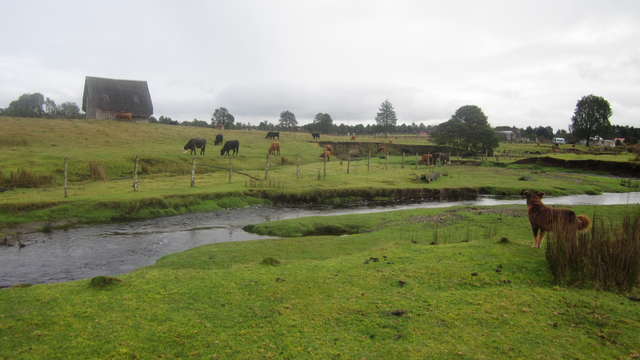
Monte Verde, one of the earliest Indigenous sites in South America, is much younger than thought, study claims. But others call it 'egregiously poor geological work.'
A new analysis of archaeological layers at Monte Verde in Chile suggests that people lived there 4,200 years ago, not 14,500 years ago as originally proposed. But many experts point to errors in the methods.