
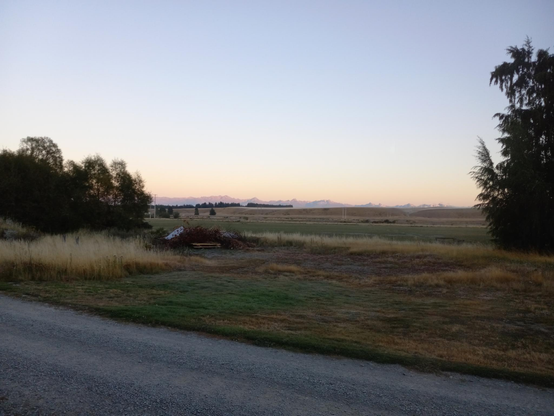
WOW what a rollercoaster looking at my email and texts this morning. First piece of context: I am staying in an (incredibly nice) sheep shearer's hut (actually bigger than my house) in the Aoraki Mackenzie Dark Sky Reserve and THIS is what the sunrise looks like right now. Wow.

I have an email from my collaborator saying he just re-ran the CRASH Clock code, and we are now under 3 days for the first time ever! Good work on bringing us that much closer to Kessler Syndrome, everybody. Special congrats to SpaceX on that one. Hope you take full credit when it starts!

https://outerspaceinstitute.ca/crashclock/ (Website hasn't been updated yet, but here's info on what the CRASH Clock tells us about how close we are to Kessler Syndrome)

CRASH Clock – Outer Space Institute

@sundogplanets

I don't think I ever _really_ grokked that a huge amount of currently in-use equipment has to be moved constantly to avoid it being destroyed and creating a cascade (I know, I know that's literally the definition of Kessler Syndrome.)

I think it's the _active_ part of the monitoring and responding that escaped me before.

So... Equipment that could keep station _sooo_ much longer if it didn't have to wobble all the damn time ends it's lifespan earlier than it should?

@401matthall I'm honestly not sure if the fuel is the primary limitation on working lifetime. But it certainly means they can't dodge forever, and dodging more often requires more fuel, which either requires bigger tanks (and more $$$) or shorter operating lifetimes.

@sundogplanets

That was the gist of the question, yeah. Thanks for the response! <3