0xedb
0xedbGoogle details new 24-hour process to sideload unverified Android apps
https://android-developers.googleblog.com/2026/03/android-de...
Google details new 24-hour process to sideload unverified Android apps
https://android-developers.googleblog.com/2026/03/android-de...
At this point I'm convinced that there's something deeply wrong with how our society treats technology.
Ruining Android for everyone to try to maybe help some rather technologically-hopeless groups of people is the wrong solution. It's unsustainable in the long run. Also, the last thing this world needs right now is even more centralization of power. Especially around yet another US company.
People who are unwilling to figure out the risks just should not use smartphones and the internet. They should not use internet banking. They should probably not have a bank account at all and just stick to cash. And the society should be able to accommodate such people — which is not that hard, really. Just roll back some of the so-called innovations that happened over the last 15 years. Whether someone uses technology, and how much they do, should be a choice, not a burden.
> People who are unwilling to figure out the risks just should not use smartphones and the internet.
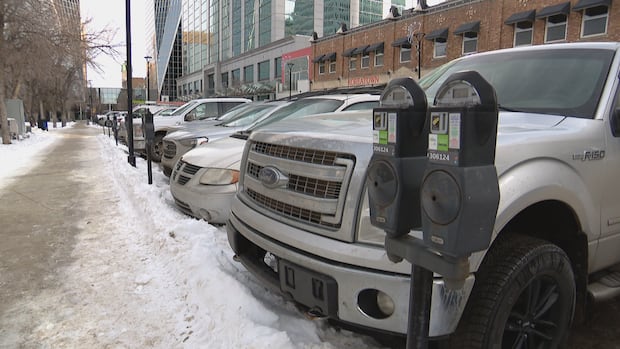
Sounds great in theory, but just today I was reminded how impossible this is when walking back from lunch, I noticed all the parking meters covered with a hood, labelled with instructions on how to pay with the app.
https://www.cbc.ca/news/canada/saskatchewan/city-of-regina-r...
What do you mean by impossible in this case? Can't you just have the coin-operated parking meters back? Where I live, in EU, parking meters even take cards.
EDIT: I guess "just" is doing some heavy-lifting, so I won't argue this further, but "impossible" isn't the word I would use either. The city could revert this decision, definitely if enough people wanted them to (that's... I know, the hardest part). I just agree with the OP that we technically could go back to slightly less-digital society.
> Where I live, in EU, parking meters even take cards.
Unfortunately, a more accurate way of putting it is: stuff takes cards in lieu of coins. Like, where I live (also EU), ticket machines in buses and trams have gradually been upgraded over the past decade to accept cards, and then to accept only cards.
It's a ratchet. Hidden inflation striking again. Cashless is cheaper to maintain than cash-enabled, so it pretends to be a value-add at first, but quickly displaces the more expensive option. Same with apps, which again, are cheaper to maintain than actual payment-safe hardware.
It's near impossible to reverse this, because to do that, you have to successfully argue for increasing costs - especially that inflation quickly eats all the savings from the original change, so you'd be essentially arguing to make things more expensive than the baseline.
I feel like this kind of glosses over the fact that a lot of people (I'd say an overwhelming majority) prefer the cashless options anyway.
I don't know if I have any friends who miss carrying coins and cash, or who miss carrying individual bus/subway tickets, but if they do, they're awfully quiet about it compared to the friends who happily say they can't remember using cash.
I'd say that if anything, cashless things are catching up to the general public.
Personally, I'm in favor of keeping things cash-friendly because people shouldn't be forced to be cash-free, but that's only to support a small minority of people.
Overwhelming majority prefers shit[0] - people pick from what is made available to them, not from what could possibly exist, and they don't have direct say whether or when what's available changes.
These cashless solutions are just another thing[1] being pushed from top down; the passengers only notice when they suddenly find themselves unable to buy a ticket for coins, but by that point, the decision has long been made, so people only get to whine and complain, or otherwise express opinions that are not actually listened to by anyone with power to change things.
This is not saying that all those solutions are bad or inferior. Just that nobody is actually checking with people whether they want it or not; technology is deployed as fait accompli, and regular people just find ways to cope.
--
[0] - Like flies, I suppose. There's millions of them, they can't be wrong!
[1] - Like most technology, really, both software and hardware.