 Dr Pyviv
Alors comme promis, je vais vous raconter le problème que semble avoir résolu Joseph Dorfer dans cet article récent
https://arxiv.org/abs/2602.22874
À noter que j'écris "semble" car l'article est très récent et donc pas encore publié dans une revue où il aurait été relu par d'autres chercheurs ou chercheuses et que sur un résultat de cette ampleur, on reste toujours prudent. Mais je n'ai aucun doute sur le sérieux de l'article

Flip Distance of Triangulations of Convex Polygons / Rotation Distance of Binary Trees is NP-complete
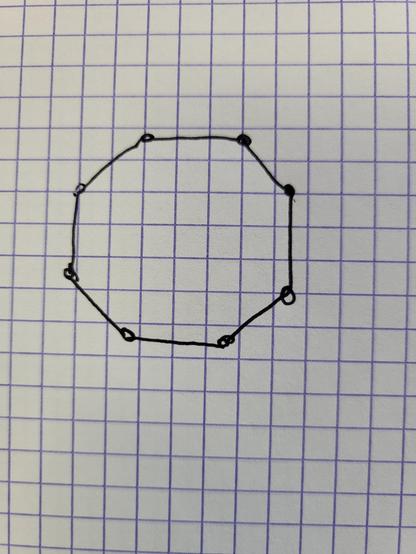
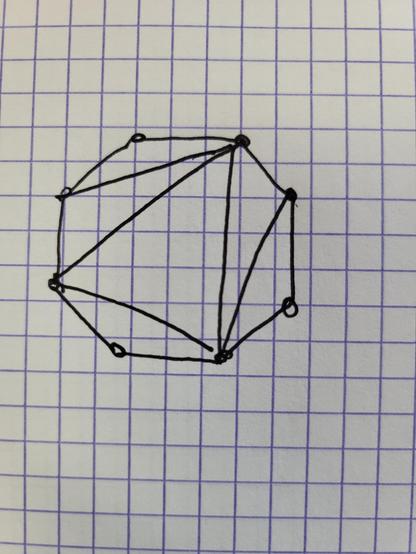
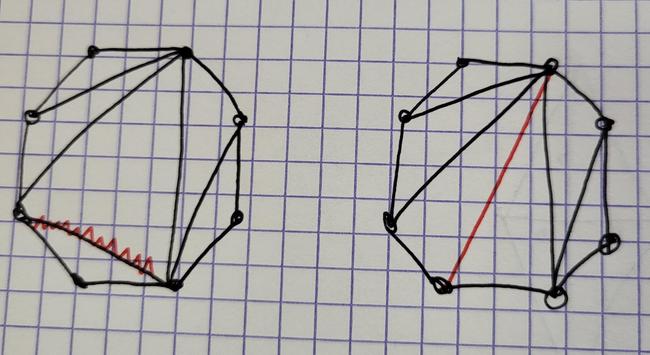
Flips in triangulations of convex polygons arise in many different settings. They are isomorphic to rotations in binary trees, define edges in the 1-skeleton of the Associahedron and cover relations in the Tamari Lattice. The complexity of determining the minimum number of flips that transform one triangulation of a convex point set into another remained a tantalizing open question for many decades. We settle this question by proving that computing shortest flip sequences between triangulations of convex polygons, and therefore also computing the rotation distance of binary trees, is NP-hard. For our proof we develop techniques for flip sequences of triangulations whose counterparts were introduced for the study of flip sequences of non-crossing spanning trees by Bjerkevik, Kleist, Ueckerdt, and Vogtenhuber~[SODA25] and Bjerkevik, Dorfer, Kleist, Ueckerdt, and Vogtenhuber~[SoCG26].
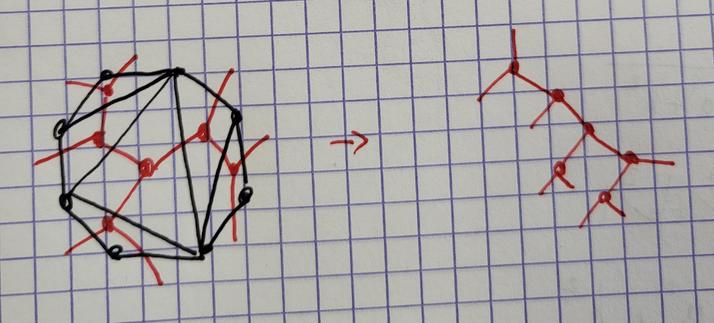


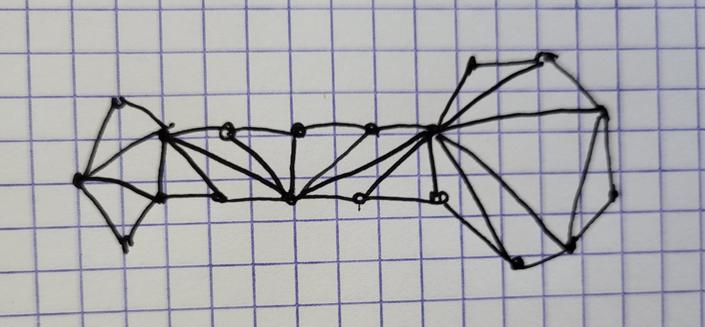
 Nath
Nath tanavit
 Pffff...
 Frédéric Grosshans
 Tom
Tom Le Néandertal se sent las, las
 Benoît Régent-Kloeckner
 TheJaySunday
 Laurent Astart
 Etnikoj
 Roland
 Kaa
Kaa  🧶
🧶 Feth 🎉