 PugJesus
"Now, let me tell you, word-for-word, the dramatic speech of each general to their army:"

"Now, let me tell you, word-for-word, the dramatic speech of each general to their army:"
Explanation: Pre-modern sources have a tendency to… inflate numbers, shall we say? Not always intentionally, to be fair - counting the enemy is a difficult enough task even with binoculars and modern methods of recording and calculation. And even calculating one’s own army isn’t always easy in a time before structured military institutions and logistics calculations! When the totality of your organization is “Send a rider to each region and tell them The King(tm) needs troops for his next campaign,” you may legitimately not know the exact number you came up with - or even that you’re supposed to have!
But also, isn’t it so much more DRAMATIC when “outnumbered” means “FIVE TO ONE, HEMMED IN ON ALL SIDES, WITH OUR BRAVE BOYS ONLY HAVING A ROCK AND A STICK, AND THEY HAD TO SHARE THE ROCK”?
Ancient historians in particular, though, had a taste for recording completely fucking made up speeches that sounded suitably dramatic for each side’s commander to say to their NOBLE AND BRAVE SOLDIERS. One of the few speeches that we have that is considered likely to be accurate (the writer’s father-in-law was an officer on the general’s staff during the battle) is fairly short and practical:
“Ignore the racket made by these savages. There are more women than men in their ranks. They are not soldiers- they are not even properly equipped. We have beaten them before and when they see our weapons and feel our spirit, they will crack. Stick together. Throw the javelins, then push forward: knock them down with your shields and finish them off with your swords. Forget about plunder. Just win and you will have everything.”
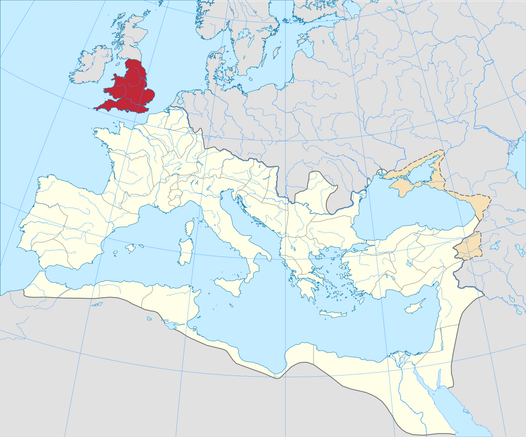
Roman general Paulinus during Boudicca’s revolt in Britain
“Ignore the racket made by these savages. There are more women than men in their ranks. They are not soldiers- they are not even properly equipped. We have beaten them before and when they see our weapons and feel our spirit, they will crack. Stick together. Throw the javelins, then push forward: knock them down with your shields and finish them off with your swords. Forget about plunder. Just win and you will have everything.”
Damn, that’s a good speech. Modern motivational speakers could learn a lot from him.
Alleviate fear
Boost confidence
Give clear and concise instructions
Warn against common mistakes
It’s very practical. And, in true Roman spirit, arrogant and condescending towards barbarians, lmao.
There was a contemporary joke a little before this period that the Roman Republic had to destroy the Republic of Rhodes, because the Rhodians were the only people in the world more arrogant than the Romans, and the Romans couldn’t let that stand!
Boost confidence
Even more so, doing that by mostly stating facts, and inferring a prediction from past experience. No big lies, no tall tales. Just plain facts and one not exactly unlikely prediction.
There are more women than men in their ranks.
It’s pretty unlikely he lied about the makeup of the Britons’ army, because that could be seen (and heard, they made a racket after all) and verified at very least by anyone in the front ranks of the Romans. So there is no point in outright lying there, at best he could get away with a slight exaggeration.
They are not soldiers- they are not even properly equipped.
The Roman army at that time were professional soldiers very well trained in all aspects of war and soldiering, and very well equipped with the finest state of the art kit the res publica could buy for them. Their opponents were mostly just regular people who took up arms, had to use whatever equipment they could personally afford, and, at best, had as much military training they could do in their spare time besides having to make a living.
We have beaten them before and when they see our weapons and feel our spirit, they will crack.
The Romans had beaten the Britons in the past, which was the very reason for them even being there in the first place, and the superior morale and discipline of Roman troops did often have a devastating effect on opponents, so it wasn’t a very far fetched assumption that it would this time, too.
Give clear and concise instructions
Stick together. Throw the javelins, then push forward: knock them down with your shields and finish them off with your swords.
It’s more than just instructions, it’s the ultimate reassurance that everything will be alright, because he basically could have just read that from a “How to Roman legionary for dummies” textbook. It’s like saying “Stick with your training and everything will be fine”.
This is the seventh part of a series taking a historian’s look at the Battle of Helm’s Deep (I, II, III, IV, V, VI, VII. VIII) from both J.R.R. Tolkien’s The Two Towers (1954) and Peter Jackson’s 2…
 OwOarchist
 trollercoaster