

wondering whether using acetone or isopropanol to clean sticky polymerised fat off cookware is a very good or very very bad idea…

i can imagine toxic impurities being a problem, especially if you get your solvents from the hardware store or cleaning supplies shop; but you can get them in food-safe/pharmaceutical-grade varieties too

i can imagine acetone destroying PTFE coatings, since PTFE itself is a polymer, but i don't have any PTFE cookware except my airfryer and rice cooker

what about other materials? stainless steel shouldn't be a problem. neither should glass, which includes emamel coatings. raw ceramic and cast iron might be a problem since they're porous, but then again, these solvents evaporate pretty quickly.

ethyl acetate might work too, and it's easy to find with reasonable purity, being a major part of nail polish remover

it might attack PTFE though

@lis You generally want to avoid using PTFE anyway.

Even without burning it or visibly damaging the cookware, it still contaminates the food with itself.

Stainless steel or ceramic is better.

You have raw ceramic stuff? Unglazed? What kind stuff do they make with that?

I vaguely wonder if the solvents could generate toxic byproducts when reacting with some stuff or other.

(Rinse very well yes.)

@[email protected] PTFE is fine for temperature controlled cooking methods tbh. a rice cooker shuts off around 100°C, an airfryer might reach 220, but PTFE doesn't degrade until somewhere beyond 250.

also good luck finding these devices
without coating lol. most of my regular cookware is in fact stainless steel.

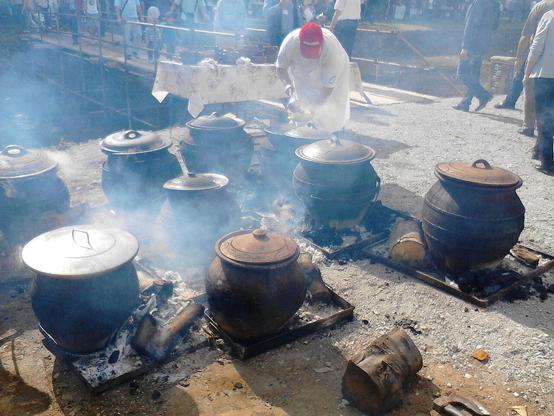
i don't own any ceramic cookware myself, but cooking in an unglazed, soaked ceramic pot
is actually pretty widespread
Clay pot cooking - Wikipedia

@lis I actually did go through some amount of effort finding a stainless steel rice cooker.

For the air-fryer, one might have to fallback to mini-ovens that include assisted convection functionality. It requires somewhat different cooking, yes.

an airfryer might reach 220, but PTFE doesn't degrade until somewhere beyond 250.

They do recommend against putting oil or fat in them for a reason, yes. Some foods might incorporate enough for spots to still degrade.

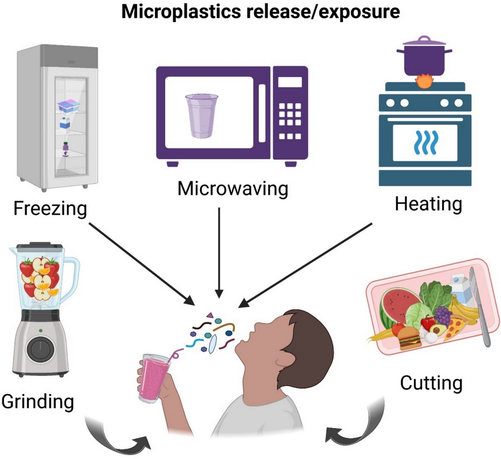
I also was thinking more of microscopic/nanoscopic plastic contamination than the acute denaturation toxicity.

i don't own any ceramic cookware myself, but cooking in an unglazed, soaked ceramic pot is actually pretty widespread

I did not know this.

I've seen those before but I was under the impression it was fairly rare. I also didn't think of them when I thought "ceramic" because the specific type gets called something different here.

Polytetrafluoroethylene microplastic properties, pollution, toxicity and analysis: a review - Environmental Chemistry Letters

Cooking with polytetrafluoroethylene-coated pans releases thousands to millions of microplastic and nanoplastic particles per use, directly contaminating food and the environment. Here we review polytetrafluoroethylene microplastics with emphasis on polytetrafluoroethylene characteristics, environmental occurrence, and detection methods. Polytetrafluoroethylene has high chemical stability and is used in medical devices, clothes and protective suits, aerospace, non-sticking pans, cables and insulation, filtration, irrigation and electronics. We discuss plastic utensils as microplastic sources, and the influence of temperature and aging on microplastic release. The presence of microplastics in humans, wild animals, sediments, water and the atmosphere is described. Limitations of actual analytical methods such as density separation are detailed. Polytetrafluoroethylene accounts for about 60% of the global fluoropolymer market, and is a major contributor to microplastic pollution, accounting for up to 44% of microplastics in sediments, 74% in benthic fish, and 60% in human organs. Our meta-analysis shows that polytetrafluoroethylene microplastic concentrations average 7.3 ± 13.3 particles per L in water, 3,685.7 ± 4,832.0 particles per kg in sediment, 24.9 ± 37.1 particles per individual in fish, and 482.5 ± 554.1 particles per kg in human tissues. Polytetrafluoroethylene microplastics may impair physiological homeostasis by inducing oxidative stress, inflammation, necrosis, and disruption of key cellular signaling pathways.

SpringerLink

@lis Intuitively I would avoid using toxic or health-hazardous solvents on food contact materials, however what you say makes sense for materials like glass or steel. But also, if possible I'd prefer ethanol since that's safer for consumption, but then it won't dissolve the fat.

Also, in my experience, using acetone to get rid of fatty substances usually doesn't work very well. Isopropanol might be a bit better, but still.

(For context: I'm a chemist)

@queerthoughts tbh i'm not too concerned about the toxicity of these solvents on their own, there's enough ways to get rid of them. they're water soluble, pretty volatile, and have low boiling points. it's really mostly the possible impurities i'm worried about.