 ibraheemdev
Astral to Join OpenAI
A concern:
More and more plainly, OpenAI and Anthropic are making plays to own (and lease) the "means of production" in software. OK - I'm a pretty happy renter right now.
As they gobble up previously open software stacks, how viable is it that these stacks remain open? It seems perfectly sensible to me that these providers and their users alike have an interest in further centralizing the dev lifecycle - eg, if Claude-Code or Codex are interfaces to cloud devenvs, then the models can get faster feedback cycles against build / test / etc tooling.
But when the tooling authors are employees of one provider or another, you can bet that those providers will be at least a few versions ahead of the public releases of those build tools, and will enjoy local economies of scale in their pipelines that may not be public at all.
It's not any different from the launch of the FSF. There's a simple solution. If you don't want your lunch eaten by a private equity firm, make sure whatever tool you use is GPL licensed.
> If you don't want your lunch eaten by a private equity firm, make sure whatever tool you use is GPL licensed.
1. For the record: the GPL is entirely dependent on copyright.
2. If AI "clean-room" re-implementations are allow to bypass copyright/licenses, the GPL won't protect you.
Maybe I'm reading wrong here, but what's the implication of the clean room re-implementations? Someone else is cloning with a changed license, but if I'm still on the GPL licensed tool, how am I "not protected"?
1. Company A develops Project One as GPLv3
2. BigCo bus Company A
3a. usually here BigCo should continue to develop Project One as GPLv3, or stop working on it and the community would fork and it and continue working on it as GPLv3
3b. BigCo does a "clean-room" reimplementation of Project One and releases it under proprietary licence. Community can still fork the older version and work on it, but BigCo can continue to develop and sell their "original" version.
> If AI "clean-room" re-implementations are allow to bypass copyright/licenses, the GPL won't protect you.
Isn't that the same for the obligations under BSD/MIT/Apache? The problem they're trying to address is a different one from the problem of AI copyright washing. It's fair to avoid introducing additional problems while debunking another point.
"Clean room" is doing a lot of heavy lifting. Having the entire corpus of knowledge for humanity and how LLMs work, how can you honestly argue in court that this is purely clean room implementation?
This is right up there with Meta lawyers claiming that when they torrent it's totally legal but when a single person torrents it's copyright infringement.
Far too many people treat AI as a way to launder copyright, it seems likely that a lot of the current state of outright plagiarism won't stand up in court
These cases will be settled out of court long before they ever reach a jury. Anthropic has agreed to pay $1.5bn in a class action suit [0]. Others will follow.
[0] https://legalblogs.wolterskluwer.com/copyright-blog/the-bart...

The Bartz v. Anthropic Settlement: Understanding America's Largest Copyright Settlement
When Anthropic agreed to pay $1.5 billion to settle a copyright lawsuit in August 2025, it became the largest copyright settlement in U.S. history. Three authors had sued, but nearly half a million ended up in the class. And a quarter of the money will go to lawyers.
If clean-room re-implementations are allowed to bypass copyright/licenses (software) copyright is dead in general?
well no, (clean room )reimplementations of APIs have done since time immemorial. copyright applies to the work itself. if you implement the functionality of X, software copyright protects both!
patents protect ideas, copyright protects artistic expressions of ideas
The biggest scam the mega-clouds and the Githubs ever pulled was convincing open source developers that the GPL was somehow out of vogue and BSD/MIT/Apache was better.
All so they could just vacuum it all up and resell it with impunity.
I remember a somewhat prominent dev in the DC area putting on Twitter around 2012 or so something like "I do plenty of open source coding and I don't put a fucking license on it" and it stuck with me for all these years that it was a weird stance to take.
John Carmack said that about a week ago.
Dan Bernstein took that attitude back in the 90s - I think his personal theory of copyright went something like "if it doesn't have a license, then it's obviously public domain", which ran counter to the mainstream position of "if it doesn't have a license, then you have to treat it as proprietary".
And, sure, djb wasn't actually likely to sue you if you went ahead and distributed modified versions of his software... but no-one else was willing to take that risk, and it ended up killing qmail, djbdns, etc stone dead. His work ended up going to waste as a result.
I doubt the lack of license was the reason DJB's projects didn't take over the world. Most of them required heavy forking to break away from hardwired assumptions about the filesystem and play nice with the OS distribution, and DJB is himself notoriously difficult to work with. Still, qmail managed to establish maildir as the standard format and kill off mbox, and for that alone I'm eternally grateful.
Well, there were always plenty of patches available - it's just that lots of them conflicted with each other, and that was a product of the licensing.
Agreed with the rest, though. I relied heavily on qmail for about a decade, and learned a lot from the experience, even if it was a little terrifying on occasion!
These days one would just most likely create a fork on github. Vim was also maintained through separate patches for a long time, but Bram was a lot more accepting about integrating and distributing those patches himself.
> his personal theory of copyright went something like "if it doesn't have a license, then it's obviously public domain"
I mean philosophically and morally, sure, one can take that position ... but copyright law does not work like that, at least not for anything published in the US after 1989 [1].
I don't remember GitHub or Amazon advocating MIT over GPL.
Feel free to prove me wrong by pointing out this massive amount of advocacy from "mega-clouds" that changed people's minds.
The ads, the mailing list posts, social media comments. Anything at all you can trace to "mega-clouds" execs.
https://choosealicense.com/about/
> "GitHub wants to help developers choose an open source license for their source code."
This was built by GitHub Inc a very very long time ago.
The site puts the MIT and GPLv3 front and center with a nice quick informative blurb on them. How are they pushing MIT over GPL?
I think this was more about "please choose _any_ license" because of the problem outlined here:
https://opensource.stackexchange.com/questions/1150/is-my-co...

Does the CEO of github count? https://youtu.be/-bAAlPXB2-c?t=180
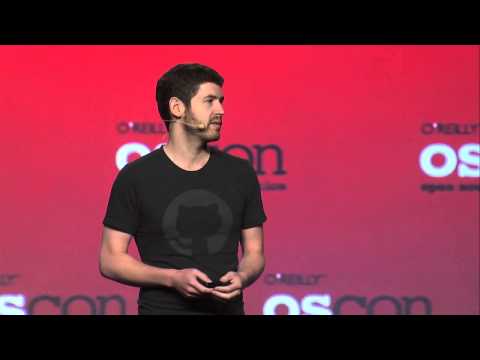
OSCON 2013: Tom Preston-Werner, "Keynote"
The big cloud providers are perfectly happy to use GPL'd stuff (see: Elastic, MySQL). They don't need to use embrace-and-extend, they're content with hosting.
The ones pushing for permissive licenses are rather companies like Apple, Android (and to some extent other parts of Google), Microsoft, Oracle. They want to push their proprietary stuff and one way to do that in the face of open source competition is by proprietary extensions.
> ones pushing for permissive licenses are rather companies like Apple, Android
The FOSS community at large embraced permissive licenses and it had nothing to do with the interests of big corporations.
While the license is important, it's the community that plays the key role for me. VC funder open source is not the same as community developed open source. The first can very quickly disappear because of something like a aquihire, the second has more resilience and tends to either survive and evolve, or peter out as the context changes.
I'm careful to not rely too heavily on VC funded open source whenever I can avoid it.
Since when has GPL stopped any company from doing so? I'd genuinely be happy to hear of a single time someone was actually pressed about their GPL compliance after FSF v. Cisco, it's like some immaterial sword of Damocles, the entire weight of which is the shame of losing face, which is fleeting in a society post-appeal-to-authority.