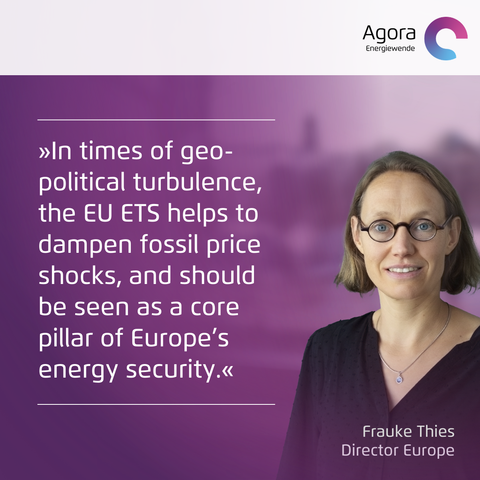
New commentary: As EU leaders meet in Brussels with the escalating Middle East conflict high on the agenda, Europe Director FraukeThies argues that a strong #EUETS – alongside targeted relief measures – should be central to Europe’s response to the global energy price shock.

The current situation once again highlights Europe’s exposure to global fossil fuel markets. Disruptions can quickly drive up prices, putting pressure on households, industry and public budgets. 1/x
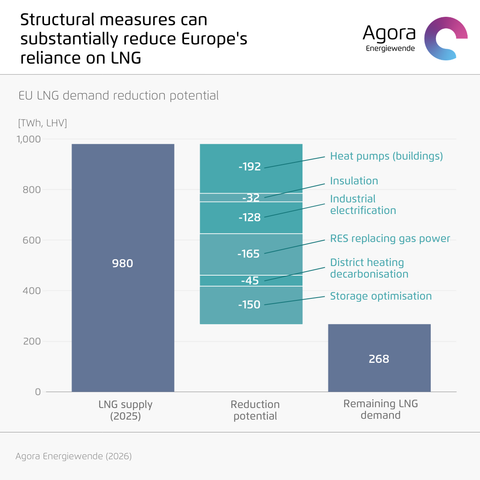
📈 While gas demand has declined since 2019, Europe’s reliance on #LNG has increased – exposing it more strongly to global market dynamics.

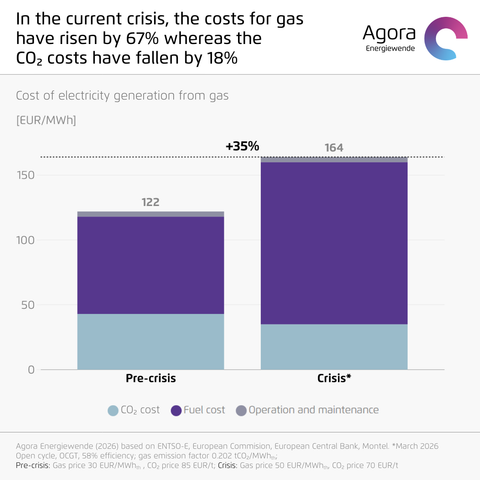
💡 Often seen as a cost driver, the EU #ETS can in fact help dampen fossil fuel price shocks. Weakening the policy would increase fossil fuel demand, raise system costs and shift value abroad. ➡️ It should instead be safeguarded as a core instrument of energy security. 2/x

⏳ In the short term, support should be targeted while preserving price signals – focusing on vulnerable households, energy savings and better taxation design.

🧭 In the long term, resilience will only be achieved by reducing fossil fuel imports through renewables, electrification, grids and flexibility. 3/x

🎯 The key lesson: #climate policy and #energysecurity go hand in hand. By accelerating the transition to renewables-based power systems and upholding the integrity of Europe’s policy framework, policymakers can significantly strengthen the bloc’s economic resilience and energy independence.

All details: https://www.agora-energiewende.org/news-events/why-the-carbon-market-is-also-europes-resilience-tool 4/4
Why the carbon market is also Europe’s resilience tool

The EU Emissions Trading System (EU ETS) is often blamed for rising energy costs, but recent events show it can help to dampen fuel price shocks. Short-term relief measures should be carefully targeted, while preserving the price signals needed to drive clean investment and reduce reliance on fossil gas.