Having discovered SNCF's newest Alstom built Avelia Horizon TGV-M trains do not fit Italian tunnels, I set about working out how everything got into such a tangle

Turns out the 1973 oil crisis and a 2009 decision of the UK government are central to it, and you can even go back to 1871 in Japan to explain part of it as well

Take a trip into the history of French high speed rail 👇
https://jonworth.eu/rail-path-dependency-how-the-oil-crisis-and-the-british-government-left-sncf-with-a-problem-in-italian-tunnels/
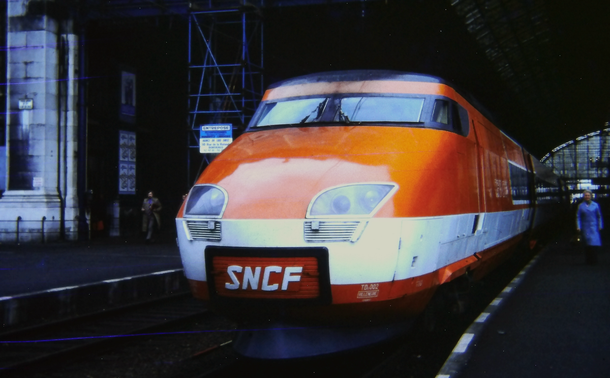
Rail path dependency: how the oil crisis and the British government left SNCF with a problem in Italian tunnels

When writing my previous post about the loading gauge of SNCF's Alstom built TGV-M Avelia Horizon train being too large for Italian tunnels, I had this nag in the back of my mind: how did they get themselves into this tangle? And it is not the first time I have

Jon Worth
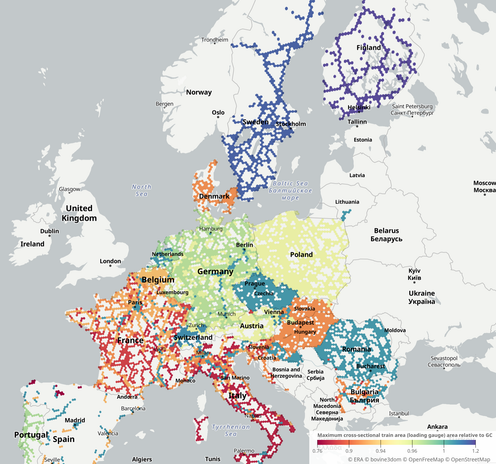
@jon Looking at https://masto.ai/@bovine3dom/116250312099483651 it seems unlikely that every km of line in a country will have the same loading gauge constraints—do you think it’s possible that they just measured for the lowest common denominator, and if they went and reassessed in more detail, some routes could be cleared to larger loading gauges (even if not full GB, then an intermediary one tall enough for TGV-M)?
Oliver Blanthorn (@[email protected])

Attached: 1 image new map for you all: "how big can trains be?" across europe using declared loading gauges from the ERA RINF. purple = big trains, red = small trains, green = somewhere in between. https://compute.olie.science/expo/?data=loading_gauge/2026-03-18#x=8.0973&y=48.8056&z=5.0605 thanks go to @[email protected] for helping with the data. all mistakes are my own :)

Mastodon
@h0m54r Maybe, but no, this doesn't answer the issue entirely. In the EU Agency for Railways database you can get data per section of track, not an entire route. Why not then show the correct data per section?
@jon At a guess, because they might measure the clearance by running a particularly sized measuring device through? So if they know one section is G1, they run through the entire line at G1 to check it fits, and then the entire line gets classified as such? I’m just speculating though.