
One of the best parts of my academic committee work is that I get regular meetings with @planet4589.bsky.social, who is a lovely human and has the best public database on launches and reentries https://planet4589.org/space/index.html

The worst part is hearing all the stuff that happened in orbit since the last time we met.... A few highlights from today's meeting:

-There are now 10,049 Starlink satellites above our heads. More than 1,500 have already been burned up in Earth's atmosphere.
Jonathan's Space Report | Space Home Page

Jonathan McDowell's new homepage

-439 new objects were catalogued in orbit in the last ~month. 410 of those are Starlink satellites.
-there were 16 Falcon 9 launches, 15 of which were just for Starlink satellites
-there were 102 uncontrolled reentries, 38 were Starlink satellites
-One bigger reentry was the NASA Van Allen Probe A, which NASA issued a press release about having a 1 in 4,000 chance of killing someone. (But it didn't. Roll the dice again!)

-The really fun tidbit of info from today's meeting: apparently there are still 40 or so Soviet uranium-fueled nuclear reactor cores in orbit at about 900km altitude. Just to make any possible future Kessler syndrome even more exciting? (Maybe someone should model how likely the Kessler Syndrome collisional cascade is to reach 900km altitude... or maybe not)

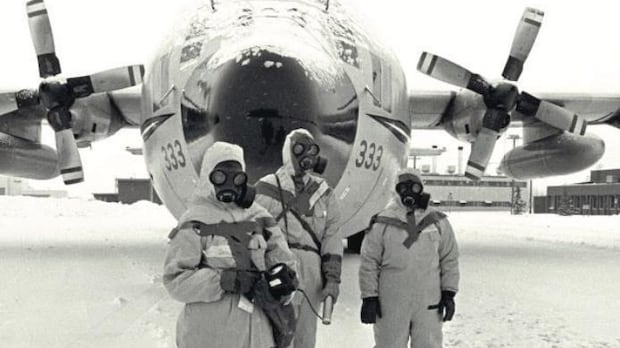
A super interesting but depressing podcast about Kosmos 954 here: https://www.cbc.ca/arts/operation-morning-light-podcast-soviet-satellite-exploded-traditional-dene-land-1.6650994

In 1978, a Soviet satellite exploded over traditional Dené land. Its effects are still felt today | CBC Arts

In the new podcast Operation Morning Light, writer Michael LaPointe and broadcaster Dëneze Nakehk'o dive into the little-known chapter of Canadian history.

CBC

@sundogplanets

I thought that 900km was already beyond the runaway threshold:

https://conference.sdo.esoc.esa.int/proceedings/sdc9/paper/305/SDC9-paper305.pdf