 Beep
BeepEmojis and Kaomojis
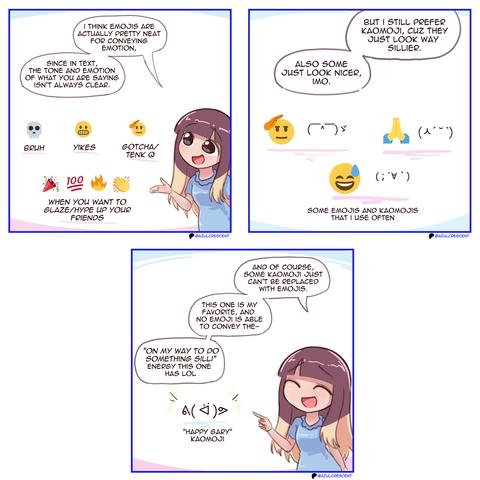
They look nice but their meanings aren’t that clear to me, compared to emojis.
Heh, the 😅 is the one emoji people have understood me the most wrong using. Then I go and copy-paste its description from the Internet.
Funfact if something gets confused frequently it means you are infact the one in the wrong.
Language has one goal to convey meaning. If you have to explain pictographs then fundamentally they have failed to do their job or you have failed in using them correctly.
Kaomoji render correctly across all platforms, whereas emojis looks different across different vendors.
There’s even been proper academic research done confirming the discrepancy.
Emoji Face Renderings: Exploring the Role Emoji Platform Differences have on Emotional Interpretation | Journal of Nonverbal Behavior | Springer Nature Link - link.springer.com/article/…/s10919-019-00330-1
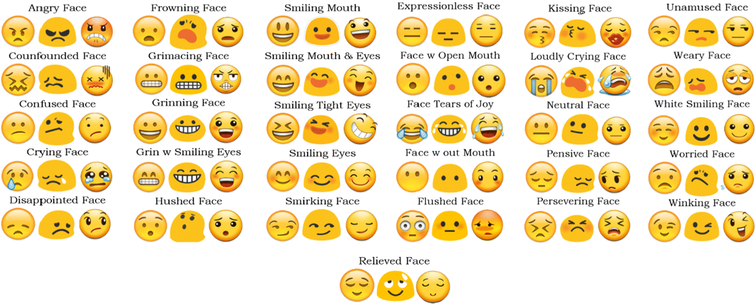
Emoji faces are ubiquitous and integrated into most people’s everyday (nonverbal) vernacular. Yet, we know little about how people interpret these characters in terms of their emotional content. Do people agree that an emoji face represents an individual emotion and that it is unique to a specific emotion? Are such representations similar across electronic platforms? The present study took a theoretical approach to address these questions by investigating shared agreement between emoji–emotion pairings across three electronic platforms (Apple, Android, and Samsung). Two hundred twenty-eight English-speaking adults completed an online survey that involved picking up to three emoji faces (presented from a common set from one of three platforms) for each of 10 emotions. They then indicated the strength of that relationship. We examined whether the intensities that participants gave to emoji–emotion pairings were specific and consistent across platforms. Our results showed limited shared agreement for the majority of emoji–emotion pairings, and significant variation as to which emotion category a “comparable” emoji belonged depending upon the viewed platform. We highlight the need for future emoji perception research to examine how different platform renderings of the same emoji might lead to miscommunication and interpretation discrepancies.
 Damaskox
 Holytimes
 UltraGiGaGigantic
 w3dd1e
 Funwayguy