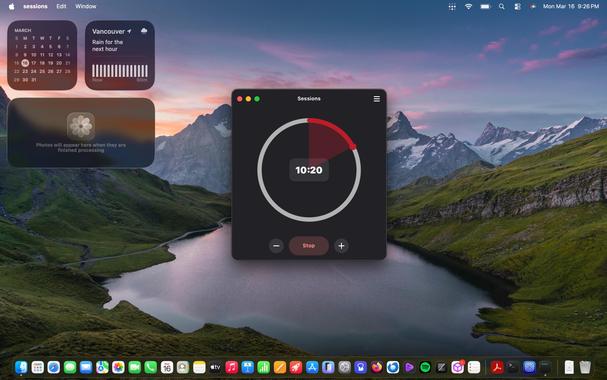
Kind of neat how well #GNOME apps fit in on macOS :) Since @nila added support for macOS to #puregotk in https://codeberg.org/puregotk/puregotk/pulls/43 this week I thought I’d give it a shot on my new MacBook Neo - and it works really well. Cross-compilation from Linux to macOS was super easy thanks to purego, no cross-compiler needed, just `GOOS=darwin GOARCH=arm64`. Plus, discovered that macOS’s arm64 library paths are different!
@nila https://gist.github.com/pojntfx/bc688a887a940e3e458684df62058843

Little hacky packaging script for all of this so far - allows you to build a .dmg for a puregotk #Go #GTK app, all from Linux, code signing included. `go-gettext` still needs a way to specify where to load the `gettext` dylib from when it's not available in the default location, so I stubbed that out, but no other code changes necessary :)

Cross-Compile a puregotk app from Linux to macOS and run it via SSH

Cross-Compile a puregotk app from Linux to macOS and run it via SSH - main-binary.sh

Gist
@nila I doubt I'll be putting much work into the macOS and Windows parts here - for this to actually be useful as in it being a viable way to publish GTK apps to non-Linux platforms while still building on Linux - we'd need a proper auto-updater and Windows support as well, and Flatpak is just too comfortable. I put a bunch of work into this for https://github.com/pojntfx/hydrapp a while back, including a way to auto-update the signed DMGs - maybe some time in the future?
@nila We can run the XCode command line tools and GTK via MacPorts & Darling on Linux running in Docker, and install gcc and GTK via MSYS2 in Wine running in Docker too. Not really puregotk-specific, but would be neat to have a "Flatpak manifest for building GTK apps on non-Linux OSes"-kind of thing some day.

@pojntfx @nila Pixi is a pretty good fit for "cross platform manifests"!

https://prefix.dev

For example, the Pixi manifest for Shortwave, which both works on macOS and Windows (and Linux):

https://gitlab.gnome.org/World/Shortwave/-/blob/pixi/pixi.toml

(WIP - not merged yet)

prefix.dev – solving software package management

The software package management platform for Python, C++, R, Rust and more

prefix.dev
@haeckerfelix @nila Oh hell yeah, that seems like exactly what I'm looking for, thank you for sharing! At first glance it seems mostly for packages, is there a way for me to publish a self-updating .dmg/.msi with this as well? The idea is that on Linux you'd get a nice Flatpak, and then on the proprietary platforms you get a self-updating package :)

@pojntfx @nila the most easiest / straight-forward way would be to publish the app to conda-forge, this way you don't have to deal with self-updates. It's comparable with Flathub, but cross platform.

The Pixi manifest describes the environment which you can use for development (cross platform), for the actual packaging you use a separate recipe file, which describes the needed dependencies + commands to build the app.

For example (WIP)
https://github.com/conda-forge/staged-recipes/pull/32284

Add shortwave recipe by haecker-felix · Pull Request #32284 · conda-forge/staged-recipes

Checklist Title of this PR is meaningful: e.g. "Adding my_nifty_package", not "updated meta.yaml". License file is packaged (see here for an example). Source is from officia...

GitHub
@haeckerfelix @nila Hmm, that makes sense, but won’t that require the user to install Conda? I’m fine with that in the case of Flatpak since it’s pre-installed, but I feel like non-technical people won’t understand how to install a package manager just to install the app :)

@pojntfx @nila yep, that's something for which there isn't a perfect solution at the moment.

There are two options:
1) Make a "wrapper installer", which installs Pixi on the machine, and then in a second step downloads and installs the actual app from conda-forge. This way you don't have to take care of the update mechanism.

@pojntfx @nila

2) Wrap the Conda package and all of the dependencies in some MSIX / macOS app bundle. This way the user doesn't need some additional package manager, but you have to deal with updates (unless you publish it in MS Store / AppStore).

Oh, and you don't need Conda (the tool), Pixi can be used as global package manager, just like homebrew or winget (but is using the same Conda package format).

@haeckerfelix @nila Makes sense! I'll def. take a look. Publishing to anything other than Linux _and_ having working updates is madness