I'm *really* enjoying this free course in #computerscience... https://youtu.be/-J_xL4IGhJA?si=auVMzHOvXb9stN6B

Contrary to popular belief, there is a lot of knowledge from the ancient era of the 80s that is still completely relevant. As an added bonus, you get cheesy 8-bit music intros and awesome bitmap-graphics in the introductions and breaks.
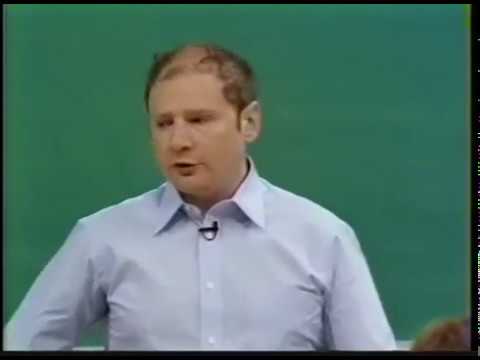

Lecture 1A: Overview and Introduction to Lisp

YouTube
@kf no clue why but everything i read or listen to about #lisp is still so relevant and interesting to read / listen to. I guess the fact that the language was a higher level of abstraction made it possible for people to think about more general stuff not the technical part itself even architecture isn't that much of a deal. Thats what makes it fascinating for me.
@m3tti I completely agree. I am also amazed by the fact that it's such a usable language as well as a glorious abstraction machine. I am currently writing all my music in #commonlisp and don't see myself switching to anything else any time soon. I still have to use C++ for sensors and graphics programming, but I'm hoping that I will be able to find ways around that as well in the future.

@kf

You write all your music in lisp? That's amazing! Do you have examples? I'd like to try it ...

@m3tti

@flavigula @m3tti I'm using cl-collider, which is a common lisp client for supercollider.... You can check out my (admittedly idiosyncratic) setup here: https://codeberg.org/kflak/kf
kf

kf

Codeberg.org

@kf

Thank you! I shall play with it! I've always loved lisp (and scheme and clojure) but haven't had the opportunity to do much programming with it for over a decade.

@m3tti

@flavigula @m3tti Cool! You definitely want to look into the cl-patterns library as well :-) Here's an example of how to use that for a slowed-down dubsteppish thing that's no longer dubstep... https://codeberg.org/kflak/mm-music/src/branch/main/dubstep.lisp
mm-music/dubstep.lisp at main

mm-music

Codeberg.org