Poudlardo
Leanstral: Open-source agent for trustworthy coding and formal proof engineering
Lean 4 paper (2021): https://dl.acm.org/doi/10.1007/978-3-030-79876-5_37
Leanstral: Open-source agent for trustworthy coding and formal proof engineering
Lean 4 paper (2021): https://dl.acm.org/doi/10.1007/978-3-030-79876-5_37
Curious if anyone else had the same reaction as me
This model is specifically trained on this task and significantly[1] underperforms opus.
Opus costs about 6x more.
Which seems... totally worth it based on the task at hand.
[1]: based on the total spread of tested models
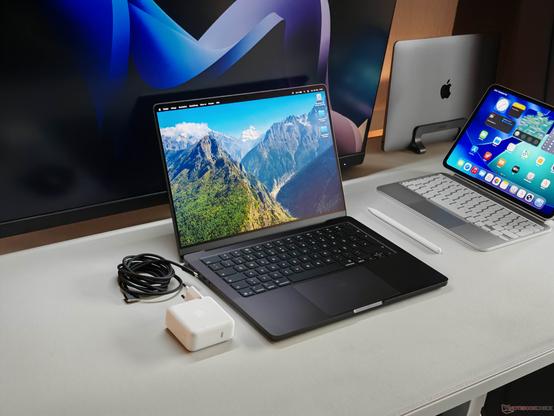
Yeah my bad, it requires an expensive MacBook.
I think it would still be fine for the legs and on battery for relatively short loads: https://www.notebookcheck.net/Apple-MacBook-Pro-M5-2025-revi...
But 40 degrees and 30W of heat is a bit more than comfortable if you run the agent continuously.
Is it though?
Most people I know that use agents for building software and tried to switch to local development, every single time they switch back to Claude/codex.
It's just not worth it. The models are that much better and continue to get released / improve.
And it's much cheaper unless you're doing like 24/7 stuff.
Even on the $200/m plan, that's cheaper than buying a $3k dgx or $5k m4 max with enough ram.
Not to mention you can no longer use your laptop as a laptop as the power draw drains it - you'd need to host separately and connect
A single DGX Spark can service a whole department of mathematicians (or programmers), and you can cluster up to 4 of them them to fit very large models like GLM-5 and quants of Kimi K2.5. This is nearing frontier-level model size.
I understand the value proposition of the frontier cloud models, but we're not as far off from self-hosting as you think, and it's becoming more viable for domain-specific models.