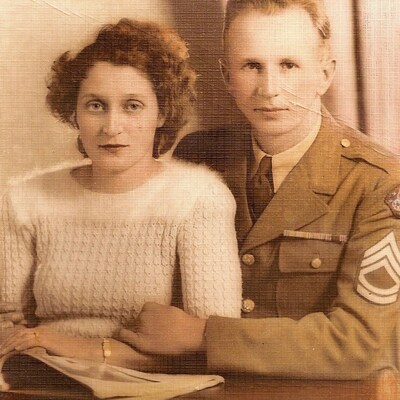
 Son of Sandor
Feb 6, 1950 TIME The decision as to whether the US should make a hydrogen bomb, said Harry Truman, is mine and nobody else’s. But there were a lot of people looking over his shoulder, and they seemed remarkably in agreement on how he should play his hand: they wanted the H-bomb built. https://time.com/archive/6614114/the-atom-the-decision-l/
Feb 13, 1950 TIME Long before the discovery of uranium fission they had known that familiar, plentiful hydrogen could make prime nuclear fuel. The sun, in sober fact, is a kind of hydrogen bomb that generates its life-giving energy by “fusing” hydrogen into helium. Man’s new bombs will not use exactly the same reactions, but they will use similar ones yielding the same end product. When the first of them explodes, a little bit of the searing sun will have hit the earth. https://time.com/archive/6614234/science-a-touch-of-sun/
Feb 13, 1950 TIME For several years Britons have been looking down their noses at what they called “American spy hysteria.” Last week, when one of their top atomic scientists was arrested as a Russian spy, the superior British stare turned slightly glassy. Dr. Klaus Fuchs, once a trusted top-level worker at the US Atomic Laboratory at Los Alamos, New Mexico., had been detected, not by famed British Intelligence or Scotland Yard, but by the FBI. https://time.com/archive/6614213/espionage-shock/
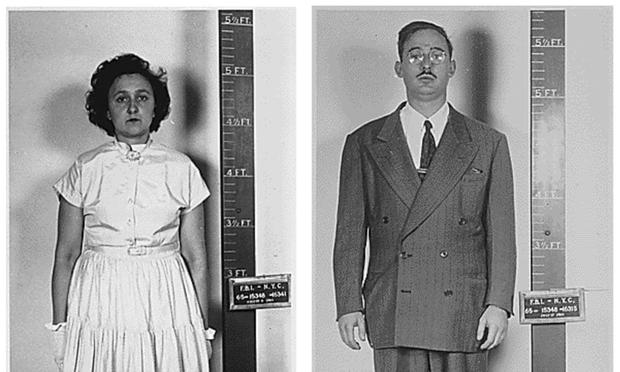
Mar 13, 1951 #ColdWar NYT Atom Bomb Secrets Described in Court. David Greenglass wove a verbal net that encompassed his wife, Ruth, his sister, Ethel Greenglass Rosenberg, and her husband, Julius Rosenberg. The Rosenbergs were indicted with Greenglass while his wife is charged as a coconspirator but not as a codefendant.
https://www.nytimes.com/1951/03/13/archives/atom-bomb-secret-described-in-court-spy-trial-witness.html
https://www.nytimes.com/1951/03/13/archives/atom-bomb-secret-described-in-court-spy-trial-witness.html
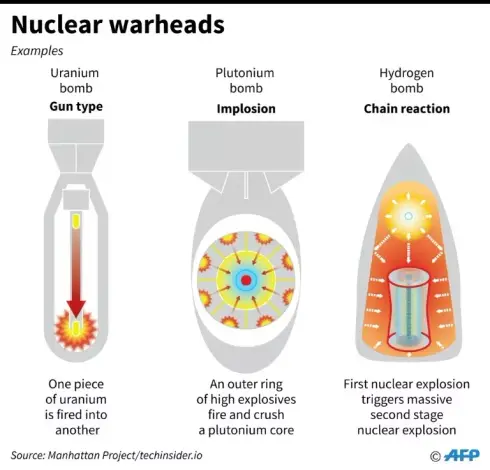
Mar 13, 1951 #ColdWar NYT "Implosion," the opposite of "explosion," became a new word for most of the public yesterday when it was used in testimony at the Federal spy trial. As defined by Webster's New International Dictionary it means: "A bursting inward; contrasted with explosion." However, as used in court it had a far more powerful meaning.
https://www.nytimes.com/1951/03/13/archives/new-word-at-spy-trial-heres-what-it-means.html
https://www.nytimes.com/1951/03/13/archives/new-word-at-spy-trial-heres-what-it-means.html
Mar 14, 1951 #ColdWar NYT Accounts of an underground spy escape route using four foreign countries, and of the ease with which supposedly airtight security regulations at the Los Alamos atom bomb project were penetrated, constituted the highlights David Greenglass, former Army technical sergeant.
Greenglass testified that he had been free to wander around any- where in the "tech area" at Los Alamos, a super-secret part of the project. As one of the 2,000 sol- diers at the project, he said, he got information from scientists and others, which he gave to Harry Gold and Julius Rosenberg for transmission to Russia.
https://www.nytimes.com/1951/03/14/archives/atom-bomb-spying-described-as-easy-witness-at-trial-of-3-tells-of.html

ATOM BOMB SPYING DESCRIBED AS EASY; Witness at Trial of 3 Tells of Getting Los Alamos Secrets and of Weird Flight Plans ATOM BOMB SPYING DESCRIBED AS EASY
Greenglass cross-examined on security laxity at Los Alamos; testifies on Rosenberg instructions, after Fuchs arrest, for flight from US, using USSR embassies in Mex, Switzerland, Sweden and Czech; on money recd from Rosenberg for purpose after Gold arrest; on $4,000 given to O J Rogge, atty; defense tries to show Greenglass betrays sister to save wife; Bloch clashes with Kaufman
Mar 15, 1951 #ColdWar In June, 1944, she said, Harry Gold came to the Greenglass home at 209 North High Street, Albuquerque, N. M., to take spy data from David back to Rosenberg. She said Gold identified himself through a cut-out portion of a Jello box she had last seen "in Julius Rosenberg's hand" in New York seven months earlier.
https://www.nytimes.com/1951/03/15/archives/greenglass-wife-backs-his-testimony-on-theft-of-atom-bomb-secrets.html
https://www.nytimes.com/1951/03/15/archives/greenglass-wife-backs-his-testimony-on-theft-of-atom-bomb-secrets.html

Greenglass' Wife Backs His Testimony on Theft of Atom Bomb Secrets; WITNESS AT SPY TRIAL
Mrs Greenglass testifies, corroborating husband's testimony on Rosenbergs approach to her; on funds recd; on efforts to escape after Gold arrest; defense tries to prove Greenglass motive was loss of money in business venture with Rosenberg
#ColdWar A Jell-O box was used in convicting Julius and Ethel Rosenberg. David Greenglass said that Julius gave it to him as a “recognition symbol,” a way to confirm his identity when he passed atomic secrets to another member of the spy ring.
https://www.spymuseum.org/exhibition-experiences/about-the-collection/collection-highlights/jell-0-box/
https://www.spymuseum.org/exhibition-experiences/about-the-collection/collection-highlights/jell-0-box/
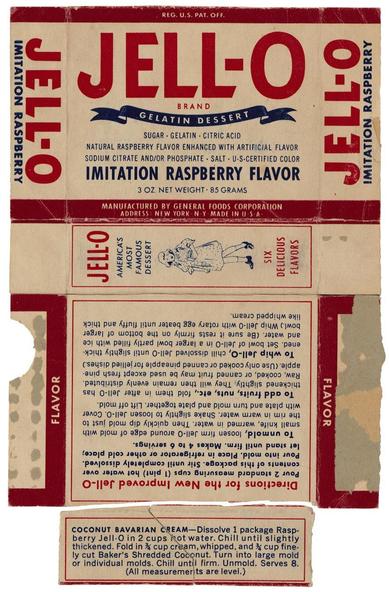
Mar 16, 1951 NYT By an ironic quirk of Gold's testimony, the cut-out portion of a Jello box became the first tangible bit of evidence to connect the Rosenbergs, the Greenglasses, Gold and Yacovlev. Earlier testimony had described how Julius Rosenberg cut out two matching pieces as identification for Greenglass and Gold.
https://www.nytimes.com/1951/03/16/archives/admitted-spy-gold-is-start-us-witness-details-aid-to-russia-and-his.html
https://www.nytimes.com/1951/03/16/archives/admitted-spy-gold-is-start-us-witness-details-aid-to-russia-and-his.html

Mar 23, 1951 #ColdWar NYT Julius Rosenberg, charged by the Federal Government with the capital crime of wartime atomic espionage for the Soviet Union, flatly refused at his trial yesterday to say whether he had ever been a member of the Communist party.
Rosenberg said, “I am in favor, heartily in favor, of our Constitution and Bill of Rights and I owe my allegiance to my country at all times. I will fight for this country if it were engaged in a war with any other country."
https://www.nytimes.com/1951/03/23/archives/rosenberg-says-he-is-true-to-us-but-wont-tell-spy-jury-if-he-is-red.html

Rosenberg Says He Is True to U.S. But Won't Tell Spy Jury if He Is Red; ROSENBERG INSISTS HE IS LOYAL TO U.S.
Rosenberg refuses to testify on Communist ties and on Perl; acknowledges membership in other orgns; professes allegiance to US; questioned on dismissal as Army Signal Corps civilian employs