 Glyph
GlyphMacbook Neo Hot Take™, take 2. Earlier I was annoyed at tech reviewers who should *really* know better giving a *really* myopic assessment of its gaming potential. Now I'm seeing another bad take on Fedi, which is "all you Apple shills love this stupid thing, but a cheap Linux laptop would work better, don't buy it". I am much more sympathetic to this but it appears to be missing what is interesting about this device and why people are talking about it at all.
What is interesting about the device is not that you *should* buy it—the whole value proposition is that it is a very cheap, but also kinda bad, MacBook—it's that people *will* buy it. A lot. It fills a market gap. The only products that this is positioned against are Chromebooks and iPads; cheap refurb Linux machines are not in the same product category for most potential buyers, and I think the fact that Linux fans do not understand the different categories are endemic to why Linux struggles.
Potential customers for this fall into a few categories, including:
1. Parents who don't know a lot about tech, but whose kids need "a laptop" for school.
2. Kids & young adults who want a macbook to run something like GarageBand but have a very limited budget *and* also don't otherwise know much about tech.
3. Schools.
4. School-like programs, like software dev clubs & summer camps.
These customer types need a low price, but they also need A LOT of *support*. The support is the product here.
Out of all of these I have the most experience with category 4. I have set up labs full of Linux computers on many occasions. I've also done the same for macs. I won't say that macs are universally superior but there are TONS of things about imaging, configuring, provisioning, and authenticating macs that are vastly superior to Linux. If it's to teach a topic that isn't programming or sysadmin, like say graphic design, macOS has huge, huge advantages for legibility to the instructor.
Yes, you could personally get a more powerful computer by getting a refurb 16GB M1 MacBook Air somewhere by bargain hunting. But you will need to hunt; right now on the official refurb store the cheapest MacBook Air is $929. If you're shopping on eBay, now you've got a machine with a ton of wear cycles on the SSD, and dubious amounts of damage.
If you, personally, have the time & energy for that, it *IS* a better choice.
But if you're trying to source a 50-machine bulk order for a CS extracurricular program, with a uniform hardware profile so that students have a consistent experience, then no, you cannot reliably do that by going around to garage sales and rummaging through bargain bins. You cannot afford to repair all of these units (which WILL have a failure rate several times the average for a new machine) yourself. You can't even afford to troubleshoot them and manage the RMA process.
This problem is magnified for institutional buyers, but for folks without a ton of tech experience it's the same. The 1-year manufacturer warranty for new-in-store models is a big deal. The implicit promise of several years of software support is really important. Apple stores run free trainings you can go to. They have a business support program where you can talk to someone about fleet management problems for free. They have 24/7 chat support on the web if you have software issues.
If you think that you can compete with this with a bespoke Linux installation on a few old ThinkPads, you need to figure out a way to provide *all that other stuff* to the people who will be using them. And I wish you would! If you ran a charity campaign to raise money to scale up such an effort for a few local school districts in a particular region, I'd probably donate to it!
But if you have people with zero tech experience in your life, who have a kid who doesn't really know what kind of computer they need… I'm not going to tell you that you should never recommend Linux to such a person. But at the *very least* you cannot be recommending that they go bargain hunting for mystery-meat laptops that will "probably work with Linux". You need to find a company like System76 or Framework that will actually help them out if the dang thing breaks.
Telling someone to get an old Linux machine when they don't know anything about Linux yet, and then sending them off to college only for them to fail out of their first literature seminar because when they needed to submit their homework their wifi suddenly stopped working, and that "shouldn't be a big deal because you can get a more reliable driver on github" or some other kind of "fuck you" like that, you're turning other people into grist for your ideological project.
If you really want to help them save money, step zero is you have to volunteer to be 24/7 on-call tech support, be responsible for the decision, and help them out every step of the way. I have done this! It's a TON of work! It can be very rewarding when you help people build the relevant skills to use a computer like that. Personally, I have a kid now and I could not handle it today myself, but if you can do it you probably *should*, but it's important that you recognize you *need to*.
So, back to the MacBook Neo and why it is interesting.
If you're reading this, you probably shouldn't buy it. But you should be aware that so many people *are* going to buy it, that it's going to set a consistent new minimum standard for software. For one thing, lots of apps are going to want to start targeting "fits into a MacBook Neo's memory envelope", which is to say, 8GB minus macOS overhead. Cheap hardware exists now, but not enough of it deployed consistently enough for app devs to care.
It's also going to give a TON more kids access to things like "a terminal". Kids will be encountering MacBook Neos in places where they've previously seen Chromebooks or iPads, devices which either cannot be used to write software at all, or implicitly have locks that most people will not bother to remove. This will not be 100% consistent (some schools will wall off MacBook Neo dev tools for "security", I'm sure) but it will still be a big enough population that it will be *interesting*.
 Taggart
@glyph Hey I agree and have run school fleets of Macs and Chromebooks. I also once converted a school to Ubuntu. AMA.
@mttaggart that is awesome to hear! I definitely have questions, beginning with: were you converting existing hardware with the ubuntu conversion or sourcing something new?
@glyph The Ubuntu conversion was a budgetary decision at the end of a MacBook Pro lifecycle. The reality was sourcing PC laptops but using Ubuntu for a more familiar interface/working with similar services made more sense than going all-in on Windows. It was an opportunity to see if it could work, and it mostly did, except at the time (2013), there were serious issues with Broadcom WiFi drivers that necessitated a lot of handholding.
@glyph The school went to Chromebooks after I left, and I've done Chromebooks elsewhere as well. In both cases, you still needed smaller fleets of high-powered machines to do anything interesting. Even with the Linux VM on Chromebooks, you still wanted more juice to do the fun stuff.
@mttaggart how were the higher-powered machines provisioned and allocated? were they just in specific classrooms or did students get to keep them based on their courseload or something?
@glyph In both cases, something like these:
They were provisioned with DeployStudio (RIP), and later Munki with a ton of custom packages. Student logins were provisioned as needed. No Active Directory or anything.
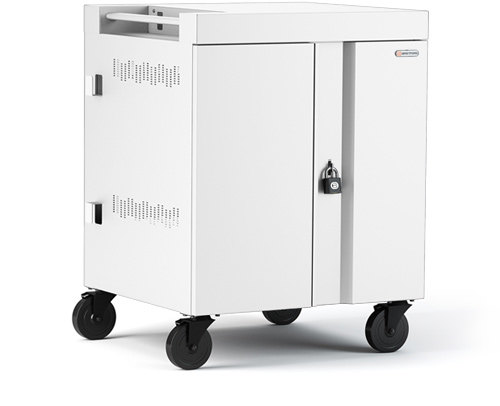
@mttaggart ah okay so from the cart I am inferring these were all classroom machines, not student-assigned
@glyph They were mobile and went to the classrooms that needed them, yeah. They were reserved using a Google Calendar.
@mttaggart Would you recommend a similar experiment to a school today? not specifically ubuntu, but a “desktop linux” (GNOME or KDE, I guess) type environment, and if so, how would you go about it?
@glyph It very depends. You need a lot of things in place to make this work. First and foremost, a faculty willing to give it a go. If the machines can't easily do what students and teachers need, that's the ballgame. Forget your principles for a second. If the damned things can't print or run the necessary apps, you're donezo with the experiment (and probably looking for a new job).
But if there is an appetite, then you want to lean into it as much as possible. I never got to go as far as Charlie Reisinger did, but that was always the goal.
But yeah everything must proceed first from curriculum. What the students need should drive tech decisions, not whatever flights of fancy the IT department might have. And that gets complicated, because you'll have some folks claim that proprietary applications are necessary for "preparation." And of course there are some testing regimes that require specific OSes to function. Chromebooks have obviated that somewhat, but it's still true to some degree.
But if all that comes together, I would first explore identity management, followed by provisioning by Ansible or Puppet, followed by Wireguard-enabled networking for always-available resources and support.
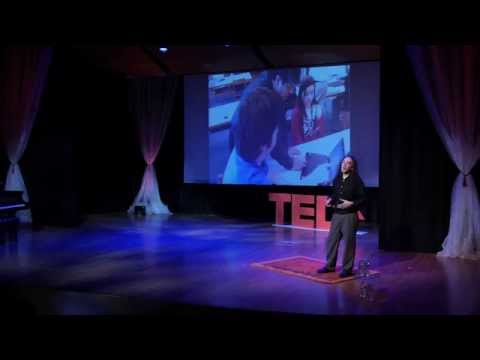
Enabling students in a digital age: Charlie Reisinger at TEDxLancaster
@mttaggart listening to this talk is definitely bittersweet, it is Extremely 2014. My biggest wonder right now is which parts of this have gotten harder, and if any have gotten easier, in the intervening decade.
@mttaggart like… dang, yeah, I remember being excited about LibreOffice. Would love to recapture that energy.
@glyph There's a potential future after the AI bubble pop that leads to some RETVRN action and a focus on fundamentals. It's by no means guaranteed.
I'm kind of thinking of my role as keeping the fires of knowledge lit while we endure an age in which people would rather not know how things work.
 The Orange Theme
@mttaggart @glyph Have you read "A Canticle for Lebowitz"? Someone on fedi recommended it to me a few months ago. I have a copy, but I haven't read it yet. (If you aren't familiar, it follows a post-apocalyptic monastic order dedicated to safeguarding and propagating humanity's scientific knowledge. It feels... prescient.)
@theorangetheme @glyph It was very popular in my Catholic all boys prep school.
I tend to reach for "Foundation" for this metaphor, but I getcha.
@mttaggart @theorangetheme Yeah I would describe it as "pretty good, and interesting" and yeah I think Foundation works better as both a metaphor and literature. It's a pity nobody ever adapted it for TV
@mttaggart @theorangetheme like I wouldn't tell you not to read it, it's competent, but "A Canticle for Lebowitz" is at the top end of the genre of "the premise outpaces the execution" :)
@glyph @mttaggart So temper my expectations? 😅
@theorangetheme @mttaggart Like I said, read it, it's good. But don't expect to be blown away :)