 MynameisAllen
Who could have seen this coming
When I first learned about NFTs I figured I was simply too stupid to understand it. There was simply no way it was as dumb as it sounded.
Turns out I was right, it was way, way dumber than it sounded.
I’ve sold some photos as NFTs 🤷♀️, and I’ve bought some art from well known people like sabet and ame72.
It’s not as ridiculous as people make it sound. It’s just these headlines of the most ridiculous examples sets people’s perception of the tech. It’s really not much different than patreon or something, except the creator doesn’t get totally screwed.
I’ve sold some photos as NFTs 🤷♀️, and I’ve bought some art from well known people like sabet and ame72.
You did not sell photos or buy art as NFTs. You might have sold photos and bought art and also received pointers to the receipts as NFTs.
Sometimes I need a blank piece of paper so I hit the START button on my copier without something in the tray.
But what I get is a copy of a blank piece of paper. It looks blank, but it’s just a copy
NFT-haters love to point out that the thing you ‘own’ is the blockchain token, not the actual art asset itself. I always find this argument silly since:
the token is the whole point. The NFT revolution (or mania, if you want to call it that) is because the tokens are the enabling technology. Where the art itself actually lives is just secondary. Nobody is getting excited about the JPEGs themselves, not really (let’s be real, most of the “art” is dogshit). People got excited about what the tokens enabled. Just one example, I can send all owners of my photos (the tokens) additional art as a bonus thank you. I know exactly who has my tokens. I can also gate premium features (similar to Patreon) to token holders. This functionality is how Ticketmaster is exploring NFTs
If I buy my digital wedding photos, or something on DeviantArt, or wherever, and if I lose that asset (computer wiped, whatever), I can just go and redownload it. It’s a copy. Of course it is. We live in a digital age. I don’t really understand why NFT-haters rave all the time about owning copies of the assets. Of course it’s a copy.
Isn’t that like owning an original photo?
Anybody who’s ever used the technology will understand this immediately. Anybody who has actually bought/used NFTs understand how silly these ‘well technically…’ arguments are.
What a good argument would be would be the distinct between ownership and possession:
ownership = rights (human law, rulings/opinions, enforced top down. i.e. titles)
possession = control (physics laws, math, enforced bottom up i.e. car keys)
crypto IMHO was never about the former. “Ownership” will always live in the layer of social agreement. What crypto gives is “possession”: control above the TOS and paper rights that web 2 gave us. The first time the user can possess the keys to his stuff on a database that’s shared with other people (and not just the illusion of). This distinction is the reason why even though you do “own” your digital song/videos/game loot on amazon or PS5 via their TOS, you cannot trade it, swap it with a friend, resell it… The key never left your digital landlord, they just let you in to play. You had the papers for your car, but not the key. You never possessed what you owned.
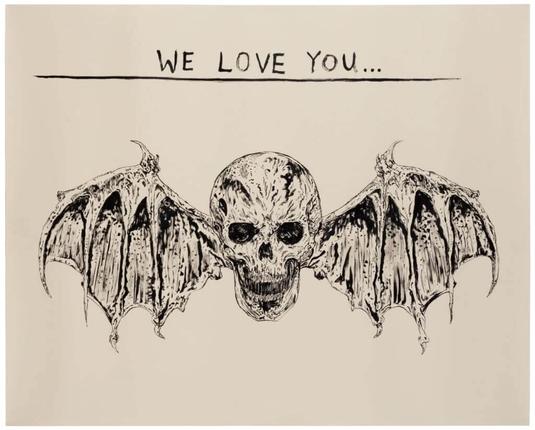
Photo: Avenged Sevenfold’s token-gated ticket sale was the first powered by Ticketmaster and offered their Deathbat NFT holders first access to tickets in New
In your opinion, how is that functionally different than when I sold photos on DeviantArt, and they got an email instead of a token? Are NFT-haters upset that art is being sold at all? Or are they upset about the delivery system?
bought art and also given out/received pointers to the receipts as NFTs.
I have NFTs with assets on chain as well, so in fact those ones aren’t just “pointers”.
Are NFT-haters upset that art is being sold at all? Or are they upset about the delivery system?
I don’t have a problem with selling art. I don’t have a problem with people using NFTs if it really makes sense for them.
I do have a problem with people claiming NFTs will solve this or that problem and without fail, every single time when you ask for detail about how that is supposed to work and be better than established ways to solve the problem you get either more nebulous claims that don’t mean anything or some variation of “I don’t understand it, but it will somehow still work, just trust me bro”.
You did not say anything nebulous, someone else in this thread did. Sorry that got mixed up.
Also, looking at another one of your comments I guess I have to take back the part where I claimed “every single time, without fail” people would not deliver an actual explanation of their point.
Proves ownership that is much more difficult for scammers to steal.
How is it more difficult? A scam almost by definition makes the current owner perform some action to unwillingly give something away, why would it be harder for scammers to make victims perform actions that give away an NFT than any other electronic good?
You know how when you get scammed or defrauded there are systems in place to roll back the fraudulent transactions? By using NFTs (or anything else based on a blockchain) you throw away those systems and make it literally impossible to bring them back. For what gain exactly?
Banks and insurance companies can use them.
Why would they? It might maybe be slightly cheaper, because some infrastructure costs are externalized, but that does not come anywhere near being worth the headache of all your confidential customer data being public. Sure, they could anonymize it and have an internal infrastructure translating it back. That would negate the cost advantage and make the whole system more complex for no gain at all.
Reduces costs in proving ownership as well.
Please elaborate, because that it not anywhere near detailed enough to discuss it seriously.
why would it be harder for scammers to make victims perform actions that give away an NFT than any other electronic good?
Well, because there’s a very good chance the owner lost their 256-bit hash key somewhere in a move so, they still totally maybe own the thing. But definitely can’t give it away to a scammer! /s lol

Walmart Canada applied blockchain to solve a common logistics nightmare: payment disputes with its 70 third-party freight carriers. To solve the problem it built a blockchain network. The system has not only virtually eliminated the payments problem; it also has led to significant operational efficiencies. This article offers five lessons on how to create a blockchain network for improving business processes.
No there isn’t. There’s lots of ways you can shoehorn NFTs in, but it’s always a poor fit. People always try and claim that NFTs will solve some sort of problem that is already solved with existing technology.
There is no problem NFTs can solve that can’t also be implemented much more cheaply and effectively with an SQL database from the 90s.
 nexguy
 John
John SeeMarkFly