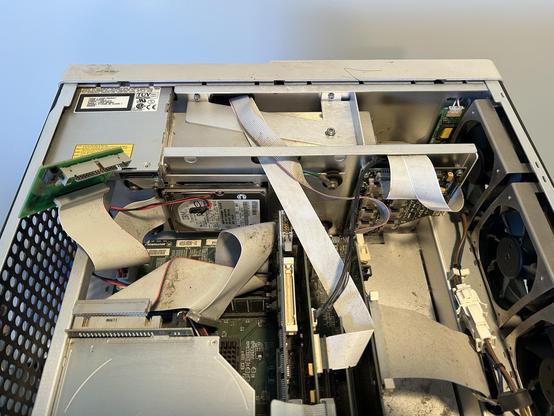
Scope update: one had a spinning HD but no BIOS boot screen and lots of beeps, the other has boot screen but no HD.

Trying to extract the HD, but the Agilent design dumbasses made it so that you need to disassemble pretty much the whole scope just to extract the HD…
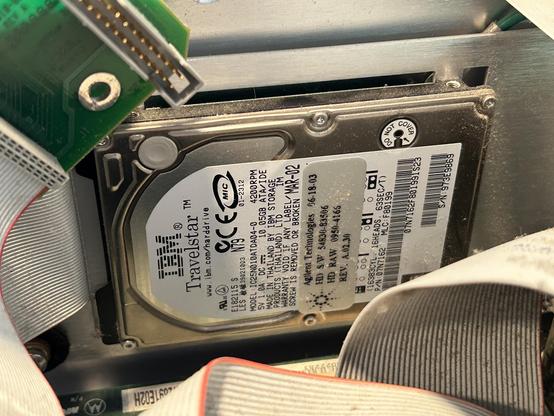
It’s an IBM TravelStar, close cousin to the IBM DeathStar and just as prone to catastrophic failure…
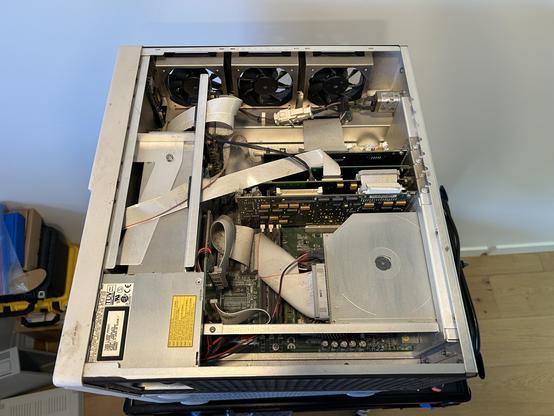
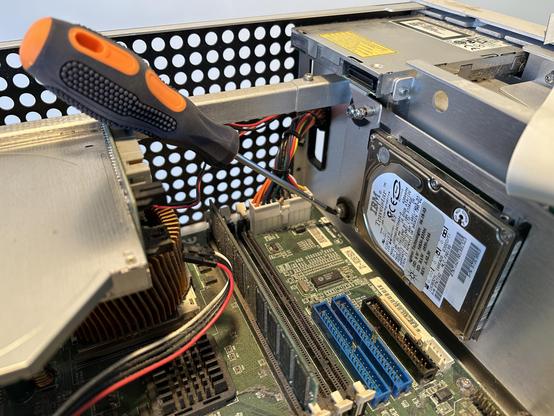
Most of the effort is because of this %%**^% screw.
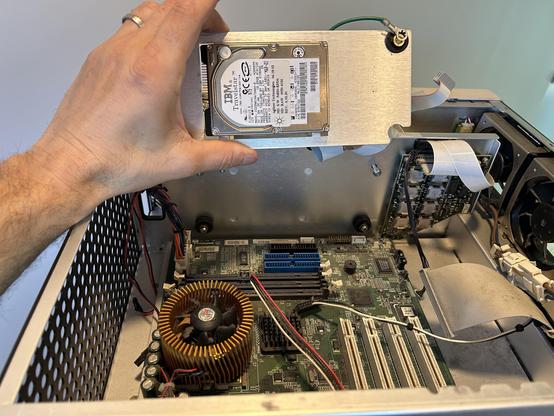
I’ll admit: Agilent tried hard to shield the HD from vibrations… It is mounted on a holding plate with rubber spacers.
HD liberation!
I’m 99% sure the drive is dead, but hoping for that 1%, so let’s connect to a IDE to USB adapter.
IT'S ALIVE!!!
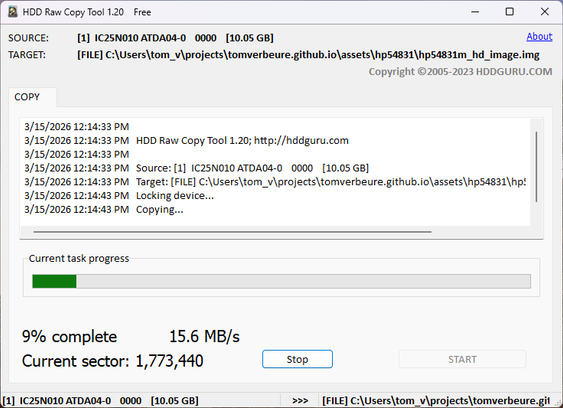
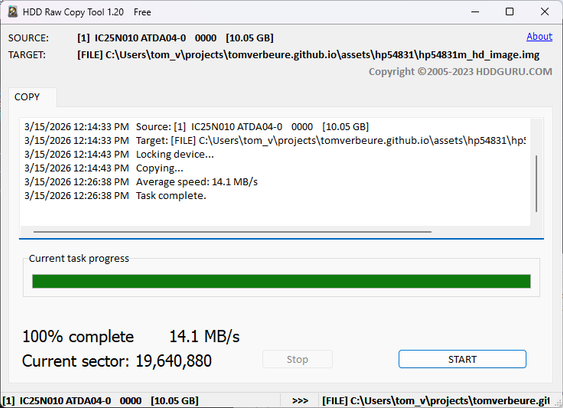
Full HD copy went smooth without any audible attempts to retry and no errors reported.
I also checked if there was any proprietary data left from the previous owner, but no. 🙂
Next step: trying to make this things boot. Replace bios battery. Connect VGA monitors. Anything to get some amount of life out of it beyond ominous beeps and a black screen...
Long beeps. No BIOS screen. Only RAM and alternate VGA card plugged in, but even with those unplugged it behaves the same. CPU fault?
I could try swapping the motherboard of the other scope…

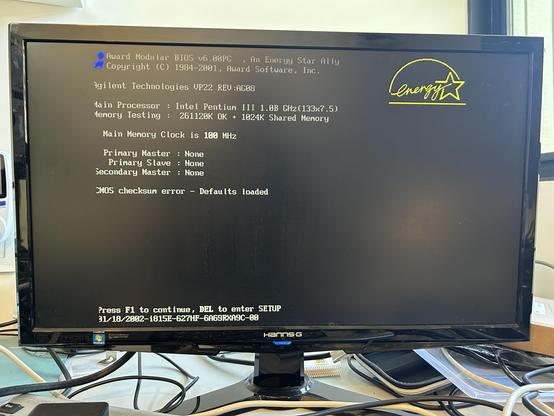
The BIOS screen is up!

All it took was remove the CPU from the socket… and put it back.

This is with a generic VGA card and HD disconnected. I can now start to put the removed components back.

@tom_verbeure It’s amazing that drive was ok! Definitely makes the restoration more fun than tracking down hard to find software
@craigjb Yes, it’s not supposed to be this easy. :-)
I hope that I can reuse the same dive image on the second scope, but some of the HW might be different and the second one is a later version.