Youngest asks me if people can be deaf and blind, I was like "Yes they can. Can you imagine not being able to see or hear? They have a special sign language that's by touch."

I went looking for a video and found that in America at least, it was finger spelling until a 'pro-tactile' way of speaking ASL developed quite recently. Here Oscar says that it's "like going from dial up to broadband!":

https://youtu.be/9GrK3P15TYU

I wonder if a similar tactile variant has happened in other sign languages?
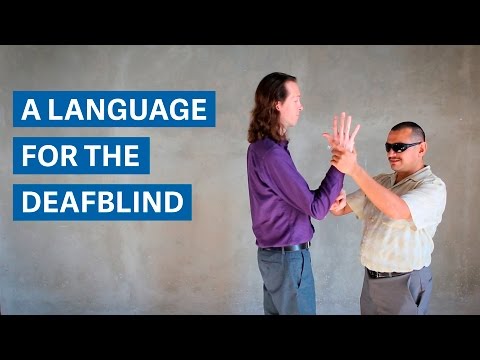
Pro-tactile ASL: A new language for the DeafBlind

YouTube

@sarajw

@adhdeanasl might have some more information for you. If he doesn't mind, of course...

@wendigo @adhdeanasl thank you!

I just went to find a German video about it, and it looks rather like it's a lot of the standard sign language, but the deafblind 'listener' is using their hands to follow those of the speaker.

@wendigo Tactile ASL is far more than fingerspelling into the hand. It’s fully ASL, with the DeafBlind person tracking hand-over-hand. There are modification to signs, of course, and the person signing to the DeafBlind person adds important environmental information such as who’s speaking, where people are in the room, etc. ProTactile (PT) is a new-ish form of conveying information via haptics - even more environmental info is shared - if the presenter is pacing, when the crowd is laughing, where questions are coming from, etc. ProTactile is a specific “brand” of haptic communication. @sarajw

@adhdeanasl makes a lot of sense. Why indeed wouldn't tactile signing also allow for the same bigger gestures that convey meaning much faster than spelling it all out.

Thank you for the extra detail!

@wendigo