 maplesaga
‘Empty pit of despair’: Job seeker describes struggle as Canada posts biggest job loss in decades

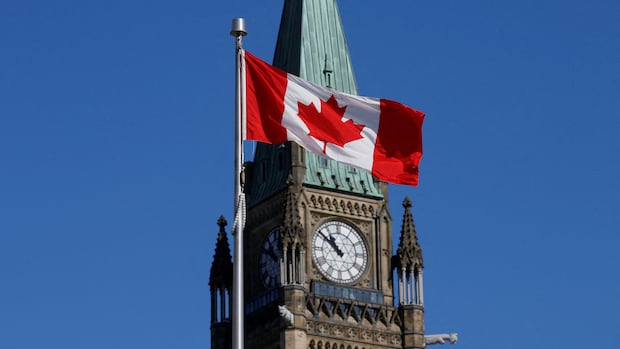
Ottawa to allow rural employers to increase proportion of temporary foreign workers | CBC News
Ottawa will allow rural employers to have a greater proportion of low-wage temporary foreign workers on their payroll on a time-limited basis, as part of new measures the federal government announced on Friday.
I do think immigration is the main cause of the unemployment crisis, mass immigration while the Bank of Canada raised interest rates was always going to cause mass unemployment.
During Covid they did stimulus and QE, which caused the 8% inflation. If you see the Phillips curve you’ll see that causes a labor shortage in the short term. This is a natural part of an economy, and wipes out the wealth inequality caused by asset appreciation via bargaining power for wages, if you rememeber the “quiet quitting” phenomenon a few years back.
The Federal government then did mass immigration, 1.4 million a year, tripling immigration over 3 years. They also allowed students to work 40 hours. This decreased labor pressure and lowered wage growth.
The Bank of Canada then raised interest rates to cool the job market. Now we have cooled wages, less need for workers, and an inevitable surplus of workers. All this was also done when we had a preexisting housing shortage, so rents and housing prices dramatically increased as well.
Sure bro the supply of workers has nothing to do with demand for labor or the rate of pay. Im sure that as soon as they get a.i. sorted they wont reserve course. You better wake up and start noticing.
It is entirely supply and demand for labor. We increased demand while rate hikes lowered demand by physically slowing money supply creation, what am I missing?
 Avid Amoeba
Nice theory you got there, shame it doesn’t bear out in practice. In normal labour conditions workers have no leverage over employers to demand higher wages because workers have to take any job available in order to avoid homelessness and hunger. Workers demand for jobs is inelastic. Only in labour shortage scenarios workers have leverage to demand higher wages. But even then industry consolidation counteracts that because large corporations not only have price setting market power in the consumer market but also in the labour market. This is why the only consistent way to create similar leverage for worker in the labour market is unionization. Wages have never grown significantly enough to chip away wealth inequality except in the presence of strong and wide unionization. This is the main reason why increased labour productivity decoupled from wage increases since the 70s and 80s, when union busting started picking up around the world.
Rapidly increasing labour supply can make wages worse but that’s not the main driver as there have been periods where wages have both been increasing with significant immigration and also others where wages were stagnant without significant immigration.
No I wouldn’t. I would say unionization is eroded through various union busting strategies as practiced as far back as the 19th century. The incentives to bust unions operate on individual firm level and do not require any other macro level phenomena to explain. Firms bust unions because unions increase wages and higher wages reduce profits.
Canadian government does PLENTY of union busting. Firms and government are completely aligned on this.
Government does everything it can to keep canadian wages low to attract business. Corporations are more likely to invest extract from Canada if the government of Canada undermines fair negotiations and writes back to work legislation every time and stomps all over its citizens’rights.
The AC union fought back and ignored back to work orders. They had huge support among Canadians. They were then quietly taken out back and shot by the Canadian government and its arbitration.
You won’t see me disagreeing with that. I’ve been following the AC, CP, CN strikes and I saw what you observed. I think it’s not even primarily for foreign investment, although that probably is a downstrean effect. I think it’s primarily for our own corporations’ owners benefit. They have significant lobbying power, and at least two of the major parties ideologically support firms over workers as many of them still believe in some form of trickle-down free-market economics. It’s bad. There’s been no positive change in direction towards organized labour from the Carney gov’t. I think they’re going to discover that their promises of higher wages would fall flat without strengthening org labour. Perhaps it’s a delayed tactic, an attempt to shore up the economy in these times before they let labour have its share, but that ignores that (sovereign) economic strength largely comes from robust domestic demand, which means higher wages. And I don’t believe it’s a delay tactic anyway. The simpler explanation is the more obvious one.
Perhaps increased job competition can motivate workers to unionise to defend wages and employment. On the other hand, a larger labour supply may make it easier for employers to replace uncooperative or striking workers, weakening bargaining power.
I personally see a large unemployment now as the Phillips curve inverted with high interest rates, and I now clearly see the wage suppression which eroded unions. But we can agree to disagree I guess.