 stux⚡️
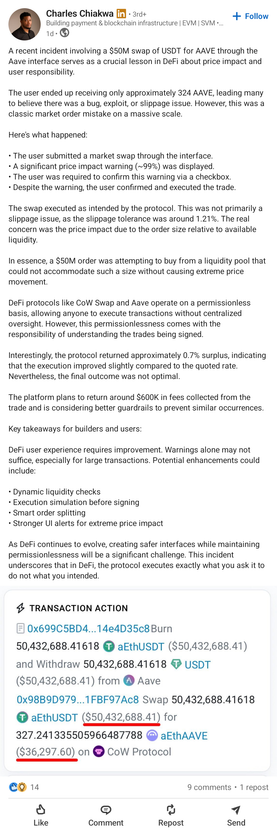
"I'll trade you my 50 million for 36K" 
#Cryptocurreny is so flawed lol, the transaction costs of this 50 mil was 600K😆
Someone swapped 50 mil for 36K basically
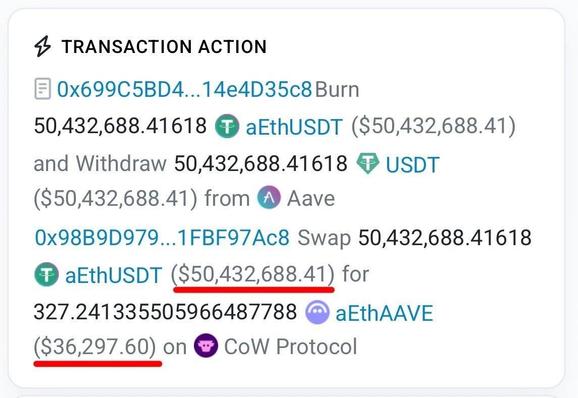
"I'll trade you my 50 million for 36K"
#Cryptocurreny is so flawed lol, the transaction costs of this 50 mil was 600K😆
Someone swapped 50 mil for 36K basically
@Cacotopos @stux it was a liquidity pool without enough of the AAVE token to swap to
more info here: https://www.linkedin.com/posts/charles-chiakwa-b1796816a_a-recent-incident-involving-a-50m-swap-of-share-7438228095385378816-XgPt
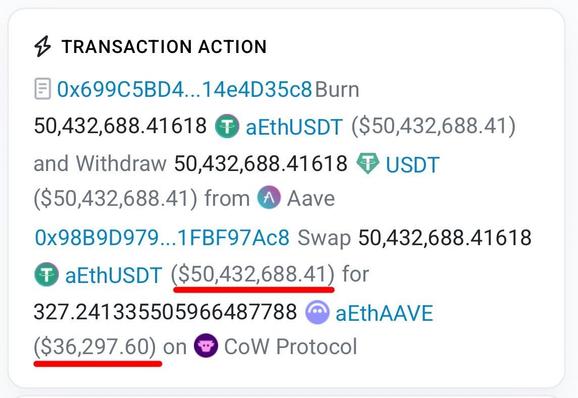
A recent incident involving a $50M swap of USDT for AAVE through the Aave interface serves as a crucial lesson in DeFi about price impact and user responsibility. The user ended up receiving only approximately 324 AAVE, leading many to believe there was a bug, exploit, or slippage issue. However, this was a classic market order mistake on a massive scale. Here's what happened: • The user submitted a market swap through the interface. • A significant price impact warning (~99%) was displayed. • The user was required to confirm this warning via a checkbox. • Despite the warning, the user confirmed and executed the trade. The swap executed as intended by the protocol. This was not primarily a slippage issue, as the slippage tolerance was around 1.21%. The real concern was the price impact due to the order size relative to available liquidity. In essence, a $50M order was attempting to buy from a liquidity pool that could not accommodate such a size without causing extreme price movement. DeFi protocols like CoW Swap and Aave operate on a permissionless basis, allowing anyone to execute transactions without centralized oversight. However, this permissionlessness comes with the responsibility of understanding the trades being signed. Interestingly, the protocol returned approximately 0.7% surplus, indicating that the execution improved slightly compared to the quoted rate. Nevertheless, the final outcome was not optimal. The platform plans to return around $600K in fees collected from the trade and is considering better guardrails to prevent similar occurrences. Key takeaways for builders and users: DeFi user experience requires improvement. Warnings alone may not suffice, especially for large transactions. Potential enhancements could include: • Dynamic liquidity checks • Execution simulation before signing • Smart order splitting • Stronger UI alerts for extreme price impact As DeFi continues to evolve, creating safer interfaces while maintaining permissionlessness will be a significant challenge. This incident underscores that in DeFi, the protocol executes exactly what you ask it to do not what you intended.
 Tom Dullemond
 Sean
Sean