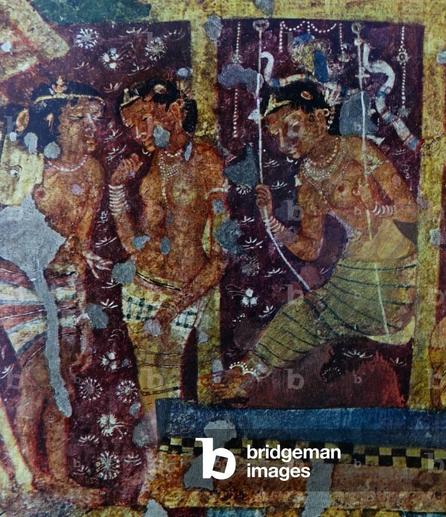
Ajanta, 5th century CE.

Three women.
A swing.
No gods. No sermons.

Just leisure. Just intimacy. Just civilisation at ease.

For decades we were told ancient India was grim, ascetic, oppressive.
Yet here — painted in mineral pigment on cave walls — are elite women in silk, pearls, conversation.

Look carefully.

The body is not hidden.
It is not shamed.
It is not policed.

It is adorned. Balanced. Composed.

The woman on the swing does not seek permission.
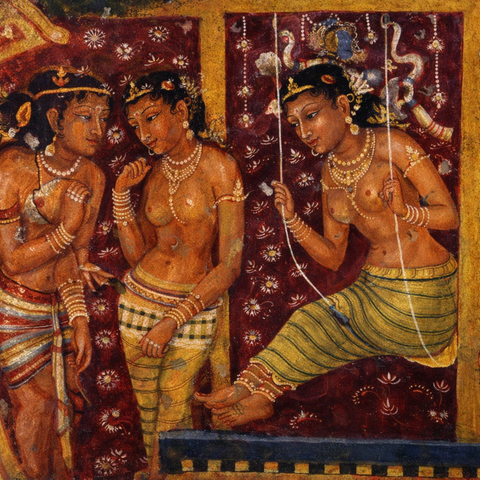
She occupies space. She commands it.

This is Vākāṭaka-era sophistication.
Court culture. Seasonal festivity. Śṛṅgāra as philosophy — not scandal.

Where is the “repressed society” narrative here?

No male gaze dominates the frame.
No moral anxiety distorts the body.
No apology.

Only ease.

The background is deep red — interior, refined, intimate.
Pearls glow against warm skin tones.
Line creates volume without violence.

Ajanta was not primitive ritual art.

It was psychological realism.
It was urban aesthetic theory in pigment form. 🎨

And ask yourself —

Why did colonial textbooks reduce this civilisation to superstition and widow-burning clichés?
Why were palace murals flattened into “religious cave art”?

Because leisure contradicts the poverty myth.
Because confident femininity contradicts the oppression trope.
Because evidence unsettles narrative.

These women are not marginal.
They are central.

A swing in a cave is not decoration.
It is proof of cultural surplus.

When a civilisation paints joy at monumental scale, it is not insecure.

It knows itself. 🌺

We were trained to see darkness.
The walls still glow.

Uncrop the mural.
Uncrop the truth. 🔥

#UncropTheTruth
#Decolonisation
Ai restoration applied.

Original as available internet