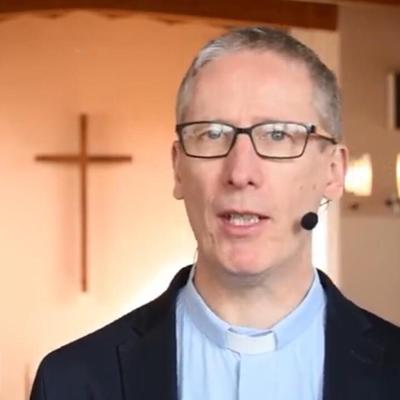
 Rev Peter W Nimmo
A faith for fools. Sermon for 29 January 2023: Epiphany 4 (Year RCL)
Texts: 1 Corinthians 1:18-31 and Matthew 5:1-12 (NRSV)
In the name of God, Father, Son and Holy Spirit, Amen.
One of the joys and privileges of ministry is being involved with local schools. Here in Cambuslang, Karen and I are members of chaplaincy teams in the three local nondenominational primary schools, and I have just joined the chaplaincy at Cathkin High School. We are really lucky to do all this work in association Ross Murray and the Cambuslang and Rutherglen Outreach Trust.
One of the aspects of that work are assemblies, when the whole school, or part of it, comes together to share news and a reflection. Not all school assemblies have a religious element- most of them are led by the teachers. However, the law in Scotland expects that there will often be a faith element in the programme of school assemblies. Chaplains are appointed by the head teacher, to work not just on assemblies, but often also in classrooms and in other ways. We are often asked to do assemblies to mark important times and seasons, or at difficult times, for example if there is a bereavement in the school. My experience has been that the contribution of chaplains is warmly welcomed by school staff.
I have learned to make sure I know a bit of what is going on in the school so that I can do something which is appropriate. And to always make sure that I’m on last, after the head teacher has made the announcement. Many years ago, I was chaplain to a primary school in Currie, a suburb of Edinburgh. It was situated in the same street as one of the other schools, separated only by a games field which they used for sports at different times. I went in one morning with a really very good retelling of the story of David and Goliath, and spoke about how God helped the small boy David to slay the frightening giant Goliath with simply a sling and a stone. Then the head teacher got up, and the first item on her agenda was to tell the children not to throw stones at the children in the other playground! It’s important for the chaplain to be relevant, and to know what’s going on in the school!
The religious aspect of school assemblies has to be thought through carefully nowadays, because many children come from families which have no connection to Christianity. Their parents may be indifferent, or even hostile, to the church. And there are also children whose families are of other faiths, such as Islam or Hinduism. Yet it is possible to respect people’s different beliefs, and also to speak of our own beliefs. My assemblies always refer to the Bible and the Christian tradition, and I often invite the children to join me in a prayer. But I cannot and do not assume that many of them will consider themselves Christian, or, indeed, that they will know much about the Christian tradition. Yet it is a privilege to offer the children a reflection on faith, and to speak of why my Christian faith seems important to me.
I expect that a school assembly in our multicultural age is quite different from what some of you will remember in your school days. I just used the word ‘multicultural’- a word which reflects the reality that Scotland is home to people of many different faiths and belief systems. Some people think multiculturalism is a new phenomenon. But the Corinthians- the people to whom St. Paul wrote his two famous letters- would have understood the concept.
Ruins of ancient Corinth. From https://www.corinth-museum.gr/en/archaeological-site/2,000 years ago, Corinth was a multicultural city. It had been founded as a Roman colony in Greece. It was a port on the Mediterranean, so it was a city of many languages, nationalities, and religions. It was home to, and constantly visited by sailors, merchants, slaves, soldiers, government officials and many others, from Europe, Asia and Africa. It was a long way from home for Paul, who was a Jew from Syria, but he had travelled there and founded the church in the city. And the new church reflected the diversity of local population- rich and poor, Jews and Gentiles, people from many different cultures and religious background, who had found a unity in Christ.
Paul wrote his letters to the Corinthians, not because they were diverse, but because were divided. Different factions had appeared in the church, often named after different church leaders (including Paul). To which his ironic reply was ‘Was it Paul who died on the cross for you?’ Paul’s answer to the divided Corinthians is to make them look beyond their divisions, beyond the human leaders they so respect, and to point towards Christ. And especially, as he does in the passage today, to Christ’s crucifixion. When he wants to point beyond the factions in the church, or even beyond the diversities of religion, nationality, faith or race, Paul points to Christ on the cross.
Paul will not bend his message so that it supports one or other of the factions in the Corinthian church. He writes:
As for us, we proclaim the crucified Christ, a message that is offensive to the Jews and nonsense to the Gentiles.
It was very strange to preach about a condemned criminal as the messenger of God in the ancient world. A criminal put to death like Jesus was believed by Jews to be cursed. And a teacher whose life ended so ignominiously and obscurely had little attraction for Gentiles, especially upper-class educated and sophisticated Greeks or Romans. Yet, as Paul goes on to say,
…for those whom God has called, both Jews and Gentiles, this message is Christ, who is the power of God and the wisdom of God. For what seems to be God’s foolishness is wiser than human wisdom, and what seems to be God’s weakness is stronger than human strength.
There is nothing more helpless and weak than a man nailed to a cross. It is foolish to expect people to be attracted by such a sight, to pay attention to a teacher whose life ends in such a way. But in this passage, Paul makes great play of concept of strength and weakness, foolishness and wisdom. The crucified Christ seems a foolish figure to many, but when you believe it somehow makes sense- it’s God’s wisdom. The crucified Christ seems weak, but it turns out that the cross is God’s power at work. For Paul, the weakness of Christ crucified shows the strength of God; and the folly of Christ’s dying on the cross points to wisdom of God, deeper than any human wisdom.
In his lifetime, Christ had also pointed out how God contradicts human expectations. Jesus taught that the kingdom of heaven belongs not to those who are confident in their faith, but who know that they are poor in spirit. Jesus promises God’s comfort for those who mourn. The humble will receive everything. The merciful will themselves receive mercy. And those whom God calls his children are not the ones who will ride off to war for him, but those who work for peace.
As we try to be Christians in this multicultural landscape, I really do think we can learn from the struggles of those Christians Paul wrote to in the multicultural city of Corinth. For Paul reminds the Corinthians,
From the human point of view few of you were wise or powerful or of high social standing.
Well, that just about fits most Scottish Christians today. We don’t have a special place in society. We are one faith among many.
And yet St Paul reminds us of what Christ means for us. Through the crucified Christ,
we are put right with God; we become God’s holy people and are set free.
When I go into schools, I don’t try to teach children Victorian hymns, or middle-class morality. I tell them about Jesus of Nazareth, who must seem a strange figure to them- born in a stable, telling ordinary people that God loves them, executed like a criminal. Yet the tales and sayings of Jesus are all I have for them. And if that doesn’t seem like much, well, says Paul,
God purposely chose what the world considers nonsense in order to shame the wise, and he chose what the world considers weak in order to shame the powerful.
Children nowadays are being brought up in a culture in which faith in the Christ crucified really does seems like a faith for fools. But maybe it’s okay for Christians to seem like fools. I certainly felt a fool after that day I had told the story of David and Goliath when the kids had been throwing stone at one another. But school had given me the privilege of speaking about faith, and I can never turn that opportunity down- even if it does make me seem a bit foolish. For after the cross of Christ came his resurrection. Jesus wasn’t so foolish and weak after all. He’s a fool worth following!
Ascription of Praise
To God be honour and eternal dominion! Amen.
1 Timothy 6.16 (GNB)Biblical references from the New Revised Standard Version of the Bible
© 2023 Peter W Nimmo
Featured image:
Lamp of Wisdom. Metal sculpture, Waterperry Gardens, Oxfordshire
From Art in the Christian Tradition, a project of the Vanderbilt Divinity Library, Nashville, TN. https://diglib.library.vanderbilt.edu/act-imagelink.pl?RC=54977 [retrieved January 28, 2023]
#Christ #JohnTheBaptist

