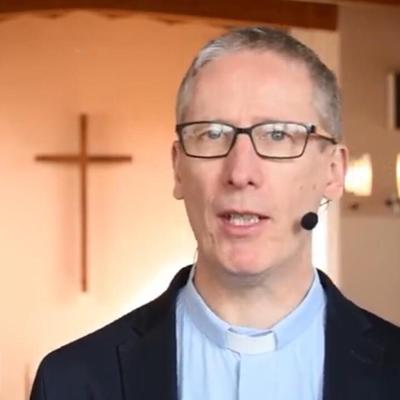
 Rev Peter W Nimmo
‘Spirit of truth and love: sermon for Pentecost, Sunday 28 May 2023
It is now fifty days since Jesus’ Resurrection at Easter. Many pilgrims have come to Jerusalem for the Festival of Weeks. Luke, the author of Acts, tries to describe the coming of the Holy Spirit, but all he can say is what it is like- wind or fire. He is describing something which cannot really be described. The reading is from the New Testament reading: Acts 2:1-21.
In the name of God, Father, Son and Holy Spirit, Amen.
A few weeks ago, somebody mentioned to me that it was on Pentecost Sunday 2008 that the three congregations united to create Cambuslang Parish Church. Those of you who can remember that far back might be surprised to learn that that’s fifteen years now!
Earlier, we told the children that Pentecost is the birthday of the Church- so the world-wide church is today celebrating being over two thousand years old!
The word Pentecost means ‘the fiftieth day’: for it is now fifty days after Easter. In our reading from the Acts of the Apostles today, we hear of what happened to the first Christians fifty days after the resurrection of Jesus:
When the day of Pentecost came, all the believers were gathered together in one place. Suddenly there was a noise from the sky which sounded like a strong wind blowing, and it filled the whole house where they were sitting. Then they saw what looked like tongues of fire which spread out and touched each person there. They were all filled with the Holy Spirit and began to talk in other languages, as the Spirit enabled them to speak.
Jesus had promised that his followers would receive the Holy Spirit after he himself had been raised to life. Saint Luke, the author of the Acts of the Apostles, gives us a very vivid account of that moment, when the Spirit descended on the first Christians. He speaks of wind, fire, and the believers suddenly finding their voice- they go out into the street and begin to take the message of Jesus, his death and resurrection, to people from all over the world.
But all this talk of the Holy Spirit sometimes makes us uncomfortable. There is actually a children’s hymn in our Church Hymnary about the Holy Spirit which begins, ‘Is it spooky, is it weird?’, which might be the worst hymn in the hymnbook[i]. When I was a wee boy, we used to hear more about ‘the Holy Ghost’, and for a youngster, well, that is just weird and spooky.
Churches have quite often rather neglected the Spirit, who is, after all, the third person of the Trinity. I have heard it said that for Protestants, the Trinity is God the Father, God the Son and the Bible; for Catholics it is God the Father, God the Son and the Virgin Mary.
Yet the fastest-growing branch of Christianity today is Pentecostalism, a movement which started in the early part of the twentieth century in America and which is now to be found all over the world in various forms, and which takes very seriously the presence of the Spirit of God in the church. Pentecostalism seems a long way from our Presbyterian brand of Christianity; yet often if offers hope to some of the poorest people in the world.
But for people like me- a rational, unemotional, Presbyterian Scot- what does the Holy Spirit mean for me? For in a Scottish Presbyterian church, you don’t really expect to see people come to church as if they had fire on their heads. And if there is a strong wind blowing around this church building, it will probably make our roof make strange noises!
Yet talk of wind and fire are ways of putting into words what as clearly an intense experience which happened on the first Pentecost. Pentecost is the church’s birthday, because it was the day the disciples first felt the power of God among them. It was a power that looked a bit chaotic and messy. Some of those who heard the disciples preaching under the influence of the Holy Spirit thought they were drunk. And our illustration of the work of the Spirit with the children was pretty chaotic, too![ii]
You might remember from a couple of weeks ago that Jesus promised his followers that, once he had gone, he would leave them a ‘helper’, or an ‘advocate’. Pentecost was when the disciples really felt the Helper among them- a Helper so powerful, they used words like fire and wind to describe the experience. But what is Helper, which we call the Holy Spirit?
I think we can understand the Spirit very simply if we think of it as God at work within each of us, and at work in the world. Thinking about the Spirit reminds us that God is involved in the world today.
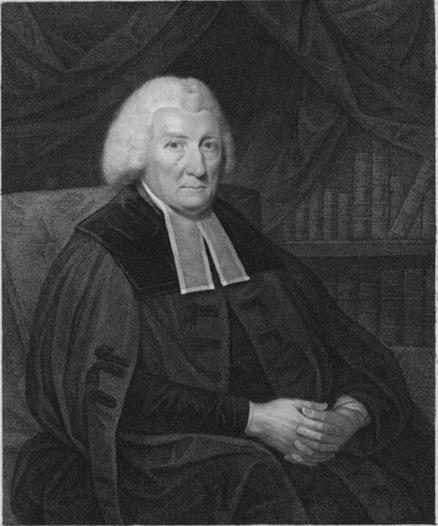
Our culture is still influenced by the eighteenth century movement known as the Enlightenment. This was a reaction to the wars of religion which had spread over Europe since the Reformation, and an attempt to use science and rationality as a way of understanding the world, instead of more traditional religion. It’s a movement in which Scots played a big part- men like David Hume and Adam Smith. David Hume was, at the end of his life, an atheist, but many of his friends and colleagues among the literati of Edinburgh did believe in God, and indeed some of them were Ministers and members of the Kirk (such as Hugh Blair (1718– 1800) (below).
Hugh Blair (1718– 1800), Church of Scotland minister, author and rhetorician, considered one of the first great theorists of written discourse, and founder member of the Royal Society of Edinburgh.One way they attempted to understand God was to imagine that God had set up the world like a great machine which God had set in action, and left to run on its own. The world, they said was governed by unchangeable scientific laws, and so while there was room for a Creator, there was no need for God to get involved. So God was a bit like a watchmaker, who creates his timepieces, winds them up, and then leaves them alone. It’s all very predictable (and, frankly, a bit boring).
For if God has made the world, and left it to run like clockwork, there is no need for the Holy Spirit. A world without the Spirit might have been okay for the Enlightenment philosophers in the eighteen century, but the same period also saw people around Scotland discovering that the Spirit of Pentecost was still at work- such as here in Cambuslang in 1742, where there was a surprising religious revival. God is always at work in the world, and there is no knowing when and where the Spirit of God might move!
The Holy Spirit is, simply, God at work in the world. The first verses of Genesis speak of the Spirit creating the world ‘in the beginning’- but really God continues to create. Above all, God speaks to people, leads them in new ways, stirs them up to serve him. Above all, one man, Jesus of Nazareth, is so full of the Spirit of God that it cannot be denied that through him, God is doing something very new indeed. The Spirit which created the world, the Spirit which was in Jesus, is still at work today. A world which just ran like clockwork would be a boring world. But God is at work in the world, the Spirit of God is at work in the world, constantly surprising us and doing new things. And the Spirit works through people.
In his first letter to the Corinthians, Saint Paul says of the Holy Spirit:
the Spirit’s presence is shown in some way in each person for the good of all[iii]
The Corinthians had written to Paul to ask him about the Holy Spirit, and the way it seems to affect different people in different ways. And so Paul writes back to them, and one the things he says to them- is ‘the Spirit’s presence is shown in some way in each person for the good of all’.
You know, you don’t have to be a genius to be ‘gifted’. I know people who are gifted listeners. I’ve met parents who seemed to me to be gifted in the way they brought up their children. I know people whose gift is the care and compassion they give to an elderly or disabled person whom they care for. I know people whose gift is how they look after those whom they have to manage at work. In all these people, the Spirit is present, for the good of all.
Each person, says Paul, has the Spirit of God present within them- the Spirit is present in each person, in each of us, in each of you. And that is shown in the fact that each of us has different gifts. Some of us are better at some things than others. We have different abilities, and different capabilities. There are different skills needed for the work of the Church, but God has given them. There are different gifts, and they are available in different people.
The great inventor Thomas Edison- a gifted man if ever there was one- famously quipped that ‘genius is one per cent inspiration and ninety-nine percent perspiration’- and he should have known. Pentecost makes us ask the question: ‘How can I use my talents, my skills, my interests, to make my contribution to carrying on the work of Jesus today?’ If we would each of us ensure that our gifts were being used for God’s work, then the Church and the world would be changed and renewed beyond our dreams. For ‘the Spirit’s presence is shown in some way in each person for the good of all’.
The Spirit is the Helper Jesus promised us- helping us continue God’s work in the church and in the world. For we have not been left alone, for the Spirit is among us, willing and able to guide us in the truth about God.
A couple of weeks ago, we heard Jesus call the Holy Spirit as ‘the Spirit of truth’[iv]. Truth is something which is not take seriously nowadays. I read the other day of an American politician who thinks the earth is flat. And there are plenty of religious people who want to bend the truth of the Gospel, who want to use religion to attack people who are in some way different from them, and to divide communities. We really need the Spirit of truth today!
Jesus was famously once asked what the greatest commandment of the Jewish law was. And he replied that it was to love God with all our heart and all our mind and all our soul. But then he added that there was another: to love our neighbour as we love ourselves.
And ever since he said that, Christians have understood the truth about genuine religion: that love of God and love of neighbour go together. In this First Letter of John, we read:
[O]ur love should not be just words and talk; it must be true love, which shows itself in action.[v]
We baptise children and adults, we do it in the name of the Father, and of the Son, and of the Holy Spirit. When we baptise someone, we hope and pray that they will discover the joys of Christian faith. But Christianity is a big ask. We need to learn about God, and we need to what God wants of us- what the truths of our faith are. And it’s not just enough to know Christian doctrine- we need to put our faith into action. Love and God and love your neighbour- put your words into actions of love.
But on this Pentecost Sunday, we recognise that we are not left alone to get on with it. The waters of baptism remind us also of the fire of Pentecost. We have not been left alone. We have Helper, who helps us know the truth (and the greatest truth is that there is a God who loves us). And that Helper- the Spirit of Christ at work in the world- helps us put our faith into action. For the Spirit of truth- who helps us know God- also offers us gifts to enable us to serve God and our neighbour in practical ways.
So on this Pentecost Sunday, let’s give thanks for the Spirit of truth- God still at work in the world, in the Church, and in each of us.
Ascription of Praise
The God of grace who calls you all
to his eternal glory in Christ
restore, establish and strengthen you.
All power belongs to God for ever and ever, Amen.
Based on 1 Peter 5.10-11Biblical references from the Good News Bible, unless otherwise stated
© 2023 Peter W Nimmo
[i] CH4 602
[ii] We blew shredded paper all over the sanctuary!
[iii] 1 Corinthians 12.7
[iv] John 14.17 (from the Gospel for Easter 6)
[v] 1 John 3.18
#HolySpirit #Pentecost