 daniel:// stenberg://
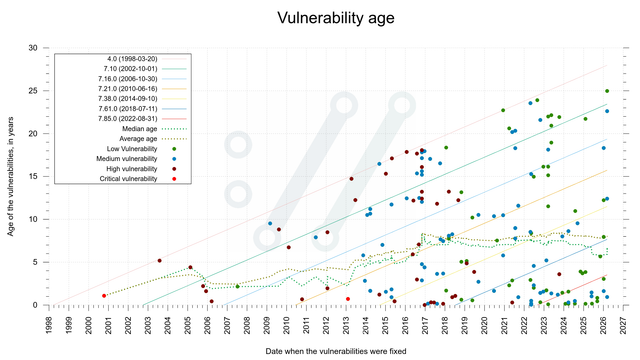
CVE-2026-3784 beat a new #curl record. This flaw existed in curl source code for 24.97 years before it was discovered.
Illustrated in the slightly hard-to-read graph below. The average age of a curl vulnerability when reported is eight years.
CVE-2026-3784 beat a new #curl record. This flaw existed in curl source code for 24.97 years before it was discovered.
Illustrated in the slightly hard-to-read graph below. The average age of a curl vulnerability when reported is eight years.
 ltning
 Poul-Henning Kamp