 Chrono
I keep being tempted by this e-ink device 
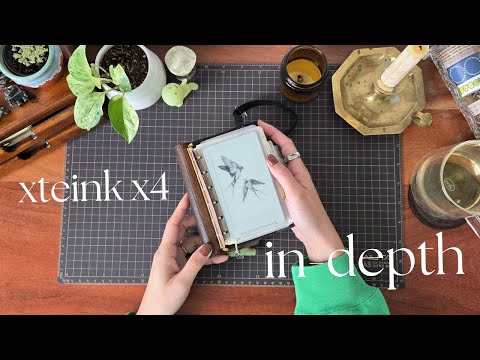
I keep being tempted by this e-ink device
Tempting price, but no built-in illuminator and maybe a proprietary ebook format? Not sure.
And it's opened up somewhat officially for alternate firmware like CrossPoint: https://github.com/crosspoint-reader/crosspoint-reader
Ah, but I am! In one spot in Ariadne's codebase, I'm wanting to assign functions to the values in a dictionary. So there is a key in the dictionary; I want to be able to refer to it via, say parsers['body']['html']['function'] (that way I can iterate through each metadata field in a standard way and call the function to parse it from a page) but for a multi-line function I have to name it separately and then reference it in the dictionary.
@mirabilos @amin @rl_dane @joel
or
def fun():
    global parsers
     a = "FOOOOOO!!!"
     def bar():
         print(a)
     parsers['body']['html']['function'] = bar
either way, bar doesn't pollute the global namespace
@kabel42 @mirabilos @rl_dane @joel
Sure, but now fun() does. And it's a much less clear way to write the code than just assigning anonymous functions as values in a dictionary definition.
A fun trick in JS:
You can only use the await keyword inside an asynchronous function. You can make the entire script asynchronous by wrapping it in this:
(async () => {
    // code goes here
})()
This creates and then immediately calls an asynchronous anonymous function that's wrapped around the whole script! :D
I actually was able to increase the performance of a piece of code I was writing tenfold in JS by using recursive arrays…
I was trying to use a thesaurus library to create a list of synonyms and their synonyms and so on and so on, where proximity in the list roughly corresponded to word similarity. I made an object where each key pointed to a sub-object, which had a "synonyms" property that was an array. Within that array were references back to items in the parent dictionary. It was pretty cool. (I'm not remembering the exact structure, but that should be the gist of it.)
 R.L. Dane

 🍵
🍵 
 Amin, minor deity of the legume realm
 kabel42
 pixx
pixx
 mirabilos