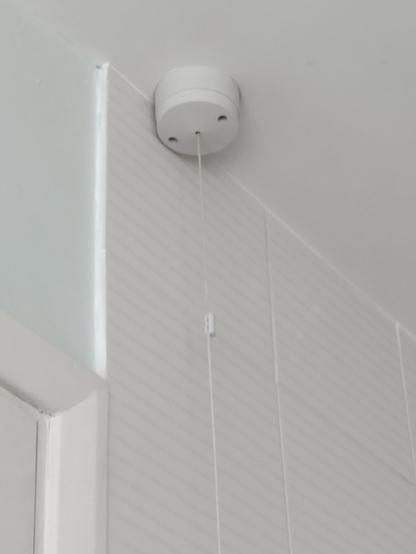
Guests constantly shut the shower off at the switch, either mistaking it for a light switch or being from a household that operates the shutoff every time they shower.

This is surprisingly effective.
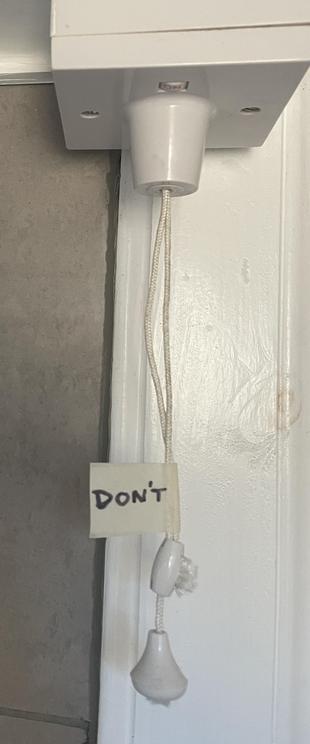
The last one broke and left us without a shower for a couple of days. Apparently these are cutoff switches not designed for frequent use. The old one was probably defective from the start but one time too many did it in.
@zip
That seems .. odd. If it was an emergency isolator, there'd be no need for it to be in the bathroom - places rewired in the last 25 years or so tend to have push switches high up on the wall just outside (or above the door.) To me a pull cord implies regular on/off operation - it's a cord because it's in the bathroom, and it's in there to be close to the thing it controls for regular use??
@zip
Having said that, that design of pull cord switch fitting is the one I associate with emergency alarm cords e.g in accessible toilets. The ones in our bathrooms here don't look like that, but maybe ours are just out of date??
@srtcd424 @zip Those ones are smaller because they don't have to accept 6mm (or larger) cable and carry 45A.
@kim @zip ah, that makes sense, yeah. Electrically heated showers are not something I've ever encountered in any of our houses - you take you chances with whatever hot water is or isn't in the tank, instead :)
@srtcd424 @zip A far superior approach, IMHO.
@kim I dunno, I've had enough accidental cold showers that I wouldn't say no to some sort of automatic electrical top-up heating system :)
@kim (at some point I will get around to rewiring the system here for PDHW, which should mean I can then sensibly leave the HW 'on' most of the day, which should reduce the cold shower problem. Just need to find the round tuits!)
@srtcd424 @zip Nahh, the pull cord is just to make the wiring easier by keeping everything in the ceiling void. It's in the bathroom so you can see that it's switched off before sticking your fingers in the shower wiring.

And like everything else, it's engineered down to a price, with the assumption that isolator switches aren't operated frequently or under load. (The only reasons to switch them off are to isolate the appliance before maintenance; a poor understanding of the energy consumption of neon indicator lamps, or because you're one of those people who habitually turn everything off (thereby wearing out cheap isolator switches) out of some fear of electricity.)
@kim @zip in this house the pull cords are light switches, so sort of by definition they get used regularly :) Possibly those have higher operation count but lower current rating, though - maybe the higher current rating ones are indeed meant only as isolators? 1/
@kim @zip
The only possibly higher current one we have is a for a shower pump, and that does get used quite regularly, as the pump (a) uses a lot of water, which isn't always desirable, and (b) we don't entirely trust its auto stop-start functionality (presumably water pressure dependent.) I really don't fancy a high power pump possibly turning itself on at random!
@srtcd424 @zip Yeah, the light switches should be rated for a decent number of operations. Assuming they're not made of utter cheese, of course.
@zip so many situations that tape would be handy in