 Rekall Incorporated
Consumer PCs have long abandoned the multi-GHz race for core count and NPU inflation.
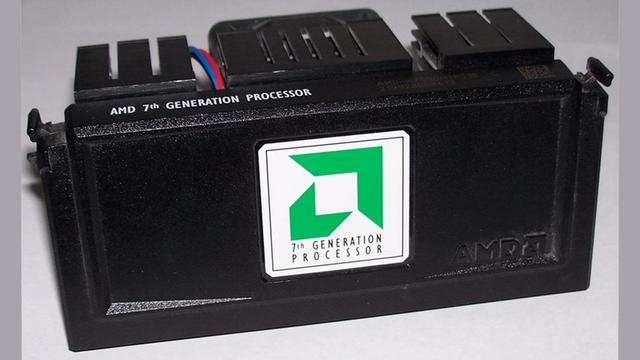
 Multiplexer
Those were awazing times.
Within 5 years I basically went from a 16 MHZ CPU to a 1,4 GHz CPU.
And going from minimal graphics card to a 3D-accelerated one was equally mind-boggling.
Progress after that era essentially felt like a technological standstill.
 fallaciousBasis
“awazing times”
Watch your W’s and M’s.
Handwriting recognition doing things :-)
Take it as indication l am not Al.
I recall going from a Tandy 1000… To a Packard Bell(Pentium 60 with 16(upgraded from 4) MB RAM and like 1 GB HDD (also upgrade).
Then a Celeron 500 I pieced together cheap(used parts) in middle school. Which didn’t last long! I recall building it. Don’t recall what happened to it!
I blame that Athlon… I had the XP 1600+(palomino), which was 1.4 Ghz. On an Abit motherboard. First time getting DDR memory. That one lasted quite a few years. Until dual cores, etc etc.
SSDs have been the most exciting thing since then. I really don’t need many cores. It’s pretty insane how much difference SSDs can make even on 10-15 year old hardware.
Almost the same as for me!
1996 I was still using an Atari ST (with 8, not 16 MHz…), end of 96 I got a Pentium 100 with 16 MB, switched to a Pentium 200 MMX and later to an overclocked K6-2@400 MHz in the same socket.
End of 2001 I got the same Athlon XP 1600+ as you.
Motherboard supported both SD- and DDR-RAM, so could reuse my old 192 MB :-)
Agree with the SSDs, only significant perceived performance boost during the last 25 years (although multicore is in some special parallelized usecases also significant, e.g. when building software).