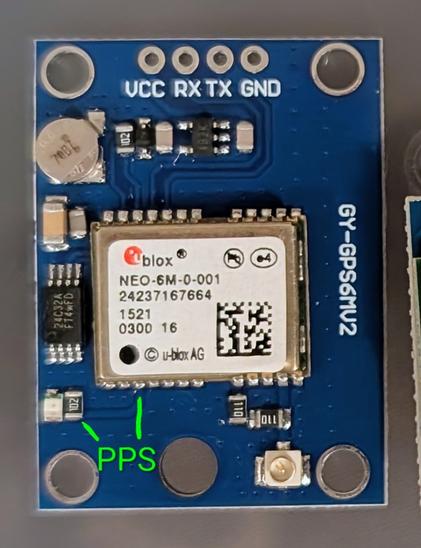
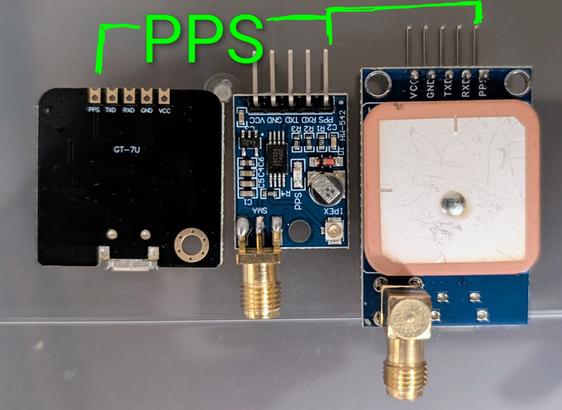
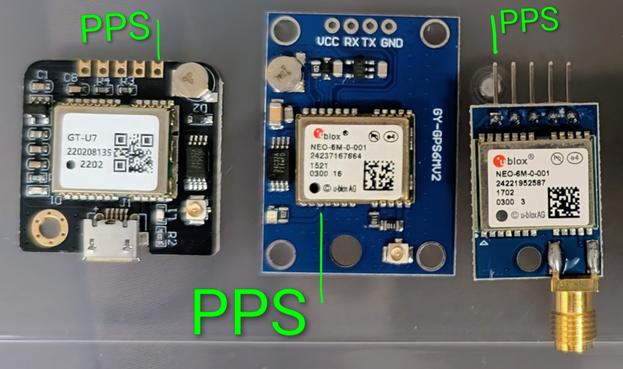
By bizarre coincidence my research project (adding CH592 support to Zephyr OS & designing a BLE beeper), a job I'm interviewing for, and @[email protected]'s latest video have me going DEEEEEEP into enabling super precise computer time. πŸ€“ I love that GPS modules offer a synced per-second clock pin 😍

RE: https://bsky.app/profile/did:plc:wgsnxwz2f6kwo6szjvgbpzda/post/3mgflevxjkk2x
I was *this close* 🀏 to ordering a used rubidium oscillators off eBay, but I talked myself out of it thanks this video. TL;DW rubidium oscillators tend not to be serviceable, and have a fixed lifetime due to a bulb used to bombard the isotope. Also rubidium is a time-keeper, not a clock reference.

Rubidium Frequency Standard Bu...
Rubidium Frequency Standard Buyers Guide - High Accuracy Clock Project

YouTube
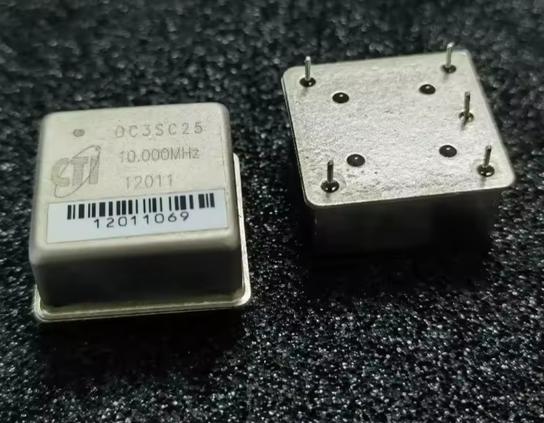
A GPS or NIST radio receiver is what you actually want to sync the current time and figure out how long a second is (a cellular radio might work too). A rubidium oscillator is just an oscillator with the least drift (under $2000). More affordable are TCXO and OCXO's (i.e. a TCXO with a heater).
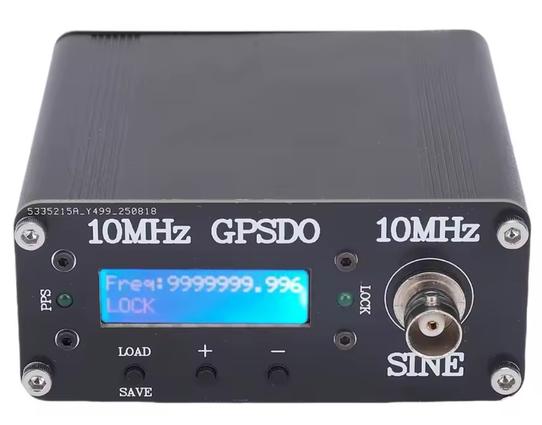
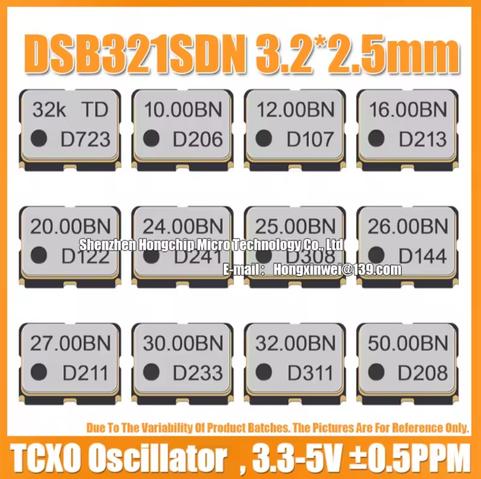
For "lab use" a GPSDO offers a "good enough" reference, automatically calibrating an OCXO using GPS ($50-$100). An OCXO reference you calibrate yourself can be had for ~$10. I haven't seen standalone TCXO references, but a component can be had for under $1. None of these tell time, they oscillate.
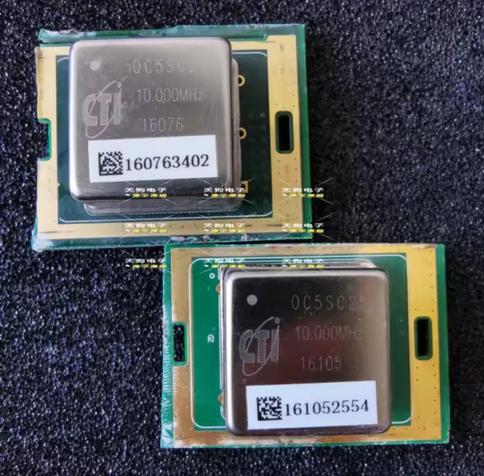
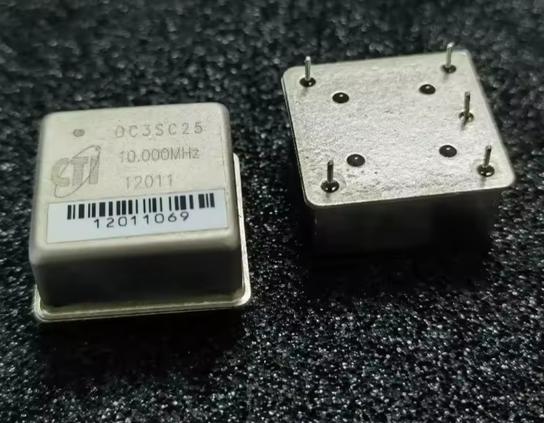
lol, to clarify, OCXO's cost ~$200 new (similar to the price of used rubidium oscillators). Used OCXO's can be had for under $5, meaning those ~$10 OCXO reference boards are built with used OCXO's. The comedy of buying used OCXO's is you can buy them still attached to their original boards. 🀣
Anyway, the point is that nearly all computers use crystals without any compensation for their clocks. Given any two crystals you should expect them to drift apart a few seconds every day. That makes them good enough for short bursty tasks like data transfers, but not timekeeping.
The X in TCXO and OCXO is shorthand for crystal AKA a piezoelectric crystal (sometimes abbreviated "xtal"). All precision timing circuitsβ€”other than rubidiumβ€”involve crystals. All crystals are affected by temperature. A TCXO compensates with a temp offset; An OCXO heats it to a constant temperature.
While unnecessary, it's not enough to swap in a TCXO (Temperature Compensated) or OCXO (Oven Controlled) for a regular crystal oscillator circuit. An OCXO also needs time to warm up "the oven" A computer doesn't need perfect clock synchronization to function. It only needs it to communicate.
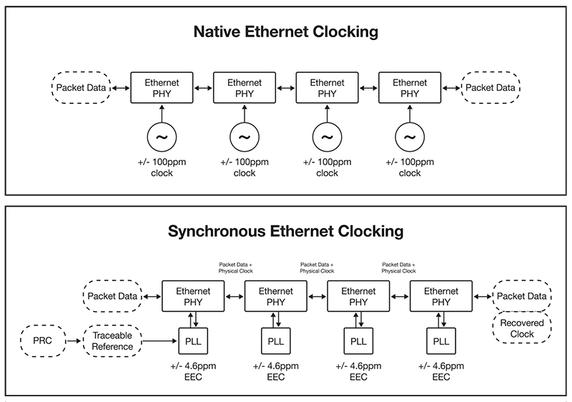
Ethernet doesn't use a dedicated clock wire like UART or SPI, but the protocol is said to encode a clock in its differential signal. The chipset on each end of a wire needs a "stable" reference clock. Ethernet needs a reference within 100Β± ppm, and Synchronous Ethernet needs one within 4.6Β± ppm. πŸ€“
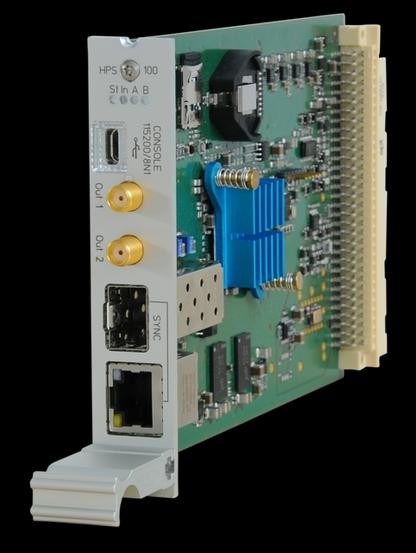
Most of us don't use SyncE capable network gear, but it was interesting to me learning it exists. I tried to find some photos of such cards but ugh I can only find an angled view. I imagine they use a calibrated TCXO to meet the spec (or take one as a clock-in on the SMA connectors?). 🀷
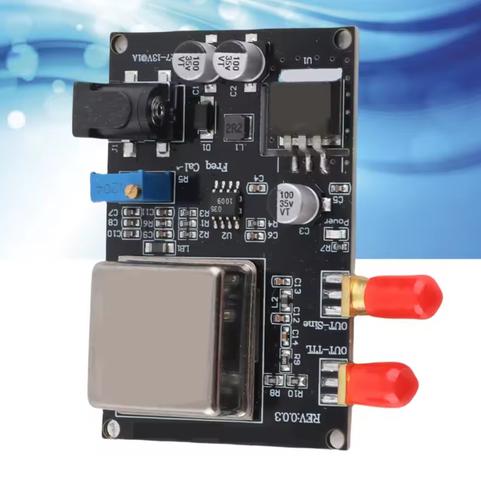
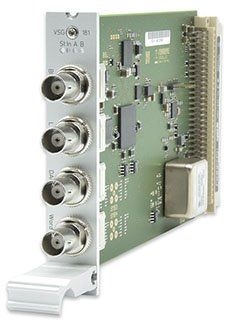
Compare that SyncE Ethernet adapter to this Video sync generator card, you can see the big square can on the boardβ€”likely an OCXOβ€”for an extremely stable sync clock.
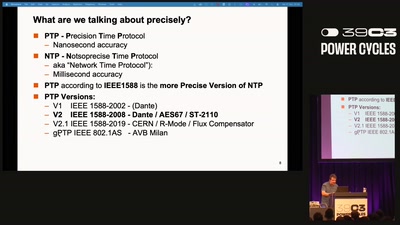
For us mere mortals, Precision Time Protocol (PTP) is a standard that provides "1000x better than NTP precision" reference time on local networks (might be used in 5G too). Some network switches support PTP. I'm still deciphering, but I think this lets them tell you how far away they are from you.
Anyway, all devices on a local network synchronize to a single device designated the "PTP grand master". When all you want is those devices to be better synchronized with each other, then PTP is all you need. BUT, if you want to synchronize across the internet, each "PTP GM" needs a reference!
FULL CIRCLE! This is where GPS/GNSS time comes into play. Each local network needs a device designated a "PTP Grand Master" whose own time is synchronized with something like GPS. πŸ˜… Unless regularly updated, Grand Master time will drift. Using a TCXO/OCXO lets you keep sync longer (GPS fail/outage)
@distraction.engineer I recently watched this talk (https://media.ccc.de/v/39c3-excuse-me-what-precise-time-is-it) on a conference about it.
While this talk is somewhat focused about the use case in synchronous media streams, it might still be interesting for you, if you are diving into this topic!
Excuse me, what precise time is It?

media.ccc.de