 NomNom
New Colorado Study Finds Nearly 7,900 Traffic Violations In 30-Minute Windows
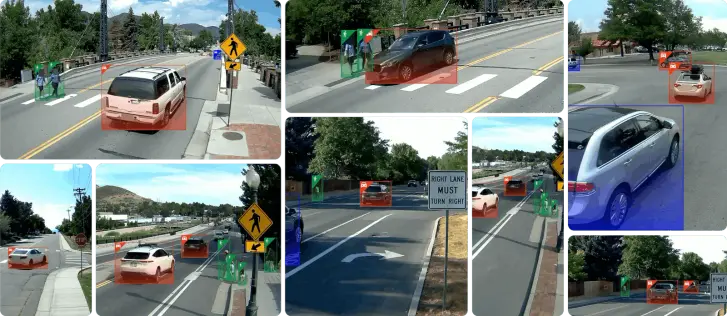
Those are rookie numbers.
 Catoblepas
That doesn’t count, everyone does that! Can I tell you about that guy I saw on a bike who blew through a stop sign?
-people driving a 2 ton car
AI automated enforcement offers an easily scalable solution for safety.
a comprehensive automated enforcement strategy as a scalable, unbiased way to save hundreds of lives each year—
Gonna have to say fuck right off with that. Rebuild roadways to be more bike and pedestrian friendly instead of picking up the Palantir.
 Snuffleupadon
@ceenote @NomNom I agree with you that roadways need to be designed to curb bad driver behaviors. Not only that, we need less drivers and roadways overall.
However, don't fall prey to them labeling this "AI". Categorization has long been within the scope of Machine Learning which is a sub-discipline of AI; it isn't AI in and of itself (https://scienceexchange.caltech.edu/topics/artificial-intelligence-research/artificial-intelligence-vs-machine-learning). Provided the cameras aren't a surveillance net in disguise, a la Flock, and there are real people qualifying the results, I think it could be a net benefit. This reads to me as a system that can tell the difference between someone holding a phone or holding the steering wheel with both hands. There's really nothing ominous about that. It's essentially the same as identifying variations in handwriting and differentiating between an "a" and an "A" as written by different people. But, if the system also logs driver's license plates and locations and stores them in a database then it becomes more problematic without data retention policies, access restrictions, human review, and other governance mechanisms.
There is potential for abuse everywhere, that's why we have rules, regulations, and laws to prevent such behavior. I'm not an AI booster by any means, but I do think there are practical applications for technologies like this. The key is in rolling technology out in a thoughtful and responsible way. We can't make an instantaneous jump to safer roadways, it takes time and this might be something we can do right now to help. This tech (at least as far as this article is concerned) helps illustrate the culture of apathy and entitlement today's drivers exist within.
Calling it AI and saying it's unbiased by the author and company are likely BS. My opinion is that AI is being used as a buzzword to make sales. I would also take this all with a grain of salt. The company should be under intense scrutiny and there is already a lot of precedent where these kinds of systems are being abused by police.
 UniversalBasicJustice
>if the system also logs driver’s license plates and locations and stores them in a database then it becomes more problematic without data retention policies, access restrictions, human review, and other governance mechanisms
@UniversalBasicJustice lot's of assumptions here...
1. Not true, it could be an anonymized dataset. What basis is there for a requirement that it log these things? If enforcement was a part of it sure, but I didn't gather from the article that enforcement was necessarily the goal. Anonymous interpretation of the data could help guide policy, road design, decide what other transportation could be incorporated and on and on.
2. Based on what evidence? Automated deletion of data happens regularly in industry. This is an extremely pessimistic take. Look at CCPA and CPRA as examples of what states are doing to protect our privacy. Similar laws could be enacted here.
3. What? So you're arguing for an entirely human based effort? Or an entirely automated effort? Both options would be ineffective. If you have an automated system doling out infractions then they should be reviewed by a human being, full stop. Likewise, you can't rely solely on humans to monitor all roadways. It's too much area to cover. Here in Colorado, they literally do not enforce the laws on the books as a result. It's an easy cop out to say there's too many other important things that need police attention.
4. Bad things happen, all human endeavors are subject to such issues. We are fallible. It doesn't mean we can't build tools that are a net benefit to society while also acknowledging there may be abuse. In the real world we should aim to minimize abuse and recognize that nothing is ever perfect.
5. Maybe? Can we arrive at that conclusion from the article alone? They may be partnered with Flock for all I know, I can't tell from the article. I'm addressing what I read and adding in what other things I know about the space.
6. How does building bike lanes affect driver behavior? It won't make cars disappear and it won't change whether people look at their phones while driving, whether people blow stoplights, or whether they speed. You're being myopic.
Any time I hear anyone pushing driverless cars or AI without mentioning public transportation, bike lines, traffic calming, or walkability I know they are full of shit. Just like the people talking about EVs being better for the environment but never mention any plans for getting cars off the road. I want trains god damn it.
Sorry. Best we can give it is 363B in VC investment for self driving cars. Trains would be too expensive
Remember this when they tell you that automated driving is better than the average human driver. THIS is the average human driver.
Probably 6k+ "not using a blinker " violations.