 Ronflaix
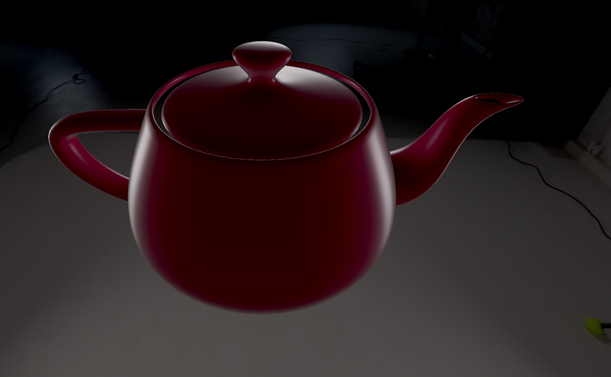
This teapot was successfully created and added to the scene from a first verson of a text data/resource file.
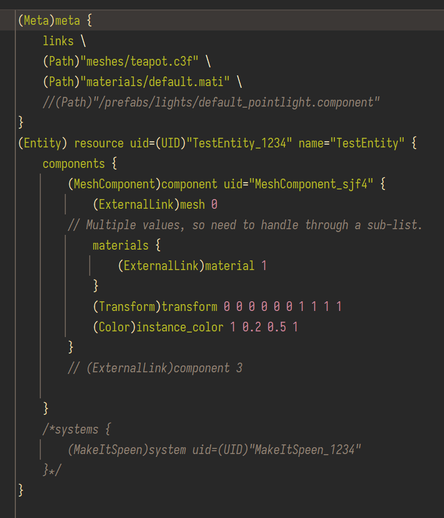
It works pretty well? I have to port the test scene to make it really comparable but with 1500 entities it parses in 4 to 8ms, depending on the weather, I suppose.
I can't really profile effectively, it's streamed, not recursive. My guess for the load is the heavy use of unique_ptrs/allocations and just the speed of the HDD. I'll check that on the DevDrive.
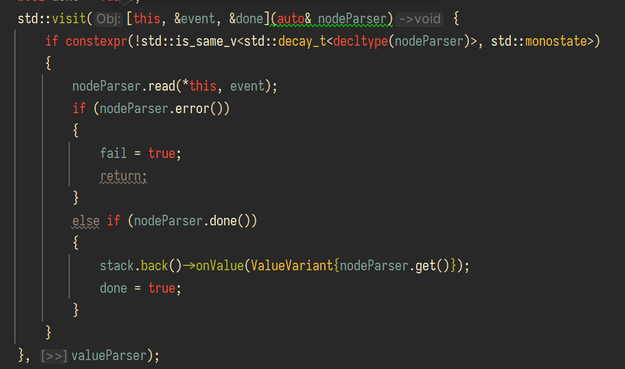
I find incredible I can pull a std::variant<typeParser, type2Parser,…>, call std::visit([](auto& parser){ return parser->get(); } directly into a matching variant<type1, type2, …> and it *works*.
I wonder how heavy on the compiling process it must be.

 Miss Mouse