 Aaron Sojourner
Happy #JobsDay!
At 8:30 am ET, @[email protected] delivers one of the most-important signals about how economy is changing
Forecasts’ center:
+50K jobs
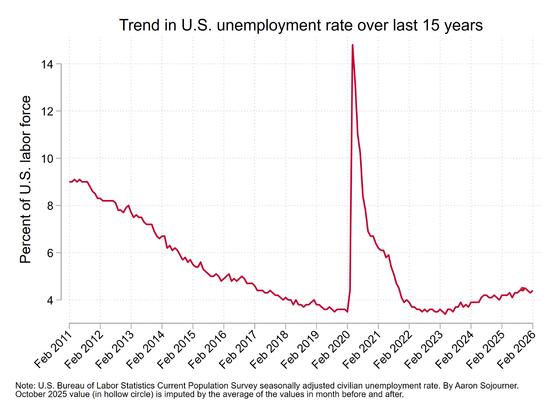
Unemployment rate (UR) steady at 4.3%
I’m a labor economist at independent, nonpartisan @[email protected]
I learned abt #JobsReport as senior economist for labor @ White House Council of Economic Advisers in Obama & Trump1 admins
CEA gets advance view of monthly #JobsReport.
I’d analyze & brief WH leaders & Labor Sec
As context, labor markets have been strong:
- low unemployment rate,
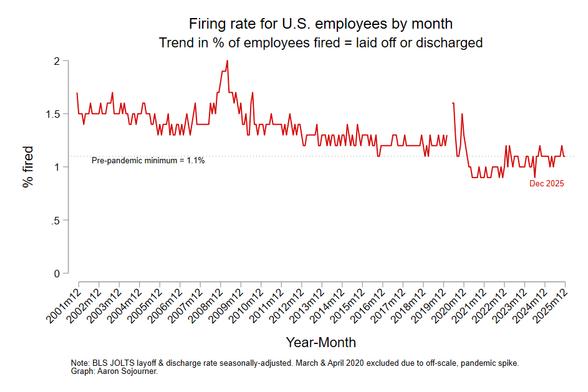
- high rate of worker job security with low rate of bosses firing staff (figure),
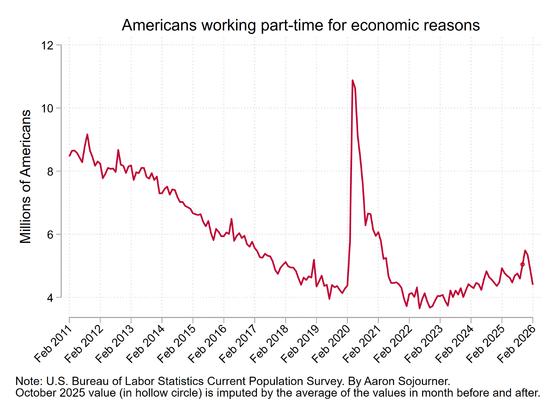
- few working part time due to lack of full time offer,
- wages growing,
- high participation and employment rates for 25-54 year olds…
Also labor market has weakened over the last year.
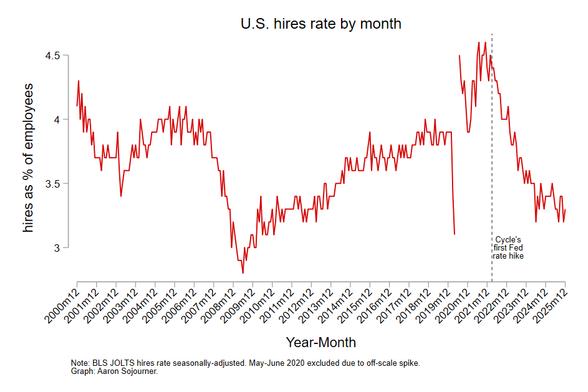
- Hires rate like 2011 is particularly worrisome, falling since Fed's hikes (figure).
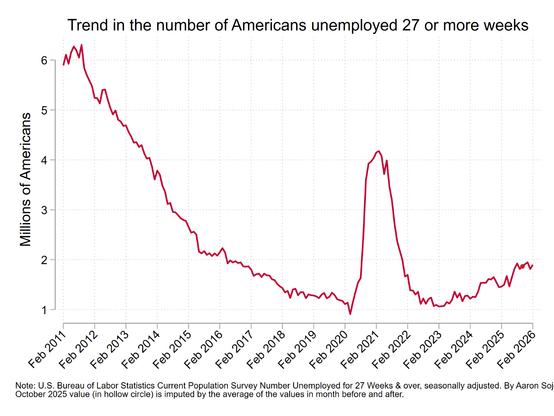
- Jobs have been stable for employed but tough for small share unemployed and wage growth has decelerated.
The Employment Situation report will be here
www.bls.gov/news.release...

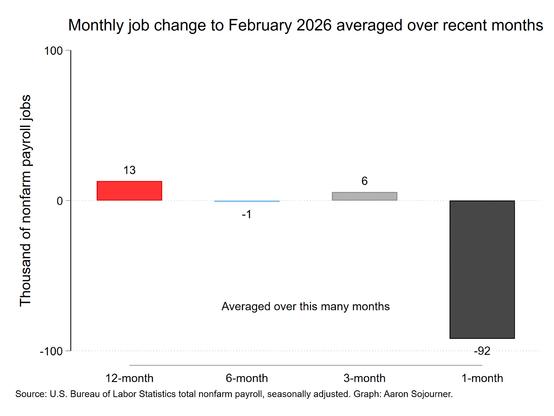
-92K jobs lost last month (mid-Jan to mid-Feb).
-69K jobs in revisions of prior 2 months.
The big picture
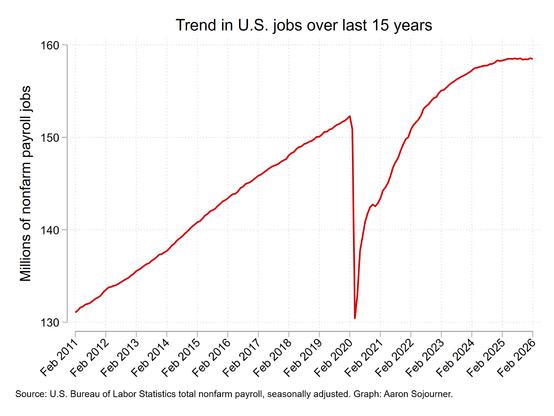
How does recent growth compare to recent years?
Economy added just 0.16 million jobs over 12 months to Feb 2026.
Job growth stopped.
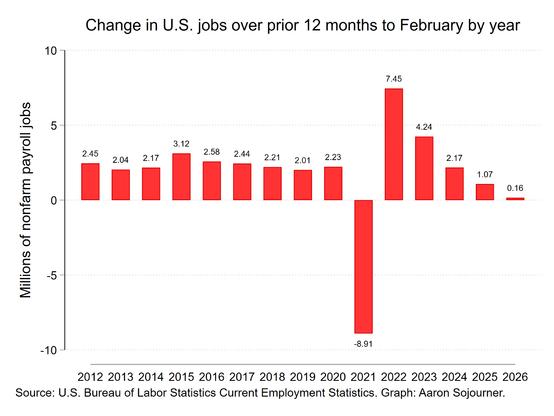
Job growth is stalled dead as huge amounts of policy uncertainty from POTUS reduces businesses’ willingness to invest in jobs:
+13K/mo over most-recent 12 months
-1K/mo over most-recent 6 months
+6K/mo over most-recent 3 months
-92K this past month
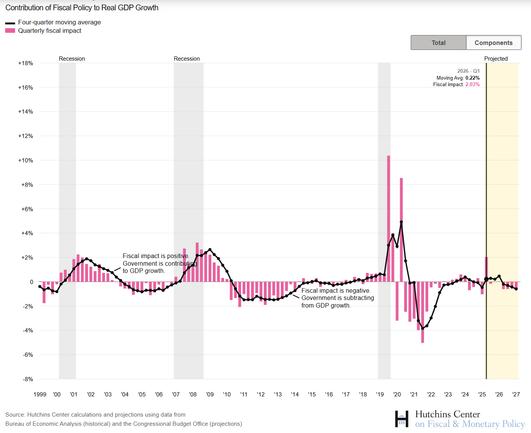
Fiscal policy – especially enormous new federal deficit spending from OBBB -- creating a large, temporary boost to economic growth, +2.0 pp in annualized terms in 2026Q1, per @[email protected] but contrary to popular impression
www.brookings.edu/interactives...
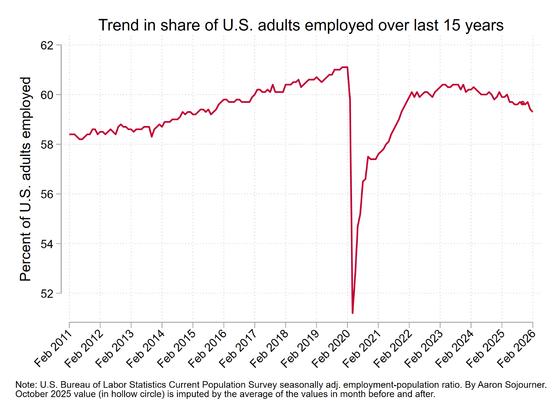
Both the labor force participation rate, at 62.0%, and the employment-population ratio (EPOP, figure), at 59.3%, changed little in February.
These measures showed little change over the
year, net of incorporating recent, better population data from Census.
Prime age (25-54 years old) EPOP measures core labor market strength, omits folks on fringes of work, at 80.7%. Down 0.2 pp from record-high of 80.9% in July-Sept 2024
Never higher than this during 2002-2022 (80.6% high)
Constrains job growth without immigration = working age folks already working
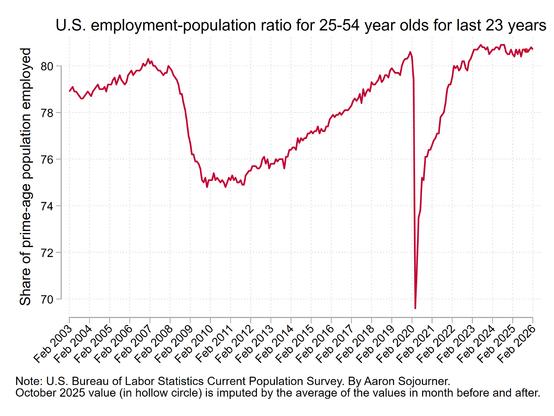
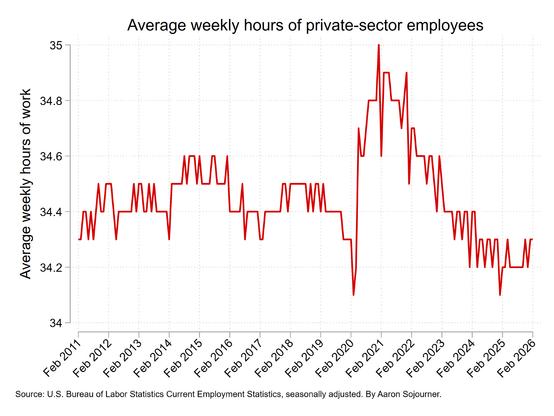
That’s the extensive quantity (Q) margin. Intensive Q margin = average hours.
Average workweek hours for private-sector steady at 34.3 hrs.
If employer demand for labor rises or fewer workers enter to supply, price (wage) rise
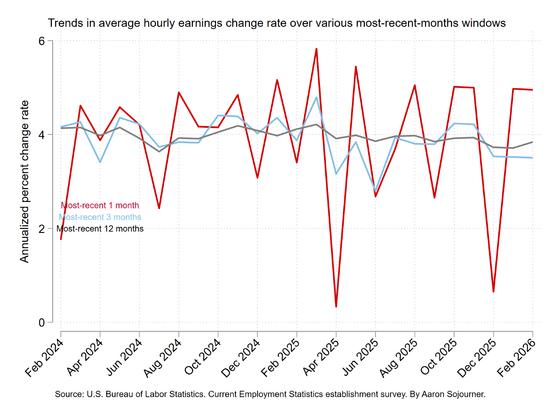
Private-sector wage growth decent and steady
Annualized rates
over-the-month: 5.0%
over-3-months: 3.5%
over-year: 3.8%
Bizs & retirees want to push 🔽. Working families, 🔼
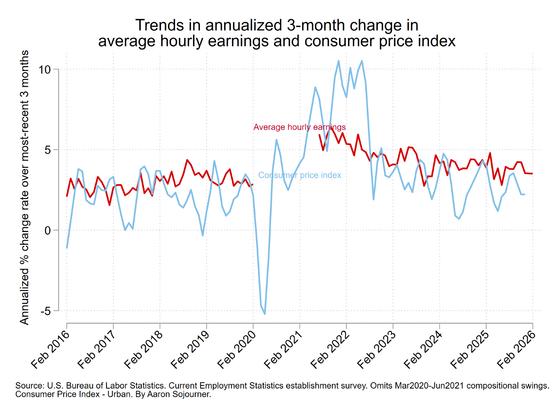
Looking at change rates in wages versus consumer prices 3-month annualized, in the most recent data...
Wages (red) up at a 3.5% rate and prices up at only a 2.1% rate in most recent data
If continues, average hour'd buy 1.4% more than year before
In sum,
1. Labor market remains strong
2. Consistent with stabilization here & end to weakening
3. But weakening could easily resume
Last month's report was anomalously strong. Job losses & unemployment today look weak but most else (wage growth, hours, EPOP, PAEPOP...) looks stable.
Last thing. BLS does amazing work to create timely, accurate info about America's working families, a huge public good.
They are there for us & we need to show up for them.
If you are a labor economist or care about workers & employment, follow & join Friends of BLS.
www.friendsofbls.org/join