@mayuraviva @w3cdevs @w3c they do have a justification if you take the time to check the intro in the spec document lol
As individuals and organizations, many of us use globally unique identifiers in a wide variety of contexts. They serve as communications addresses (telephone numbers, email addresses, usernames on social media), ID numbers (for passports, drivers licenses, tax IDs, health insurance), and product identifiers (serial numbers, barcodes, RFIDs). URIs (Uniform Resource Identifiers) are used for resources on the Web and each web page you view in a browser has a globally unique URL (Uniform Resource Locator).The vast majority of these globally unique identifiers are not under our control. They are issued by external authorities that decide who or what they refer to and when they can be revoked. They are useful only in certain contexts and recognized only by certain bodies not of our choosing. They might disappear or cease to be valid with the failure of an organization. They might unnecessarily reveal personal information. In many cases, they can be fraudulently replicated and asserted by a malicious third-party, which is more commonly known as "identity theft".The Decentralized Identifiers (DIDs) defined in this specification are a new type of globally unique identifier. They are designed to enable individuals and organizations to generate their own identifiers using systems they trust. These new identifiers enable entities to prove control over them by authenticating using cryptographic proofs such as digital signatures.
 W3C Developers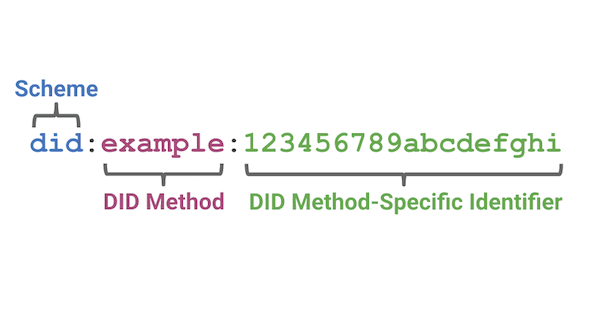
 Tut-Nefer
 CyberFrog