
Ethan Chlebowski did a video on rice in youtu.be/IjjdAheuNKs where he cooks rice sous vide to determine water ratios and cook times. There are more details in the companion blog post at cookwell.com/ā¦/rice-cooking-fundamentals-4-methodā¦
For brown rice in an on/off rice cooker, try doing 1:1 + 0.5 cups of water for evaporation.
TL;DR/W: When cooking different types of rice sous vide, they all absorb water in a 1:1 ratio. The only difference is how long it took to cook through (white long grain is less than brown or wild, for example).
So, the deciding factor is how much the cooking method evaporates water in that time. Sous vide canāt evaporate water, so itās still 1:1 but other methods need more water. Rice cookers are pretty consistent, so itās easier to calculate the additional water for evaporation. For white rice, itās about 0.25 cups for evaporation while brown rice needs about 0.5 cups for evaporation because it cooks longer.
There are more details in the video/blog post about other methods, like boiling rice similar to pasta

Ethan mentions it in the video with the stove top method since it varies based on the saucepan, but if you have a method that consistently makes rice the way you like it, then stick with that.
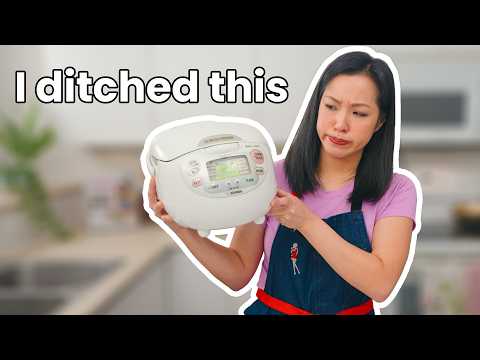
Zojirushi is designed for households that have rice for each meal, 3x a day. Even then, Pailinās Kitchen noted in youtu.be/j9tvO5XNGkU that replacement parts are expensive, so a more entry-level rice cooker can be more worth it. Washing rice in a separate bowl might help reduce wear and drying the gasket might help it last longer, but I digress.
IMO, an Instant Pot is more versatile since itās designed as an all-in-one appliance. However, I have an oven, stove top, and enamel cast iron, so Iād rather make use of them. Rice is challenging in cast iron because of heat retention; itās actually easier to cook it in the oven.
For me, a rice cooker frees up the oven and is very set-it-and-forget-it, so it was an easy choice
If I didnāt already have the above, Iād probably have a rice cooker and crock pot, for which I understand the Instant Pot is a good replacement

You bring up another important positive for the instant pot: when I wash the rice, I tend to scrub hand-fulls between my fingers under running water and swirl it around as the bowl fills. Since the inner pot is stainless steel, I am not worried about damaging a non-stick coating like you tend to see on other rice cookers. Additionally, once the cooking cycle is complete, I have learned that letting the pressure drop over a period of about 10 mins before venting helps release the rice from the bottom of the inner bowl so sticking isnāt really a problem and I never get any burnt rice either.
The one thing I am not sure about is how well the rice would keep if it is left on warm all day like you describe for households that make a large batch for multiple meals. I typically make just enough for the meal at hand and some leftovers for fried rice later so I suppose the instant pot serves it purpose well but it may not be the solution for everyone.
The stainless steel inner pot was the main reason Pailinās Kitchen switched, but it sounds like the Instant Pot is easier to clean since it doesnāt burn the rice.
I personally donāt recommend keeping the same batch of rice on keep warm mode all day for food safety, which was mentioned in the comments of the Pailinās Kitchen video, but if it works out then it works out.
I donāt mind reheating rice in the microwave. There are many pre-made rice options that do the same
Regardless, there are plenty of ways for people to get their rice fix š so itās just a matter of finding one that works for oneās needs
