 geneva_convenience
Literally worse than Nazi Germany

Reminds me of the old (apocryphal) story of Stalin, FDR, and Churchill debating what to do with the Nazi officers’ corps after their defeat.
"The German General Staff, [Stalin] said, must be liquidated. The whole force of Hitler’s mighty armies depended upon about 50,000 officers and technicians. If these were rounded up and shot at the end of the war, German military strength would be extirpated.” When Churchill angrily declared he would be no party to such mass retribution, the President quipped that he would act as mediator, and suggested the compromise of shooting only 49,000. In heat, Churchill left the room. Stalin himself fetched him back, assuring him it was all a jest.
The tendency to treat enemy soldiers as honorable adversaries while foreign civilians are resources to be exploited or speed bumps to be flattened is extremely fascist.
What separates Hitler and Hegseth isn’t their army’s treatment of survivors of a military operation, but their view of their targets as military or civilian. Hegseth knows he’s targeting civilians and treats them just like a German military commander would treat other civilians.
Muh hypothetical dead Nazi officers and technicians
I mean, I wish that were actually true.
One of the bleakest turns of the post-war Eastern Bloc was the speed at which they re-incorporated ex-Nazi officers into the Stasi. I’d have to dig it up, but there’s a whole line about a German describing his career as roughly “First I worked for the monarchy to suppress fascism, then I worked for the fascists to suppress communism, then I worked for the communists to suppress capitalism, and now that the communists lost I’m old enough to retire.”
Worse than Nazi Germany?
… though even for radical Nazis, American approaches like the “one-drop” rule seemed to go too far.
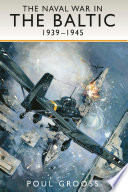
A military historian and naval warfare expert delivers a revealing history of the Baltic Sea Campaigns and their significance throughout WWII. From the Battle of Westerplatte on the Polish coast in 1939 to the thousands of German refugees lost at sea in 1945, the Baltic witnessed continuous fighting throughout the Second World War. This chronicle of naval warfare in the region merges such major events as the Siege of Leningrad, the Soviet campaign against Sweden, the three wars in Finland, the Soviet liberation of the Baltic states, the German evacuation of two million people from the East, and the Soviet race westwards in 1945. Naval historian Poul Grooss explains the political and military backgrounds of the war in this theatre while also detailing the ships, radar, artillery, mines and aircraft employed there. He also offers fascinating insights into Swedish cooperation with Nazi Germany, the Germans' use of the Baltic as a training ground for the Battle of the Atlantic, the secret weapons trials in the remote area of Peenemunde, and the Royal Air Force mining campaign that reduced the threat of German submarine technology. A major contribution to the naval history of this era, Naval War in the Baltic demonstrates the extent to which the Baltic Sea Campaigns shaped the Second World War
I found one exception:
[T]he only proven survivors were the two sailors sent along to row the boats, Nikolai Sjirokov and Mikail Klimov. They were captured by [Axis] authorities at the end of March, freezing and starving. During the subsequent investigation in the vicinity of the landing site, the [Axis] found human bones, body parts and even a human head. What remained of the bodies could not be identified, and exactly how they died could not be established. Sjirokov and Klimov would eventually be brought to Oslo, where they were presented as cannibals in a press conference[.]
The Axis was a little less courteous when it came to the hospital ship Armenia.
ETA: From Waves of Hate, pg. 106:
Immediately after the sinking, Kefalas had said, he got onto a raft together with one of the Russian sailors, Liossis and Kostantinidis. The submarine came alongside and called Kefalas and the Russian on board for interrogation. Among other things, the [Axis] wanted to know the name of the ship and retained a lifebuoy with her name on it, presumably as proof of the sinking.
The two men were returned to the raft and were on it when a grenade was thrown. The blast broke the Third Officer’s arm, and both Liossis and Kostantinidis were wounded. The latter died of these wounds on 15 March and was buried at sea.
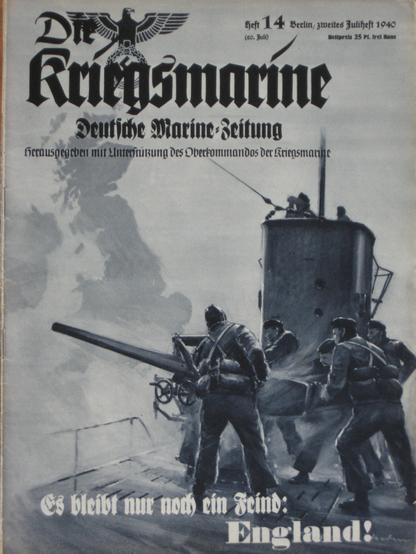
(This takes seven minutes to read.) The ‘clean Kriegsmarine’ myth remains one of the most successful lies about the Axis powers. Hardly anybody ever discusses the Kriegsmarine’s war crimes, and even institutions like the USHMM have almost [https://collections.ushmm.org/search/catalog/irn516732] nothing at all to say about them. This silence is not entirely unreasonable given that the Axis committed the bulk of its atrocities on land, but discussing the Kriegsmarine’s malconduct would demonstrate to people just how saturated the Third Reich’s armed forces were with White supremacy. Quoting Wojciech Wichert’s ‘Nazi Indoctrination of the Kriegsmarine and its Relations with the NSDAP in the Years 1935–1945 – Outline of Subject Matter [https://bibliotekanauki.pl/articles/30146197.pdf]’: >Kriegsmarine Commander Siegfried Sorge […] argued that a navy officer should be taught not only about the soldierly duties but also about German history to fully comprehend the elements of the [Fascist] worldview. Moreover, as important teaching material he recommended that the officers read Hitler’s “Mein Kampf” and his speeches published by Franz Eher Verlag. > >It is evident that Sorge planted the Kriegsmarine in the [Fascist] camp as a totally obedient instrument of the [Third Rreich]. It is, of course, impossible to determine precisely how much influence Sorge’s work exerted upon the Kriegsmarine officers. Nevertheless, the book was a crucial counsellor for young officers of the navy for leadership that became very popular not only among them (in 1943 the fifth edition was published). > >[…] > >Beside the “cultural care” (kulturelle Betreuung) the navy also took over the antisemitic indoctrination that was practiced in the NSDAP within the framework of the so–called training (Schulung).⁴⁶ An explanatory leaflet (Wehrbetreuungsmerkblatt) from 1 April 1941 obliged the unit commanders and their propaganda officers (Wehrbetreuungsoffiziere) to teach the sailors about the “Jewish question.”⁴⁷ Soldiers were to be informed that for a thousand years Jews had succeeded in penetrating “the healthy host nations” (gesunde Wirtsvölker) and harming them. > >As essential reading were such books as Alfred Rosenberg’s “Die Spur des Juden im Wandel der Zeiten”, Walther Brewitz’s “Von Abraham bis Rathenau Viertausend Jahre jüdischer Geschichte” and Hans F.K. Günther’s “Rassenkunde des deutschen Volkes.” The racial and antisemitic literature of the Nazi party was included, henceforth, also in the reading canon in the navy.⁴⁸ The Axis’s capture of the Latvian port city of Liepāja on June 29, 1941 offers valuable examples of the Kriegsmarine putting its White supremacy into practice [https://www.liepajajews.org/LGhetto.pdf]: >Liepāja had an ice-free port and a large naval base, and so it was the German Navy that took charge of the city. Several successive Navy commandants also had a major rôle in the atrocities [https://muse.jhu.edu/document/2891] of the first few months. On July 2, Korvettenkapitän Dr. Walter Stein warned the population that ten hostages would be killed for every act of sabotage, looting, or attack. He was succeeded by Fregattenkapitän Dr. Hans Kawelmacher, whose aide, Korvettenkapitän Fritz Brückner, amended this decree on July 8 by threatening to kill 100 hostages for every injured German soldier. > >On July 5, Brückner issued a set of draconian rules for Jews [https://commons.wikimedia.org/wiki/File:Nazi_orders_against_Jews_Liepaja_1941_01.jpg], including the requirement to wear yellow patches on their chest and backs. Thus marked, Jewish men became easy prey for daily manhunts by the Navy, SD, and Latvian police, and in the next two weeks, more than 300 Jews were shot. Many victims were conveniently seized on the Firehouse Square, where Jewish men between 16 and 60 had to report for work every morning. > >Believing their own propaganda that Jews were the main pillars of the Soviet state, the Red Army, and the partisans, the [Axis invaders] ruthlessly killed Jewish men. They even killed them as “hostages” to retaliate for sniper attacks by manifestly non-Jewish partisans, failing to realize that this would hardly deter the latter, as solidarity between Jews and non-Jews was tenuous. > >The almost daily executions by SS or Navy firing squads with Latvian helpers were performed within the city limits, near the lighthouse and the beach. Often they were watched by hundreds of [Axis] soldiers and their sweethearts. > >The pace of shootings was not fast enough for commandant Kawelmacher (a.k.a. Gontard). On July 22 he telexed the commanding admiral of the Baltic fleet in Kiel, requesting 100 SS- and 50 Schutzpolizei troops “for rapid execution [of the] Jewish problem. With present SS-personnel, this would take one year, which is untenable for [the] pacification of Liepāja.” His request was promptly granted; the notorious Latvian SD Commando under Viktors Arājs arrived from Riga, shot about 1,100 Jewish men on July 24 and 25, and left. > >Meanwhile the 2nd Company of Police Battalion 13 under SS-Hauptsturmführer Georg Rosenstock had arrived, primarily for patrol duty and to a lesser extent for executions. From then on, the Navy played a less active rôle, leaving the persecution of Jews in the hands of Kügler and his superior, SS-und Polizeistandortführer Dr. Fritz Dietrich, who arrived in mid-September. > >[…] > >The Stutthof prisoners were put on barges on April 25, 1945 and towed westward for a week without food. After the tugs abandoned the barges, Norwegian prisoners managed to navigate them to a beach at Neustadt i.H., where those Jews who had not perished during the voyage staggered ashore. > >They were greeted by Navy men who shot or drowned more than 50 of the Jews, including 8 from Liepāja—as it turned out, only a few hours before liberation by British troops.¹⁸ By this cruel quirk of fate, Navy sailors had once again become the nemesis of Liepāja Jews, nearly finishing the job their Navy comrades had begun in 1941. As well, this comes from Lawrence Paterson’s Hitler’s Forgotten Flotillas: Kriegsmarine Security Forces, chapter 7 [https://books.google.com/books?id=2BZhDwAAQBAJ&pg=PT224]: >FK Birnbaum […] was tasked with clearing a route along the Crimean coast from Eupatoria to Feodosiya with branches into active habours. He had been named Räumchef Krim (Barrage Commander, Crimea) and co-ordinated the activities of the ‘Naval Special Duties Detachment’. He planned and executed a landing of ‘agents, prisoners of war and shock troops’ between Cape Fiolyent and Khersones, south-west of Sevastopol, on 13 July using R-boats and MFPs to land troops. > >Mopping up lingering pockets of resistance, ‘111 prisoners, among them a Commissar, Staff Officers and women’ were brought in while twenty-nine ‘Russians who resisted’ were shot. This operation was probably not connected to the orgy of violence unleashed against Sevastopol’s captured Soviet Jews who were shot on the outskirts of the city, but there can be little doubt as to the fate of the Commissar who was subject to [Berlin’s] Kommissarbefehl that called for their summary execution as purveyors of ‘Judeo-Bolshevik ideology’. The Kriegsmarine also committed several atrocities as it was at sea. For brevity’s sake, I shall limit myself to three examples. (The Kriegsmarine’s sinking of SS City of Benares seems to have resulted from misidentification.) Quoting Nachman Ben-Yehuda’s Atrocity, Deviance, and Submarine Warfare: Norms and Practices during the World Wars, pages 184 [https://books.google.com/books?id=AapQAAAAQBAJ&pg=PA184]–185 [https://books.google.com/books?id=AapQAAAAQBAJ&pg=PA185]: >#### The U-37–Severn Leigh Incident >One malicious case in World War II involved the sinking of the Kelston Steamship Company’s 5,242-ton Severn Leigh. In August of 1940, the Severn Leigh was sailing from England to Canada, supposedly with a convoy. The ship had a crew of 43. > >On the night between August 23rd and 24th, U-37,⁹³ commanded by Kapitänleutnant Viktor Oehrn, targeted the Severn Leigh with one of its torpedoes. The torpedo hit the ship and killed eight crew members. As the crew and gunner were in the process of abandoning the ship and trying to board the lifeboats, the surfaced U-37 approached and opened fire. This attack took the life of another 18 seamen. > >On September 5, 10 survivors, in bad shape, arrived in a lifeboat at Leverburgh, Isle of Harris, in the Outer Hebrides. These were the only survivors from the Severn Leigh. Oehrns later explanation of why he committed this atrocity was that his Kriegsmarine thought that the survivors were going for their deck gun. Although Oehrn contemplated using the submarine guns to kill the survivors in the lifeboats and had his gun and man ready for it, he decided against doing it.⁹⁴ > >[…] > >#### The U-156–Oregon Incident >The [Allied] tanker Oregon was sailing from Aruba to New York on February 28, 1942, when U-156, commanded by Kapitänleutnant Werner Hartenstein, intercepted it. Since the submarine had no torpedoes left, it surfaced and used its deck gun to attack. U-156 sailed around the Oregon for about 90 minutes, firing shell after shell into the crippled ship. > >After about four hours, the Oregon sank. Six crew members died in the initial attack; the remaining 30 crew members escaped onto a lifeboat and a raft. The lifeboat landed in the Dominican Republic on March 4, and the Gulfpenn picked up those on the raft. Some of the survivors reported that the submarine had used its machine guns to shoot at surviving crew members when they tried to lower the lifeboats.⁹⁸ Page 188 [https://books.google.com/books?id=AapQAAAAQBAJ&pg=PA188]: >#### The U-852–Peleus Incident >The Greek Peleus, with a crew of 35, was steaming from Freetown, South Africa, to Buenos Aires when U-852, commanded by Kapitänleutnant Heinz-Wilhelm Eck, intercepted it in the mid-Atlantic, on March 13, 1944. While U-852 was surfaced, Eck fired two torpedoes at the Peleus. Within three minutes or so, the ship disintegrated and vanished. It is difficult to know how many of the Peleus crew survived the blast, but Blair estimates that maybe half did.¹⁰⁸ > >Eck took on board two survivors, to extract information about the identity of his victims, and then returned them to a raft. Later, Eck “ordered that machine guns, machine pistols, and hand grenades be brought to the bridge and that the twin 20mm and the 37mm flak guns be manned,” and “for about the next five hours […] Eck maneuvered U-852 through the wreckage and lifeboats, firing away.”¹⁰⁹ (Emphasis added in all cases.) With the number of Jews at sea as both civilians and Allied personnel, it is surprising that we do not have more examples of the Kriegsmarine committing antisemitic atrocities. In fact, not only did Karl Dönitz turn down Admiral Kurt Fricke’s suggestion in 1944 that they destroy Jewish refugee transports departing from the Kingdom of Romania to Palestine, Dönitz actually provided naval escorts to said transports for the outbound part of their journey. [https://books.google.com/books?id=hXw7AAAAQBAJ&pg=PA229] In other words, the Kriegsmarine could have committed more antisemitic atrocities if it wanted to do so, but Karl Dönitz’s sympathies for Herzlianism complicated this. Further reading: Waves of Hate: Naval Atrocities of the Second World War [https://annas-archive.li/md5/1d095a6ea7982e4c973c8d0fd496ef5c]
I’m not the point of this post either.
In fact, I’m not the point of anything.
If you read the rest of the tweet by Arnault, you’ll learn that Nazis later abandoned the practice of rescuing survivors of sinking enemy ships, and it was because Americans are worse war criminals than Nazis:
The history of this is actually interesting: the Nazis rescued survivors all the way until the so-called Laconia Incident in 1942 (en.wikipedia.org/wiki/Laconi…).
The Laconia was a British troopship sunk by U-156, a German U-boat, off the West African coast. Right after the sinking, the Nazis immediately began rescuing over 400 survivors, broadcasting - as was common practice - in plain English their position on open radio channels to all Allied powers nearby, so they wouldn’t get attacked during the rescue.
That’s when a US B-24 “Liberator” bomber attacked the submarine anyway, even though all the rescued survivors were on its foredeck. The B-24 killed dozens of Laconia’s survivors with bombs and strafing attacks, forcing U-156 to cast into the sea the remaining survivors that she had rescued and crash dive to avoid being destroyed.
The American B-24 pilots mistakenly reported they had sunk U-156, and were awarded medals for bravery…
This event completely changed Nazi policy on this matter: Karl Dönitz, commander of the U-boat fleet, issued the “Laconiarefehl” - the Laconia Order - forbidding U-boats from rescuing survivors, because the risk to the submarine was now too high.
In other words, the Americans during WW2 essentially forced the Nazis to abandon survivors - from the allied side (!) - at sea.
Dönitz at least had an excuse.
Nazi germany was against white people cuz european jews were/are practically white. That’s why they needed the badges to fully distinguish.
Today, they just look at the skin color or if they are wearing a hijab or other cues to decide who is an “immigrant” or not
I mean, yeah. It goes far beyond just Britain and France though. They want you to forget about the military dictatorships they upheld in Spain and South Korea too. They also want you to forget that the fascist Empire of Japan killed far more people during world war 2 than any other nation, and by most counts actually killed more people by themselves than was killed in the European theater entirely. They slaughtered entire nations.
And then you can talk about the American actions that ended the pacific war. The atrocities committed by both America and Japan on occupied nations. It’s a mess. Both of those states committed a littany of horrific acts of violence on millions of people. There is no good side or bad side. Only the side that surrendered.
History is this way for the most part. It’s deeply unsatisfying. But the lie was that there are any good wars to begin with. We only regard the holocaust as so unique because of the incidental details of how it was carried out. The rounding up, the trains, the gas chambers, the whole industry of it. But it was not all that unique an event in truth. In the late 19th and early 20th century the Armenian genocide came about in a similar manner and functioned in a similar way. There are many similarities in genocide. The holocaust exists as an archetypal series of events mostly because it was documented by the modern super powers of the world. We remember it because they want us to. They dont want us to remember the Nakba or the atrocities carried out by the military dictatorships they upheld across the world.
Hans Langsdorff I typed a few names in search for German naval officers that did this in WW2 and found they all served in World War I. I bet it’s because there was an honor code among the navies back then like there was within the Air War. (I use code loosely but it was there that’s lacking nowadays).
Bet they will start encouraging rape of enemy civilians again. Cause that’s just the kind of show they are running now.
No honor.
 Aeri
Aeri officermike
 Zachariah
 MinnesotaGoddam
 UnderpantsWeevil
 KimBongUn420
 ThermonuclearHoxha [comrade/them, mirror/your pronouns]
 Anarcho-Bolshevik
 LadyAutumn
 ItWasntMe