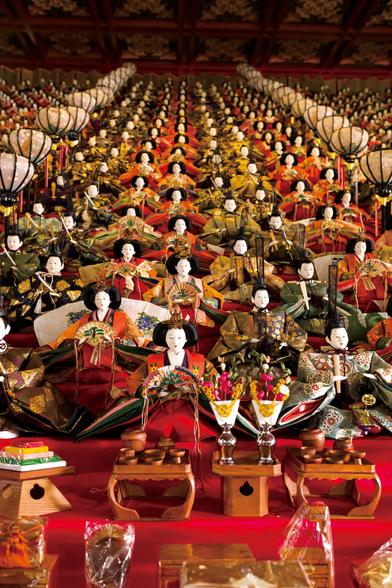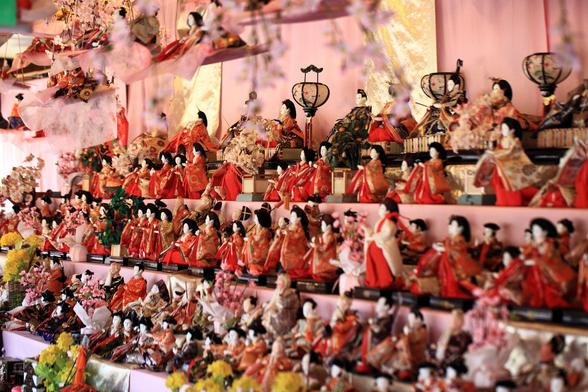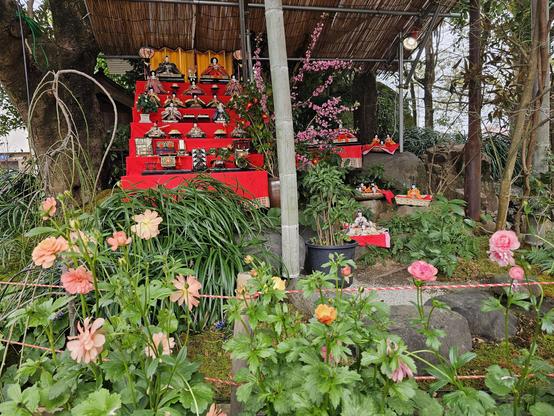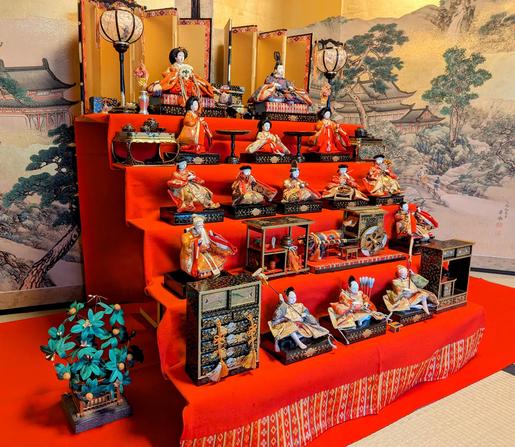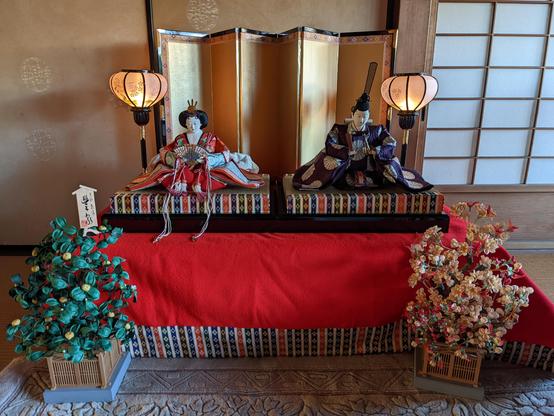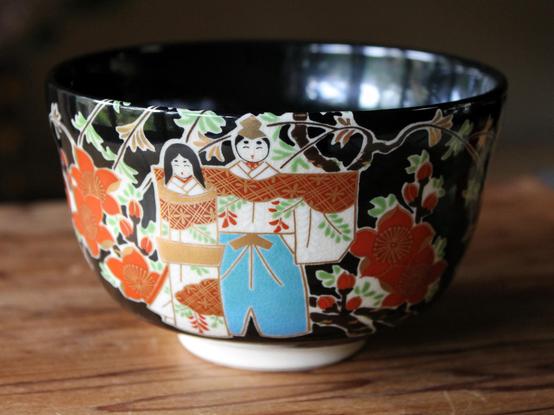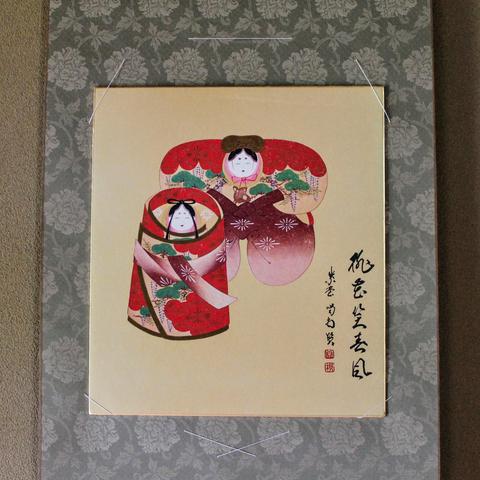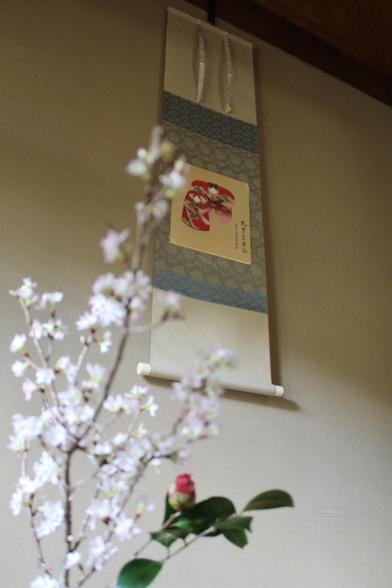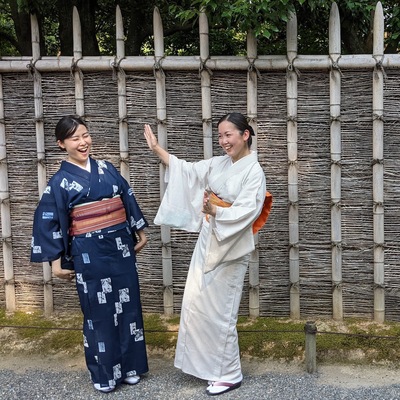
It's a little late, but the dolls are ready to greet the guests🎎🍑🙇‍♂️

#Kyoto #京都 #HinaMatsuri #ひな祭り #雛人形 #雛飾り #DollsFestival #Japan #DollsDay #dolls

👋🎎DAY OF THE DOLLS🌸🥰

Some time in February families begin to unwrap and display a set of ornamental dolls called 'Hina-ningyō' (雛人形). These dolls lie at the heart of the 'Hina Matsuri' (雛祭り) celebrations on March 3rd.
In English it is known as "Doll’s Day" or "Girls’ Day".
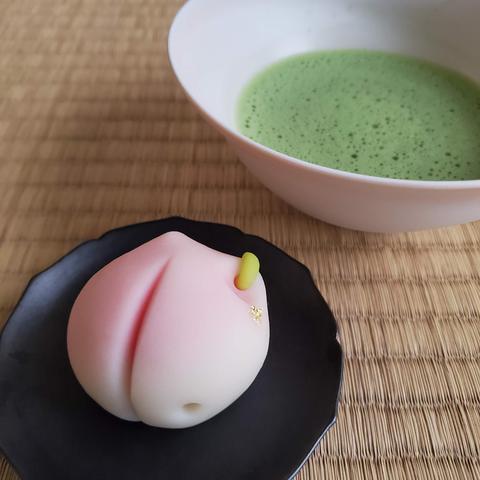
#Kyoto #雛祭り

Central to Hina Matsuri is a set of dolls, collectively known as 'Hinakazari' (雛飾り).

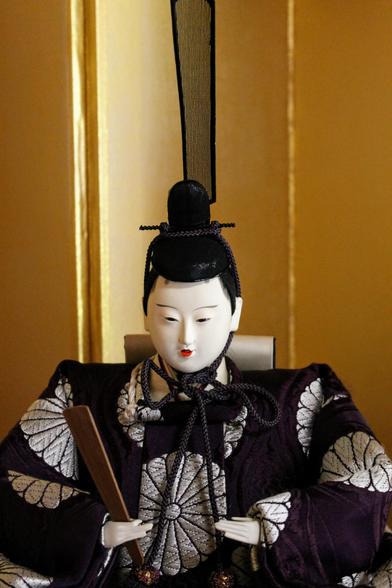
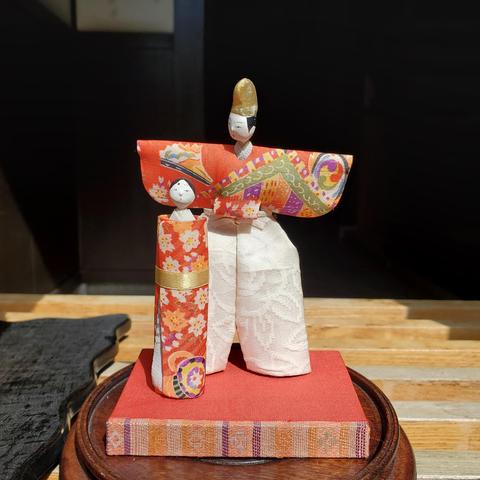
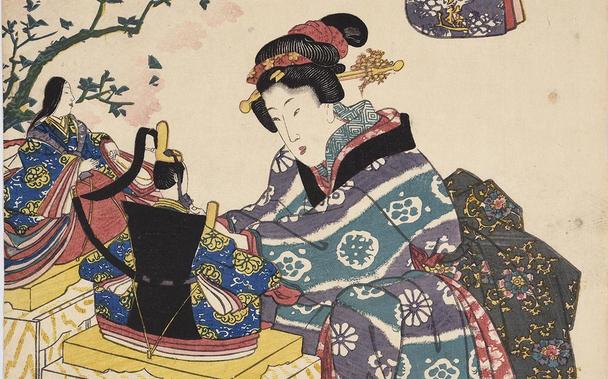
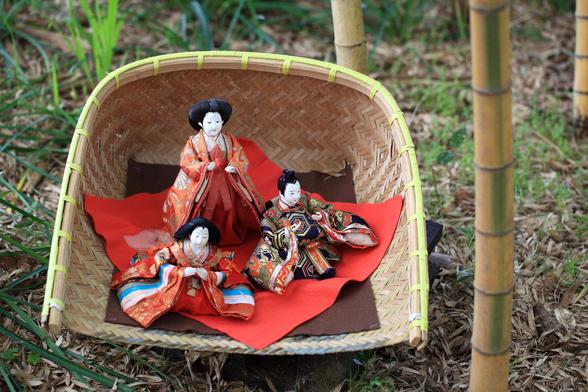
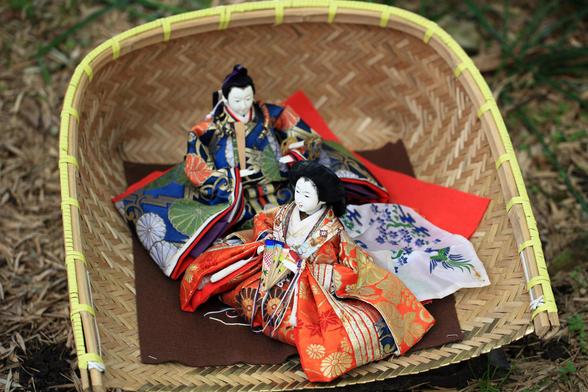
Traditionally girls received the main figures, a male doll 'Obina' (男雛) and female doll 'Mebina' (女雛), before their first birthday.
Even today an entire doll set can be fairly expensive!
#Hinamatsuri #雛飾り
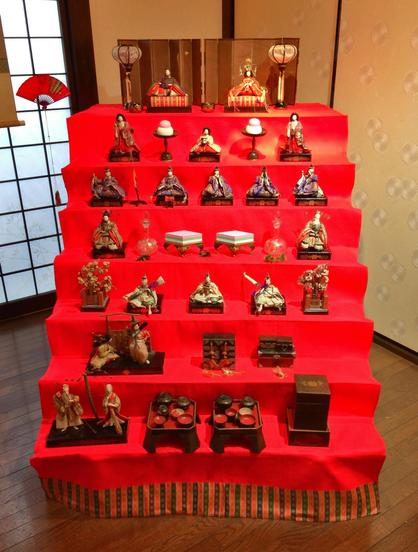
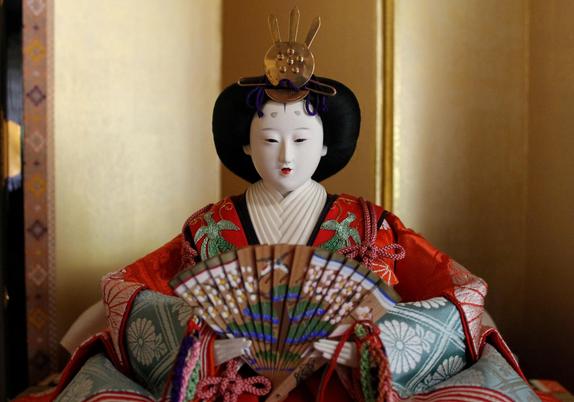
Hina Matsuri evolved from 1 of the 'Go-sekku' (五節句), 5 events held on auspicious days throughout the year.

Imported by the imperial court from China, these festivals now coincide with the 1st January, 3rd March, 5th May, 7th July and 9th September.
#Kyoto #Japan #hinamatsuri

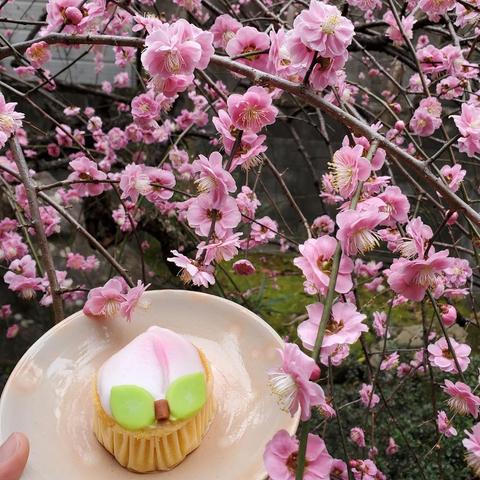
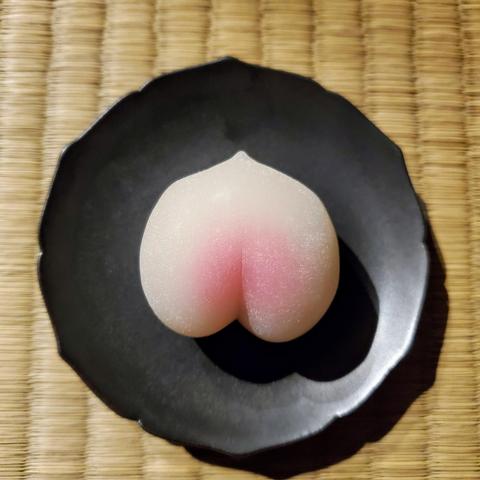
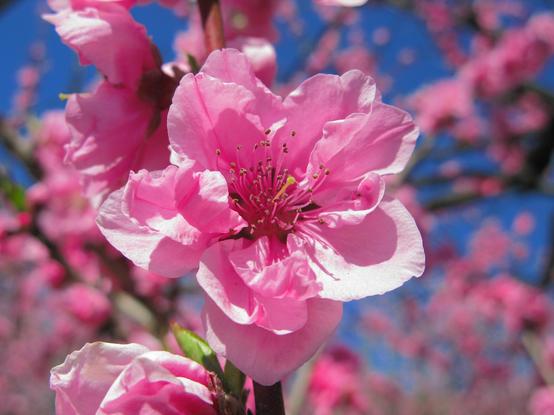
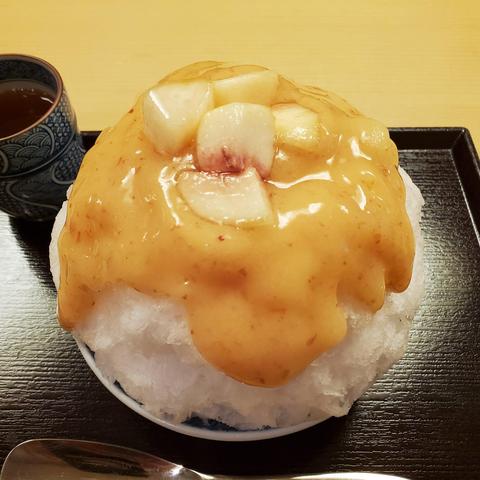
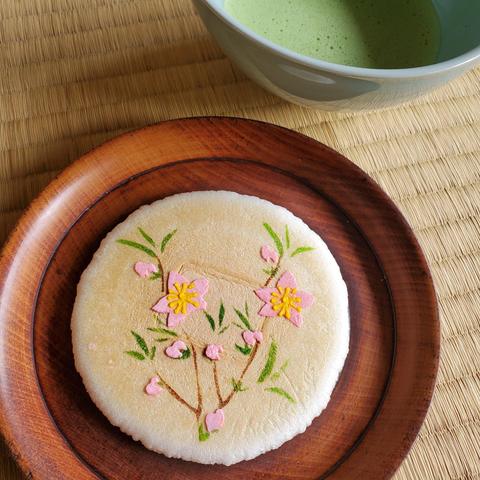
Because peach trees flowered around the original date of the celebration, it was first known as the 'Peach Festival' (桃の節句 'Momo-no-Sekku').
When the Gregorian calendar was adopted the festival fell outside the blooming period, and so it was renamed 'Hana Matsuri'.
#Japan
In 1625, to celebrate the Peach Festival, the ladies at court had a set of dolls made for Okiko (興子), daughter of Emperor Go-Mizunoo.
Playing with (雛遊び 'hina asobi') and displaying dolls became linked to the old festival, and in 1687 the name was changed to 'Hina Matsuri'.
#hinamatsuri #ひな祭り

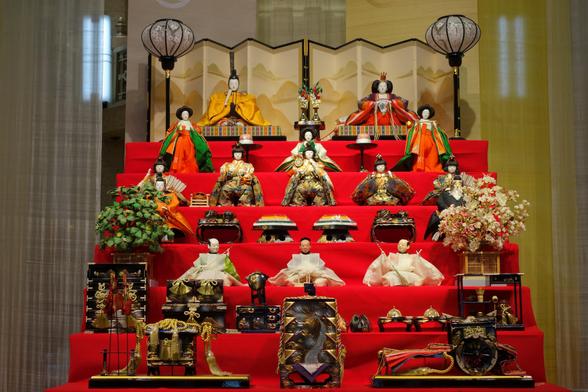
A competition of sorts began to create more and more elaborate dolls in the early Edo period, but eventually rules were introduced that limited their size, and established the standard number of dolls in a Hinazakari set as 15.
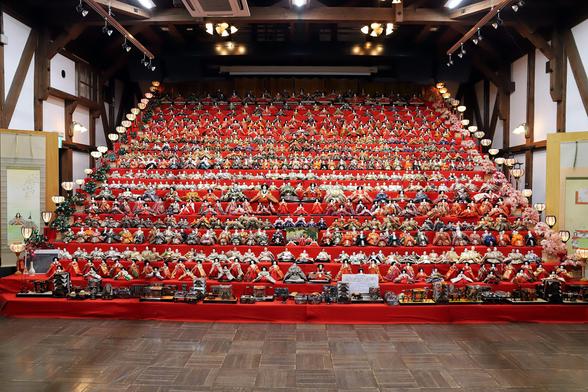
#Japan #hinamatsuri #ひな祭り #雛祭り #Kyoto

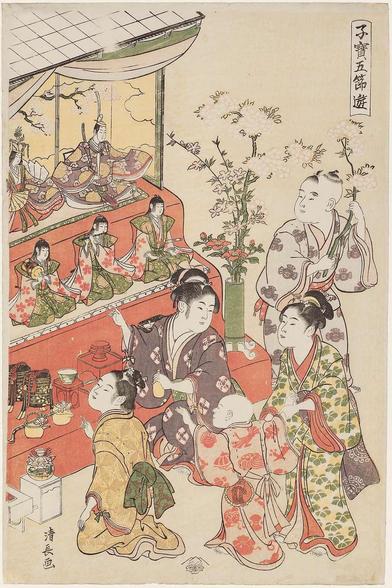
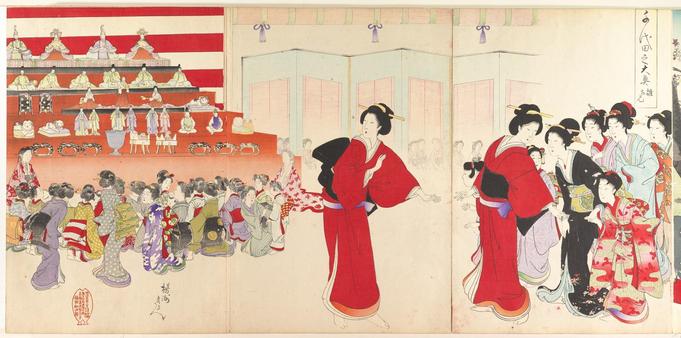
Originally for playing with, the expense of dolls gradually turned them into a decorative feature. A tiered doll stand called a 'Himadan' (雛壇) was created to keep the dolls from the reach of pawing hands.
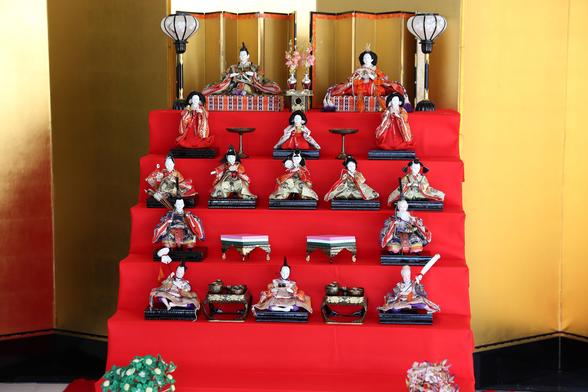
The standard 'Himadan' has 7 tiers, each shelf with a particular role.

Each region and family has their own way of arranging the dolls (choosing what paraphernalia to include), but there is a loose set of rules that I'll briefly mention here.

Due to limited space and money, many families have smaller sets that may include only the main dolls.
TOP PLATFORM:
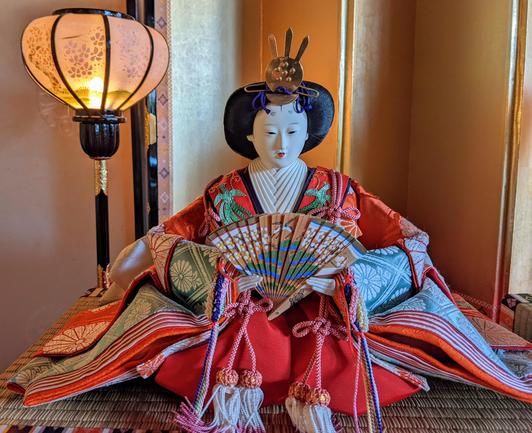
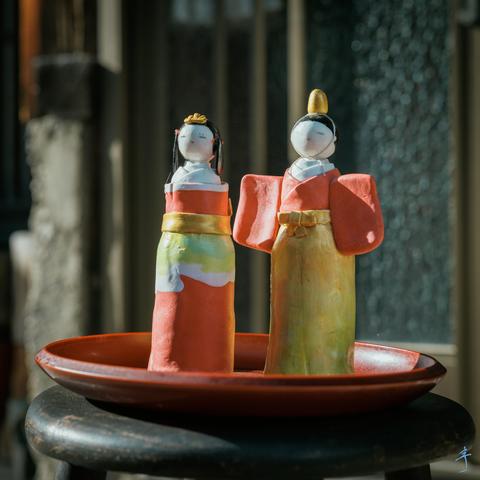
The imperial dolls 'Dairi-bina' (内裏雛), between 'bonbori' (雪洞) lamp stands.

The male doll, known as 'Obina', 'Tono' (殿) or 'Odairi-sama' (御内裏様), holds a ritual baton (笏).
The female doll, known as 'Mebina', 'Hime' (姫) or 'Ohina-sama' (御雛様), holds a fan.
2ND TIER:
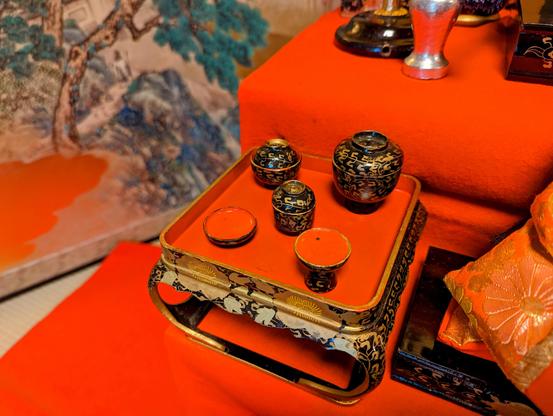
Three court ladies 'San-nin kanjo' (三人官女), 2 standing & 1 sitting, (typically) serve saké to the imperial dolls. They hold serving utensils and a table.
Between the ladies are 'Takatsuki' (高坏 -stands with round table-tops), piled with seasonal sweets.
#hinamatsuri
3RD TIER:
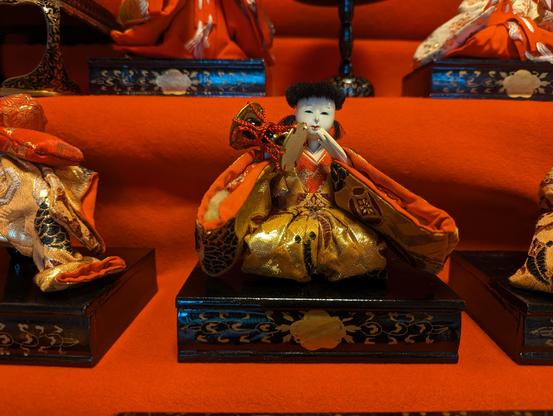
Five male musicians 'Gonin bayashi' (五人囃子)...
*Small drum (太鼓 'Taiko')-seated.
*Large drum (大鼓 'Ōtsuzumi')-standing.
*Hand drum (小鼓 'Kotsuzumi')-standing.
*Flute (笛/横笛 'Fue' or 'Yokobue')-seated.
*Singer (謡い方 'Utaikata'), holding a folding fan-standing.
4TH TIER:
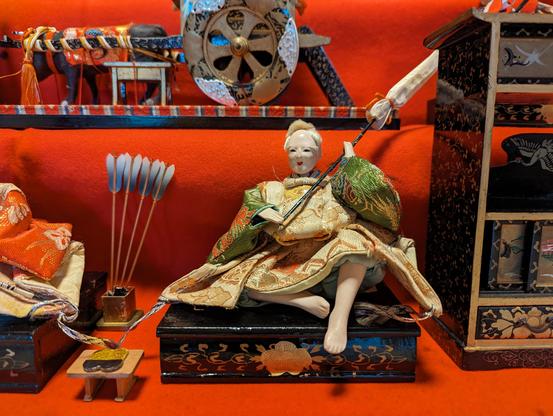
Either bodyguards (of the emperor) or ministers 'Daijin' (大臣): 'Minister of the Right' (右大臣 'Udaijin') and 'Minister of the Left' (左大臣 'Sadaijin'-older because he's senior).
They are flanked by a mandarin tree (右近の橘) and a cherry blossom tree (左近の桜).

5TH TIER:
These are my favourite dolls...depicted as either imperial helpers 'Shichō' (仕丁) or guardians 'Eji' (衛士).
*Crying drinker 'Nakijōgo' (泣き上戸).
*Angry drinker 'Okorijōgo' (怒り上戸).
*Laughing drinker 'Waraijōgo' (笑い上戸).

Which one are you?😉
#雛祭り #Kyoto

6TH TIER:
Items within the imperial palace.
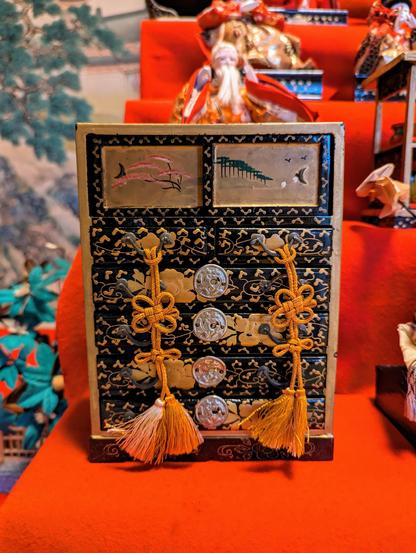
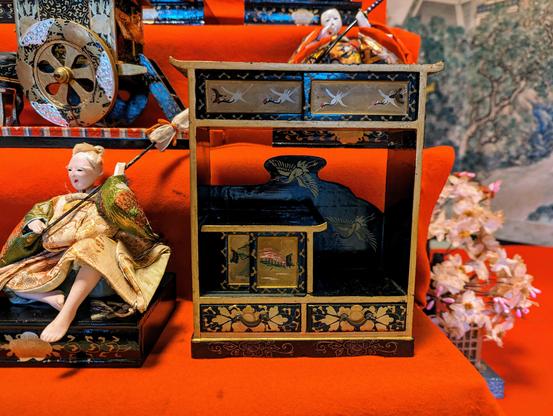
*Tansu (箪笥)- chest.
*Kyōdai (鏡台)- mirror stand.
*Haribako (針箱)- sewing kit.
*Nagamochi (長持)- kimono storage.
*Hasamibako (挟箱)- smaller clothing storage.
*Hibachi (火鉢)- braziers.
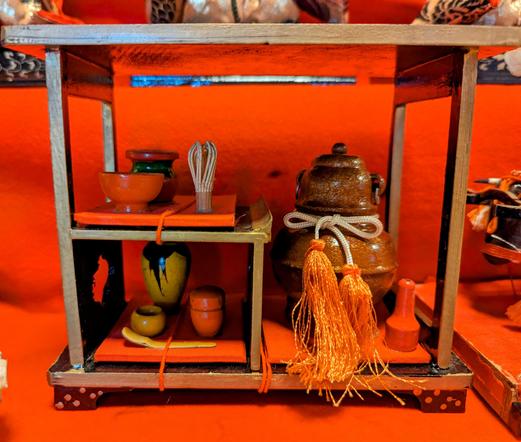
*Ocha dōgu (お茶道具)- tea ceremony utensils.
7TH TIER:
Items for use outside the palace.
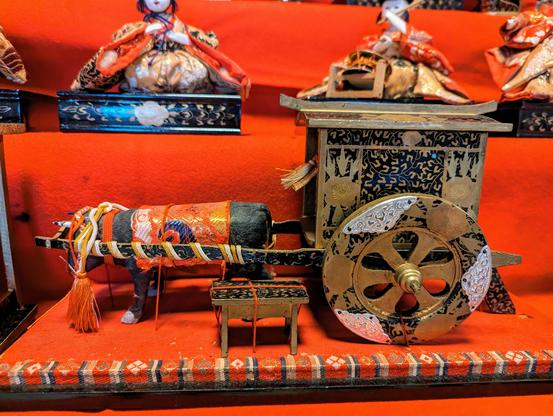
*Goshoguruma (御所車)- ox-drawn carriage for the Heian nobility (aka 'Gisha' or 'Gyūsha' 牛車).
*Hanaguruma (花車)- ox drawing a cart of flowers.
*Jubako (重箱)- nested lacquered food boxes.
*Gokago (御駕籠/御駕篭)- palanquin.
#Japan
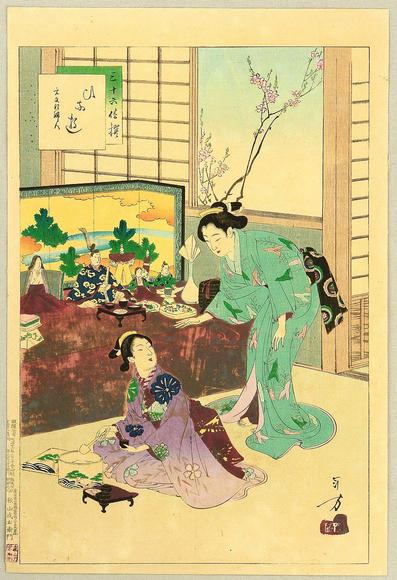
Some of the more elaborate displays will have many more items, such as silk lanterns (火袋 'Hibukuro'), a folding screen (屏風 'Byōbu'), accessories (三方飾 'Sanbō kazari'), covered bowl tables (掛盤膳 'Kakebanzen'), and diamond-shaped stands (菱台 'Hishidai') for Hishi-mochi.
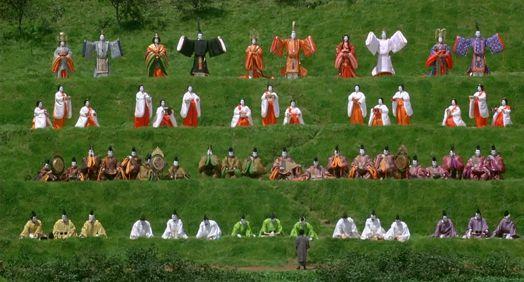
@camelliakyoto Thanks for the explanation helping me to understand better this sequence in Akira Kurosawa's Dreams.