scrlk
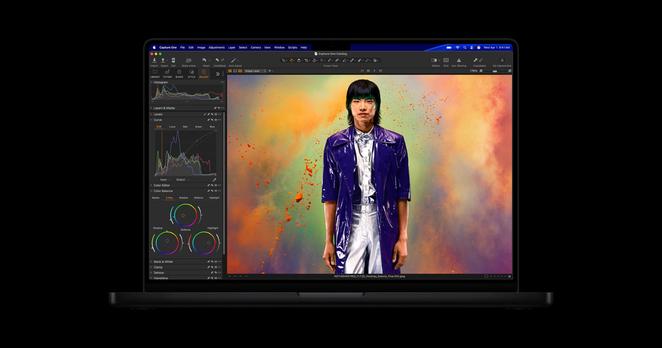
scrlkMacBook Pro with M5 Pro and M5 Max
https://www.apple.com/newsroom/2026/03/apple-introduces-macbook-pro-with-all-new-m5-pro-and-m5-max/
MacBook Pro with M5 Pro and M5 Max
https://www.apple.com/newsroom/2026/03/apple-introduces-macbook-pro-with-all-new-m5-pro-and-m5-max/
I love the following section of their copy:
> Even More Value for Upgraders
> The new 14- and 16-inch MacBook Pro with M5 Pro and M5 Max mark a major leap for pro users. There’s never been a better time for customers to upgrade from a previous generation of MacBook Pro with Apple silicon or an Intel-based Mac.
I read as "Whoops we made the M1 Macbook Pro too good, please upgrade!"
I think I will get another 2-5 years out my mine.
Apple: If you document the hardware enough for the Asahi team to deliver a polished Linux experiene, I'll buy one this year!
my tinfoil hat theory is that they make small features depend on new hardware.
for example, let's say the new os depends on m5's exclusive thumbnail generator accelerator, and let's say it improves speed by a 20%.
now, your M1 notebook than on previous OSes uses standard gpu acceleration for thumbnails will not have this specialized hardware acceleration, it will have software fallback that will be 90% slower.
you won't notice it a first thought because it's stuff, fast, but it eats a bit of the processor.
multiply this by 1000 features and you have a slow machine.
I don't know how else to explain how an ipad pro cannot even scroll a menu without stuttering, it's insane how fast these things were on release
> The battery is wearing out a bit, but it started out life with so much runtime that losing a few hours doesn't seem to matter.
this is my exact opposite experience. my M3 Max from 2 years ago now has <2hrs battery life at best. wondering if any experts here can help me figure out what is going on? what should i be expecting?
My M3 Max can burn through battery much faster than my M1 Max ever could.
And some apps are really inefficient. New Codex app drains my battery. If you are using Codex I recommend minimizing it, since it’s the UI that uses most power.
A couple weeks ago I was working remote and didn't bring a power adapter, and I realized a couple hours in that my battery was getting kind of low. I clicked on the battery icon and got a list of what was using a lot of power: 1 was an hour long video chat using Google Meet, the other was Claude desktop (which I hadn't used at all that morning).
What in the world is an idle Claude Desktop doing that uses so much power?
People here are suggesting limiting your battery charge as a proactive measure to prevent degradation but an M3 is far too new for you to be getting so poor battery life from use, even if you spent all day every day charging and discharging it.
The only plausible answers are either: something you’re running is eating CPU/GPU cycles like crazy (browser tabs gone amok, background processes) or you have a defective battery. Use Activity Monitor to look for energy usage and that will give you a pretty good idea.
I chased down what the "4x faster at AI tasks" was measuring:
> Testing conducted by Apple in January 2026 using preproduction 13-inch and 15-inch MacBook Air systems with Apple M5, 10-core CPU, 10-core GPU, 32GB of unified memory, and 4TB SSD, and production 13-inch and 15-inch MacBook Air systems with Apple M4, 10-core CPU, 10-core GPU, 32GB of unified memory, and 2TB SSD. Time to first token measured with an 8K-token prompt using a 14-billion parameter model with 4-bit quantization, and LM Studio 0.4.1 (Build 1). Performance tests are conducted using specific computer systems and reflect the approximate performance of MacBook Air.
This is broadly correct for currently favoured software, but in computer science optimization problems you can usually trade off compute for memory and vice versa.
For example just now from the front page: https://news.ycombinator.com/item?id=47242637 "Speculative Speculative Decoding"
Or this: https://openreview.net/forum?id=960Ny6IjEr "Low-Rank Compression of Language Models Via Differentiable Rank Selection"