Die EU-Kommission sagt: TikTok kann süchtig machen. 👀

Infinite Scrolling, Autoplay und Push-Benachrichtigungen ... All das soll Nutzer:innen möglichst lange auf der App halten - trotz möglicher gesundheitlicher Nachteile.

Wichtig: Das ist das Ergebnis einer vorläufigen Untersuchung und muss noch final bestätigt werden. TikTok hat jetzt die Möglichkeit, dazu Stellung zu nehmen.

Was stört dich am TikTok-Design? 👇

📝 & 🗣️: Jasmin Ehbauer
📹 & ✂️: Marc Nikoleit

#TikTok #Sucht #EU

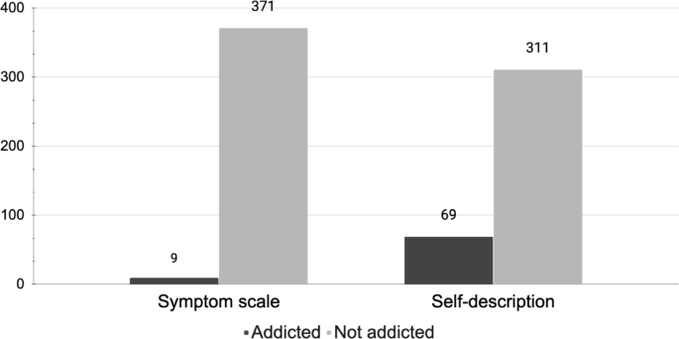
@digitalrechte @markus_netzpolitik Die Forschung sagt: In den meisten Fällen ist das Wort „Sucht“ nicht korrekt, aber ein solches Framing durch Politik und Medien richtet Schaden an.

https://www.nature.com/articles/s41598-025-27053-2

(Was nicht heißt, dass das Design von Tiktok nicht schädlich ist!)

Overestimates of social media addiction are common but costly - Scientific Reports

Overuse of social media is commonly termed a behavioral addiction. However, there is reason to believe that users overestimate their addiction; instead, frequent use largely builds habits to automatically activate, scroll, post, and react on social media. The present research (N = 1204) explored the implications of overusing the addiction label. In Study 1, a national quota sample of Instagram users (N = 380) overestimated their addiction to the app, and those who perceived themselves as more addicted (but not more habitual) experienced less ability to control their use. We show that the perception of addiction likely arises from popular media’s frequent labeling of social media as addictive (vs. habit forming). Study 2 (N = 824) demonstrated experimentally that framing frequent Instagram use as an addiction has deleterious consequences for user self-efficacy, including reducing perceived control over social media use and increasing self-blame for overuse. In addition, misperceiving excessive social media use as addictive potentially diverts users from effective strategies that could be used to curb overuse habits.

Nature