1/10
Image: Recruiting broadside endorsed by Douglass (Gilder Lehrman).
#history
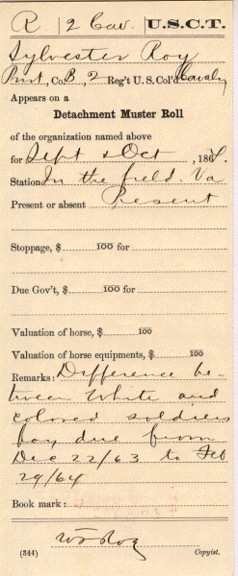
Douglass had urged Black men to fight for freedom hundreds of times before. Then he stopped. In "Douglass’ Monthly," he wrote that he could no longer recruit “with a whole heart.” Black soldiers were paid less, barred from promotion, and executed or enslaved if captured. This was not moral exhaustion. It was leverage—withdrawal as exposure.
2/10
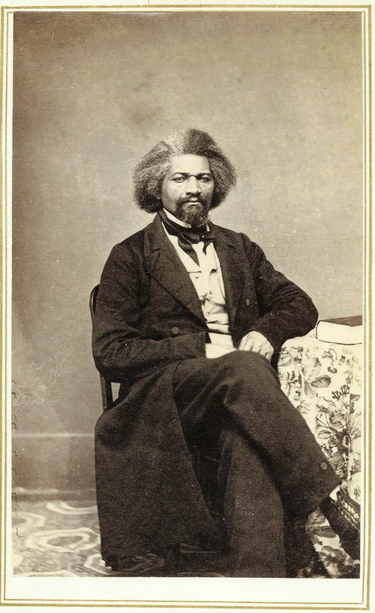
Image: From a series of "Carte de Visites" produced from his visit to Hillsdale College on January 21, 1863, 9 months before meeting with Lincoln..
Ten days later, Douglass arrived in Washington carrying the war with him: draft riots, Fort Wagner’s dead, his own sons wounded and sick. Stanton listened, delayed, offered commissions that never came. Then Douglass walked into the White House—alone, the only Black man waiting. He expected hours. Two minutes passed. “Mr. Douglass!”
3/10
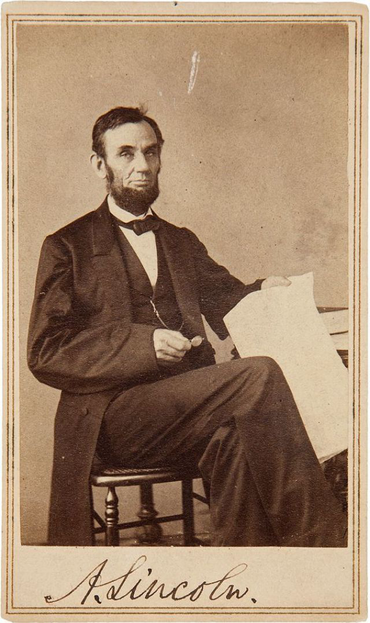
Image: Lincoln the day before meeting Douglass,, Carte de Visite. August 9, 1863: By Alexander Gardner.
Intellectual Map
Secondary Sources
Blight, David W. Frederick Douglass’ Civil War: Keeping Faith in Jubilee. Baton Rouge: Louisiana State University Press, 1989.
Cornish, Dudley Taylor. The Sable Arm: Black Troops in the Union Army, 1861–1865. Lawrence: University Press of Kansas, 1957.
Emilio, Luis F. A Brave Black Regiment: The History of the Fifty-Fourth Regiment of Massachusetts Volunteer Infantry, 1863–1865. Boston: Boston Book Company, 1891.
5/10
More...
Foner, Philip S., ed. Frederick Douglass: Selected Speeches and Writings. Adapted by Yuval Taylor. Chicago: Lawrence Hill Books, 1999.
Glatthaar, Joseph T. Forged in Battle: The Civil War Alliance of Black Soldiers and White Officers. Baton Rouge: LSU Press, 2000.
McPherson, James M. The Negro’s Civil War: How American Blacks Felt and Acted during the War for the Union. New York: Vintage Books, 1965.
6/10
Still more ...
Oakes, James. The Radical and the Republican: Frederick Douglass, Abraham Lincoln, and the Triumph of Antislavery Politics. New York: W. W. Norton, 2007.
Simpson, Brooks D., ed. The Civil War: The Third Year Told by Those Who Lived It. New York: Library of America, 2013.
Trudeau, Noah Andre. Like Men of War: Black Troops in the Civil War, 1862–1865. Lawrence: University Press of Kansas, 1998.
7/10
Websites
Gilder Lehrman Institute of American History. “Men of Color to Arms: The 1863 Call for Black Soldiers.” Gilder Lehrman Institute of American History. Accessed February 8, 2026. https://www.gilderlehrman.org/history-resources/spotlight-primary-source/men-color-arms-arms-1863.
HistoryNet. “Abraham Lincoln Meets Frederick Douglass.” HistoryNet. Accessed February 8, 2026. https://www.historynet.com/abraham-lincoln-meets-frederick-douglass/.
National Park Service. “Confronting a President: Douglass and Lincoln.” National Park Service. Accessed February 8, 2026. https://www.nps.gov/frdo/learn/historyculture/confronting-a-president-douglass-and-lincoln.htm.
8/10
"Men of Color, To Arms! To Arms," 1863 | After the Emancipation Proclamation was enacted on January 1, 1863, Black leaders including Frederick Douglass swiftly moved to recruit African Americans as soldiers. | After the Emancipation Proclamation was enacted on January 1, 1863, Black leaders including Frederick Douglass swiftly moved to recruit African Americans as soldiers. “A war undertaken and brazenly carried on for the perpetual enslavement of colored men,” Douglass wrote in Frederick Douglass’ Monthly, “calls logically and loudly for colored men to help suppress it.” This broadside, endorsed by Douglass (third name in the first column) and other African American leaders, urges free African Americans to enlist, declaring, “If we value liberty, if we wish to be free in this land. . . . If we would be regarded men, if we would forever silence the tongue of Calumny, of Prejudice and Hate, let us Rise Now and Fly to Arms.”
More websites …
———. “Frederick Douglass Home.” National Park Service. Accessed February 8, 2026. https://www.nps.gov/frdo/index.htm.
———. “When the American Civil War Came to Douglass’s Door,” video, 3:26, posted on National Park Service, n.d. Accessed February 8, 2026. https://www.nps.gov/media/video/view.htm?id=4bbf994b-e1b7-42e8-8002-5b2850ad2bf6.
———. “Frederick Douglass and the Meaning of July Fourth for the Negro,” video, 2:18, posted on National Park Service, n.d. Accessed February 8, 2026. https://www.nps.gov/media/video/view.htm?id=e0ca43b0-0ee9-4841-8634-9d8690925859.
9/10
Frederick Douglass spent his life fighting for justice and equality. Born into slavery in 1818, he escaped as a young man and became a leading voice in the abolitionist movement. People everywhere still find inspiration today in his tireless struggle, brilliant words, and inclusive vision of humanity. Douglass's legacy is preserved here at Cedar Hill, where he lived his last 17 years.
Still more websites …
New York Times Opinionator (archived). “When Douglass Met Lincoln,” by Daniel C. Maguire, August 9, 2013. Accessed February 8, 2026. https://archive.nytimes.com/opinionator.blogs.nytimes.com/2013/08/09/when-douglass-met-lincoln/.
Rare Historical Photos. “Abraham Lincoln Photos.” Rare Historical Photos. Accessed February 8, 2026. https://rarehistoricalphotos.com/abraham-lincoln-photos/.
University of Maryland, Freedmen and Southern Society Project. “The Military Act of 1862.” Accessed February 8, 2026. http://www.freedmen.umd.edu/milact.htm.
10/10
In the granularity of its definitions, The Military Act of 1862 puts me in mind of the Nuremberg Laws. Heinrich Krieger must have seen it when he was over here researching Jim Crow laws to learn how it's done.