
Got nerdsniped by a request from @thisismissem.social and made a little visualizer tool demonstrating the various ways you can represent "how long is this string?" in Unicode:

https://data.runhello.com/bs-limits/

- Bytes (in the standard UTF-8 recording)
- UTF-16 (irrelevant except in JS, where it's relevant)
- Codepoints (unicode characters)
- Grapheme clusters (the visual "characters" you see on screen)

And how the divergence of the two relates to Bluesky's "unusual" post limit rules.
Unicode demo

Based on this visualizer I issue you a challenge.

Bluesky's post limits work like this: You can fit 3000 bytes OR 300 graphemes, whichever is less. I thought at first that hitting the byte limit would be nigh impossible, but it turns out to be pretty easy with emoji: 🤷🏾‍♀️ is 1 grapheme but 17! bytes, thanks to stringing an emoji, a skintone, a gender, and two ZWJs.

My challenge: Can you hit the 3000 byte limit, without hitting the 300 grapheme limit, using only *natural human text*, any language?

In other words, can you top out Bluesky's byte limit by writing in a human language, not relying on emoji or proto-emoji like ☪? And if not, what human text comes closest— has *largest* ratio of byte-length to grapheme-length?

I'm guessing the leading candidates would be:

- Vietnamese, as far as I know the diacritic-est language on earth;
- Chinese, assuming you can stick only to four-byte characters;
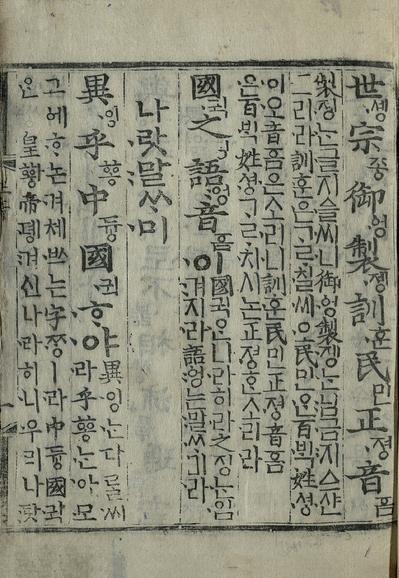
- Archaic korean— oh, but this one's *complicated*, so I'll have to explain in the next post—

So, in Korean Hangul, syllabic characters are formed by arranging 67 "jamo" in a grid. Unicode decided to represent this by working out every legal combination of jamo and assigning each one a codepoint. But this creates a problem:

https://en.wikipedia.org/wiki/Obsolete_Hangul_jamo

Adoption of Hangul came in fits and starts. There are thirty-ish Jamo that are attested in pre-1945 waves of Hangul but didn't survive into modern use. Unicode didn't want to waste codepoints on these. So they did something hacky. (1/3)

Obsolete Hangul jamo - Wikipedia

To support encoding of older Korean texts, the Unicode body has a concept of "conjoining" jamo:

https://www.rfc-editor.org/rfc/rfc5892#section-2.9

This leads to something I was posting about last night— these "conjoining" jamo are discouraged in some circumstances because they mean there can be multiple different ways of encoding a single visible character:

https://mastodon.social/@mcc/116100748088621894

I suspect conjoined jamo give you a very high byte-grapheme ratio. But this raises a question: Are these texts "natural"? (2/3)

RFC 5892: The Unicode Code Points and Internationalized Domain Names for Applications (IDNA)

@mcc very tempted to refer to this hypothetical high byte-grapheme ratio Hangul as “jumbo jamo”