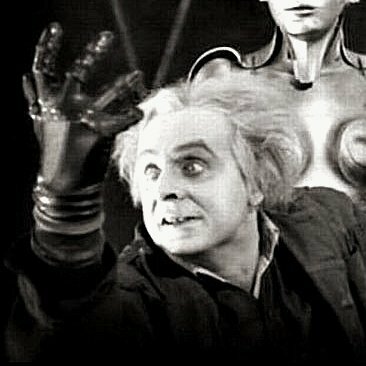
Me: A ⋀ B

Person on social media: How dare you say A ⇒ B

Me: *Tears at hair*

Me: ∃ x P(x)

Person on social media: How dare you say ∀ x P(x)

Me: *Tears at hair*

Me: A ⇒ B

Person on social media: How dare you say ¬A ⇒ ¬B

Me: *Tears at hair*

@mcc Bookmarking this thread so I can reply to complainants with the fallacy they have committed.

@mcc I think that could simplify to

Me:

Person on social media:

Me: *Tears at hair*

@ghosttie @mcc
∃ Person on social media:
Me: *tears at hair "

∀ Person

@mcc almost well actuallied this one reading it as "¬B ⇒ ¬A" 😆
@natevw How dare you…
@natevw @mcc I even thought that the original reference was to how people on social media use classical logic instead of intuitionistic and started trying to figure out if the latter statement can be reduced from the former in intuitionistic logic (I'm rusty okay?), and then saw your reply

@IngaLovinde @natevw intuititionistic logic might actually be the correct one for discussing the real world because so many things people talk about IRL are to some degree subjective or require proof-standards

"he's not *not* an anarchist" is a reasonable statement might say about a person

@mcc @natevw a soviet joke:
Professor during the class explains how in many languages double negations cancel each other out and result in agreement (but in some others, reinforce each other), and off-handedly remarks how in no language double agreements result in negation.
Student from the back of the class, sarcastically: "yes, sure".
@mcc unfamiliar with DeMorging's laws
@mcc my father taught propositional and predicate logic at university. Helping him proofread textbooks as a teen really helped build the mindset that primed me to become a programmer. Also the start of my career was making a Windows executable to accompany a revision of one of his textbooks. Anyway seeing this thread brought all that back to me.
@mcc Social media ⊻ good hair
@mcc attempting to generalise (but probably screwing up the notation if not the logic):
∀P ∃person ∃Q P(A,B)⇏Q(A,B) ∧ person thinks P(A,B) ⇒ Q(A,B) ∧ person is outraged
@mcc A -> B <=> not A or B.

logic is hard and the implication is weird.
@mcc you can infer a lot about people from that