 mefengl
Polis: Open-source platform for large-scale civic deliberation
What are some strategies a platform like this can take against spam or influence bots? Tying real life identities to users would certainly limit that(though identity theft and account selling could still happen), but that adds friction to joining, poses security risks, and many people might feel less comfortable putting their opinions openly online where backlash could impact real life.
We really need proof of soul systems to exist, extended to also have a proof of citizenship. While the proof of soul systems can plausible be done in a decentralized manner, proof of citizenship is much harder, and in my opinion this is one of (the few) things the government should really do.
What about Zero-Knowledge Identity? Use zero knowledge proofs to prove that I have an eID without actually providing my identity.
EFF has a good write-up about zero-knowledge:
https://www.eff.org/deeplinks/2025/07/zero-knowledge-proofs-...
> What ZKPs don’t do is mitigate verifier abuse or limit their requests, such as over-asking for information they don’t need or limiting the number of times they request your age over time. They don’t prevent websites or applications from collecting other kinds of observable personally identifiable information like your IP address or other device information while interacting with them.
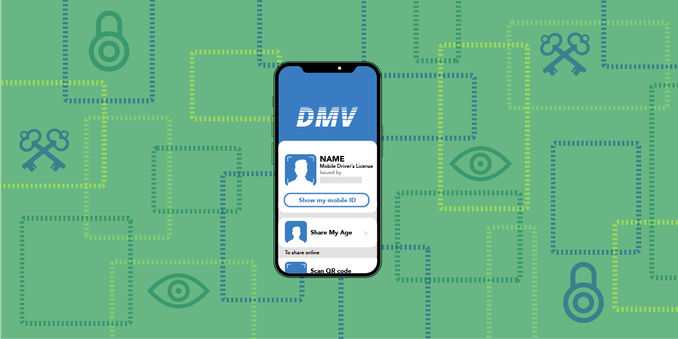
Zero Knowledge Proofs Alone Are Not a Digital ID Solution to Protecting User Privacy
In the past few years, governments across the world have rolled out digital identification options, and now there are efforts encouraging online companies to implement identity and age verification requirements with digital ID in mind. This blog is the first in this short series that will explain...
The arguments they make is a good example of "Don't let perfect be the enemy of good".
If we allow incumbents to make photo age verification and upload of ID to third-parties to be the solution, we will have a much worse solution.
Exactly. And I do think that a world where zkp ids are taken for granted is one where the issues they point to will be more surmountable than today.
Interesting. While that is true I don't see how it's an argument against. Over-asking + ZKP certainly seems superior to over-asking + without ZKP. Without ZKP in a world where you constantly need to identify yourself you have absolutely no privacy.
And going forward I think that any communication without establishing some kind of trust boundary will just be noise.
For many purposes, we need anonymous authentication. I haven't heard about much innovation on that and similar privacy fronts in awhile.
Off the top of my head, a possible method is a proxy or two or three, each handling different components of authentication and without knowledge of the other components. They return a token with validity properties (such as duration, level of service). All the vendor (e.g., Polis) would know is the validity of the token.
I'm sure others have thought about it more ...
I mean I can prove with a zero-knowledge-proof that have solved a Sudoku puzzle without actually giving away the solution so this seems possible?
Society is not ready for an AI world: any platform that does not guarantee anonymity will be of limited utility for social discourse in a world lurching towards authoritarianism, and any platform that does guarantee anonymity can no longer reliably distinguish human from ai; not that that should matter when it's ideas that are being debated.
But the bigger issue is the control of money: hierarchical institutions disintermediate workers from the way the fruits of their labor are put to use. Money spent or paid in taxes is aggregated and misused by third parties against the wishes and against the providers of that money. Essentially, your labor is used against you. This is true regardless of where someone is on the political spectrum.
A platform for debate or voting isn't going to resolve this fundamental problem.
I believe we can solve both anonymity + proof-of-humanity using zero-knowledge proofs that act as intermediary between a trusted identity provider and the service provider. I.e. you get a digital id but you use it to generate proofs rather than handing out your identity.
Right?
> PoP makes it possible to prove "I am unique" without giving up privacy.
Ah, very nice! I have been trying to figure out if this was possible!
And who is going to be a trusted identity provider in authoritarian regimes?
It needs to be globally distributed and not tied to any one government. Worldcoin but not Worldcoin.
Either that or a protocol that is as reusable as email that can facilitate a variety of identity proof and trust mechanisms.
Yeah, I mean that is definitely an additional hard nut to crack.
I also think it has potential (partial) solutions. I'm thinking that there are many ways to prove identity information. You could use something like tlsnotary to prove that you can log in to a certain web page (i.e. you are an employee of corp X). You can prove that you know someone that know person Y given certain encrypted data.
I just think that Zero-knowledge-proofs are very under explored. As I understand it, and I am not an expert - more or less anything that can be proven algorithmically can be turned into a zkp. Any question that algorithmically can have a yes or no answer can also avoid leaking further information if handled in a zkp way.
I just learned like a few basic examples of zkp and I realized that so many proofs can be made this way.